

Maddy summaryThis proposed constitutional amendment (HJR F) would remove gender-specific language from two Michigan constitutional provisions. It would repeal Article I, Section 25 - which defined marriage as "the union of one man and one woman" - and amend Article X, Section 1 to make property rights language gender-neutral. If approved, it would eliminate the constitutional ban on same-sex marriage and update outdated references to gender in property law. The amendment would require voter approval at the next general election. (Note: The bill is currently in committee referral, with no further action taken as of March 2025.)
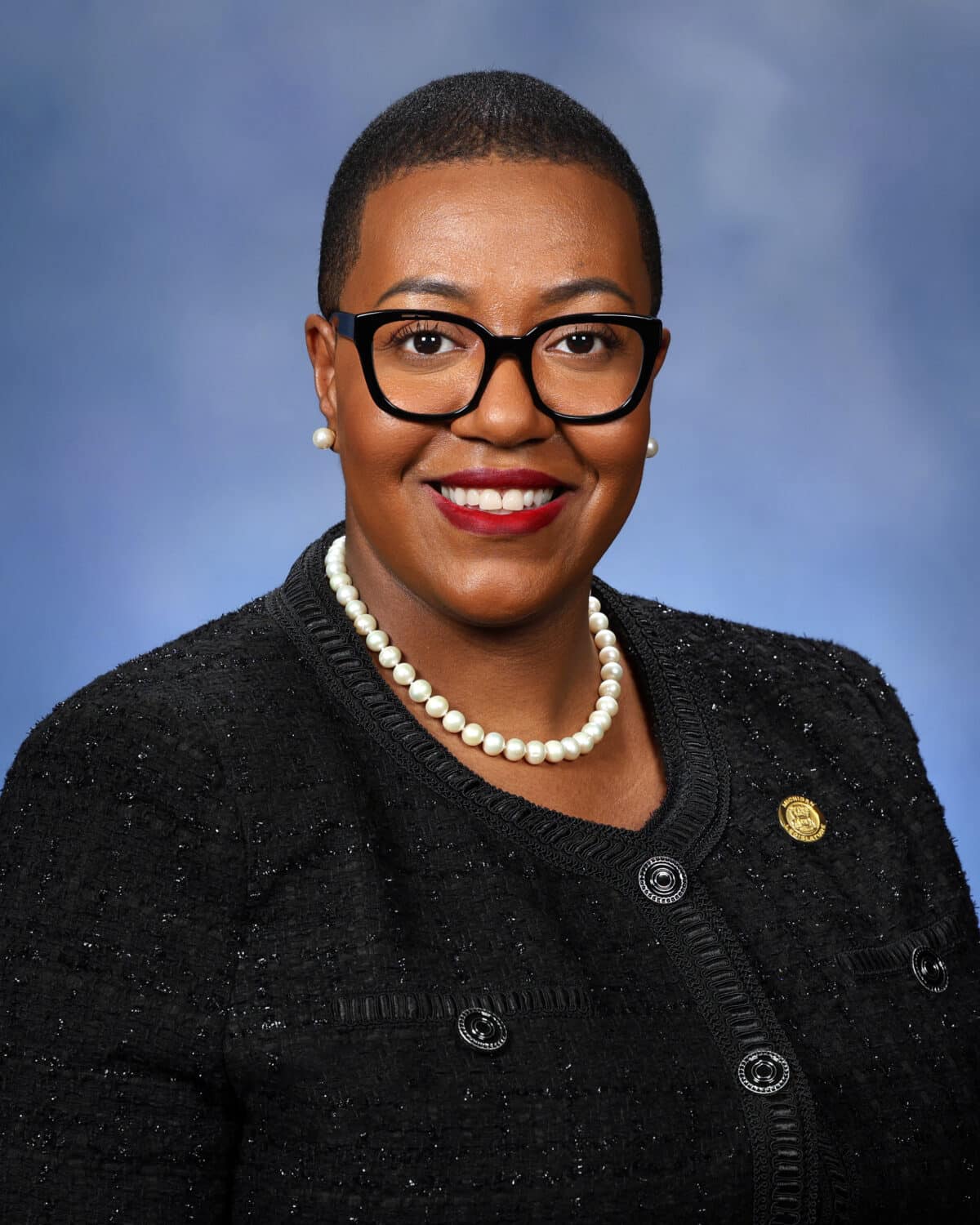
Rep. Morgan Foreman
Sponsored bills
Maddy summaryHB 4169 creates a Rare Disease Advisory Council within Michigan's Department of Health to advise on research, diagnosis, and treatment of rare diseases. The council, composed of 12-18 members including physicians, patients, caregivers, insurers, researchers, and industry representatives, must identify policy priorities to improve access to care and reduce discrimination for individuals with rare diseases (defined as affecting fewer than 200,000 people in the U.S.). Key duties include researching cost-effective treatments, sharing best practices from other states, and developing a public webpage with rare disease resources by March 2026. The bill establishes a formal advisory body but does not change existing laws or funding.
Maddy summaryHB 4171 provides supplemental state funding for hospitals in Michigan to test for H5N1 avian influenza (bird flu) in clinical settings. It directly affects hospitals and healthcare facilities that need to conduct these specific tests. The bill creates a new appropriation (funding line) to cover the costs of testing, ensuring hospitals have resources to screen patients for H5N1. This is a funding measure, not a policy change, and it applies to the 2025 fiscal year.
Maddy summaryHB 4172 provides supplemental state funding for bird flu testing in Michigan for the 2025 fiscal year. It directly affects state health and agriculture departments by allocating resources to support testing efforts for avian influenza in poultry. The bill creates a specific appropriation to cover these testing costs without changing existing laws or creating new requirements.
Maddy summaryHR 36 is a non-binding resolution introduced by 18 House members urging the federal government to create a national strategy to address the bird flu outbreak. It highlights the outbreak's impacts - including over 150 million affected poultry, 1,000 dairy herds impacted, and 68 human cases - as justification for this request. The resolution does not create new programs or funding but formally calls on federal agencies to prioritize developing a coordinated response. It directly addresses the federal government, not specific communities or industries, though the outbreak affects agriculture and public health nationwide.
Maddy summaryThis resolution (HR 33) calls on the U.S. Congress to restore funding from the United States Agency for International Development (USAID) to research universities. It directly affects research institutions that rely on USAID for critical projects in agriculture, food security, public health, and global development. The resolution states that a recent funding freeze has disrupted programs like the Feed the Future Lab, threatening research progress and international partnerships. As a non-binding resolution, it urges Congress to act but does not change funding policies itself.
Maddy summaryThis House Resolution (HR 34) urges the federal government to consider the economic impacts of tariffs on trade with Canada and Mexico. It directly affects Michigan businesses, particularly in agriculture (where Canada is the top export market), manufacturing, and auto production, which rely on stable North American supply chains. The resolution reaffirms support for the U.S.-Mexico-Canada Agreement (USMCA) and highlights Michigan’s $3 billion annual agricultural exports and $55 billion in annual trade with Ontario. As a non-binding resolution, it does not create new laws but formally advocates for fair trade negotiations to protect Michigan’s economy.
Maddy summaryThis is a symbolic resolution, not a policy bill. It declares February 2025 as "American Heart Month" and February 5, 2025, as "National Wear Red Day" in Michigan. The resolution aims to raise public awareness about heart disease, particularly its impact on women, through educational efforts and community recognition. It does not create new laws, allocate funding, or impose requirements on any group.
Maddy summaryHB 4036 removes an expiration date (sunset provision) from Michigan's distance education reciprocal exchange program, which allows colleges and universities to share courses across state lines. The bill repeals Section 7 of the 2015 Higher Education Authorization and Distance Education Reciprocal Exchange Act (MCL 390.1697), making the program permanent. This directly affects Michigan colleges and out-of-state institutions participating in the reciprocal course-sharing agreement, ensuring the program continues without needing annual renewal.
Maddy summaryThis resolution declares January 2025 as National Stalking Awareness Month in Michigan. It does not create new laws or change existing policies; instead, it symbolically recognizes stalking as a serious crime and acknowledges efforts by victim services and law enforcement. The resolution highlights Michigan's legal definition of stalking and relevant statistics (like 18,000 stalking reports in 2022) to underscore the importance of public awareness. It was introduced and adopted by the Michigan House of Representatives on January 28, 2025.