

Maddy summaryThis bill prohibits federal immigration and border security employees from obtaining Michigan law enforcement licenses between September 1, 2025, and January 20, 2029. It also mandates that all individuals seeking or holding specific law enforcement licenses complete active violence response training focused on coordinated tactical responses to mass casualty incidents. The Michigan Commission on Law Enforcement Standards is tasked with creating the rules to define these training requirements.
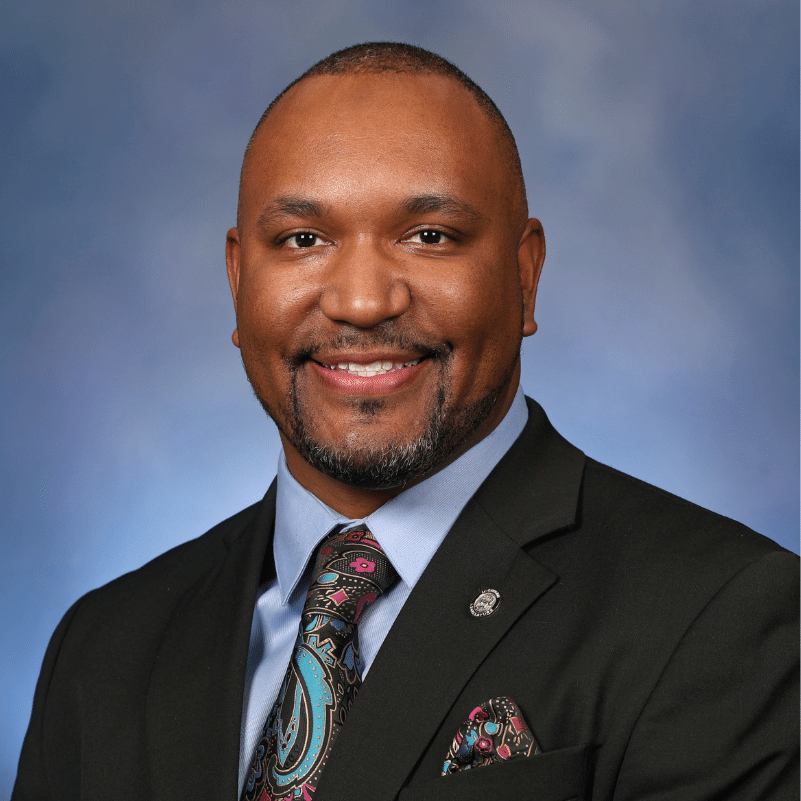
Rep. Jimmie Wilson
Sponsored bills
Maddy summaryThis bill authorizes Michigan to join the National Popular Vote Interstate Compact, an agreement among states to award all their electoral votes to the presidential candidate who wins the most votes nationwide. The legislation declares that the one-person, one-vote principle requires the candidate with the highest national total to become President and outlines how Michigan's chief election official would count votes and designate the winner once the compact is active. The agreement only takes effect when states participating in it collectively hold a majority of the Electoral College votes, ensuring the current system remains in place until that threshold is met. If the compact becomes active, Michigan's laws regarding elector appointment will follow the compact's rules rather than conflicting state statutes.
Maddy summaryThis bill prohibits Michigan school districts, academies, and intermediate districts from hiring or retaining individuals who worked for specific federal immigration agencies between September 1, 2025, and January 20, 2029. The affected agencies include Immigration and Customs Enforcement, Customs and Border Protection, and Citizenship and Immigration Services. The law applies to any role within these educational institutions and targets people who were employed by these organizations during that specific future time frame.
Maddy summaryThis bill prohibits the certification or recertification of certain individuals as local corrections officers in Michigan if they have worked for specific federal immigration agencies between September 1, 2025, and January 20, 2029. The law directly affects people seeking to become local corrections officers on or after January 1, 2005, by adding a new requirement that they must not have been employed by U.S. Immigration and Customs Enforcement, U.S. Customs and Border Protection, or U.S. Citizenship and Immigration Services during that three-year window. While the bill maintains existing requirements for U.S. citizenship, age, and high school education, it introduces this specific employment restriction to prevent federal immigration workers from transitioning into local correction roles.
Maddy summaryThis bill prohibits individuals who worked for specific U.S. immigration agencies between September 1, 2025, and January 20, 2029, from becoming or remaining state correctional officers in Michigan. It requires all correctional officers to be certified or recertified by the Michigan Commission of Corrections, but explicitly excludes those with recent employment at U.S. Immigration and Customs Enforcement, Customs and Border Protection, or U.S. Citizenship and Immigration Services from this requirement. The law applies to anyone seeking certification or recertification after six months from the act's effective date, ensuring that only eligible candidates meet the state's training standards.
Maddy summaryThis bill establishes a formal appeal process and creates a new Cannabis Licensing Appeals Board to handle disputes involving violations of Michigan's marijuana laws. It directs the state regulatory agency to use a graduated disciplinary system that starts with warnings or citations for minor issues and escalates to fines or license suspensions only for serious offenses like public safety risks or repeated violations. The legislation sets specific rules for how penalties are determined, including a two-year lookback period for prior warnings and a maximum fine of $10,000 or daily gross receipts for each violation. Licensees will receive written notices explaining their right to appeal before facing license suspensions, ensuring due process in enforcement actions.
Maddy summaryThis bill clarifies how Michigan would appoint presidential electors if the state joins an agreement to choose the President based on the national popular vote rather than the Electoral College. It requires the state Board of State Canvassers to calculate the total national popular vote for each candidate and designate the winner accordingly, while also reporting these results to other participating states. If a tie occurs for the national popular vote, the bill specifies that Michigan would appoint electors based on which candidate received the most votes within Michigan itself. The legislation updates existing election laws to ensure these procedures are followed and includes requirements for issuing official certificates of appointment.
Maddy summaryThis bill designates June 27, 2026, as National Post-Traumatic Stress Disorder Awareness Day within the state of Michigan. It directly affects residents by encouraging them to learn about PTSD, show compassion to those affected, and support mental health services. The resolution aims to raise public understanding of the disorder and reduce stigma without changing any laws or funding.
Maddy summaryThis bill designates July 1, 2026, as Food Day in the state of Michigan. It aims to raise awareness about the importance of food security and to honor the various groups involved in the state's food supply chain, including farmers, farmworkers, and food assistance organizations. The resolution encourages residents to observe the day by learning about food issues, supporting local agriculture, and recognizing the efforts of those who strengthen the food system.
Maddy summaryHB 6007 updates Michigan's Food Law to clarify how enforcement responsibilities are shared between the state Department of Health and local health departments. The bill allows the state to delegate most inspection and licensing duties to local health departments for food service establishments, provided those departments meet specific program criteria. However, the state retains direct authority over complex wholesale food processing, establishments within large grocery stores, and certain high-risk mobile food units. Additionally, the legislation prevents local governments from creating conflicting licensing rules and outlines the process for revoking a local health department's certification if it fails to meet state standards.