

Maddy summaryHB 4858 would prohibit Michigan state and local government entities from sharing personal information (like names, addresses, Social Security numbers, or criminal history) with anyone seeking it for enforcing federal immigration law, unless a court-issued warrant is presented. Government agencies must verify if a request is for immigration enforcement and deny disclosure without a warrant. The bill requires agencies to report annual requests related to immigration enforcement to the attorney general and legislature. It directly affects local law enforcement, courts, and other government offices that handle public records, as well as federal immigration authorities seeking such data.
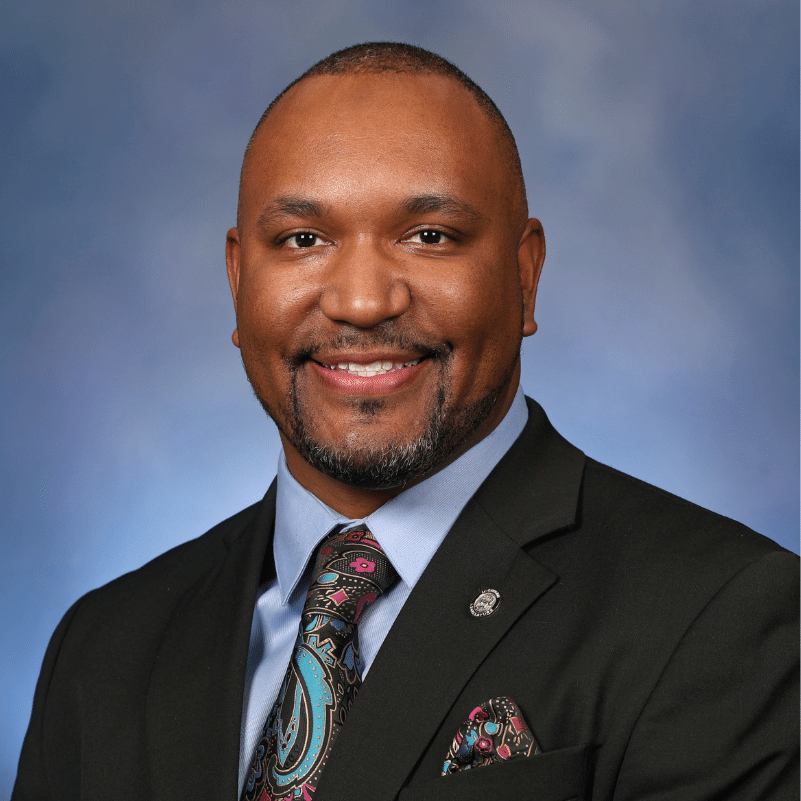
Rep. Jimmie Wilson
Sponsored bills
Maddy summaryHB 4859 prohibits law enforcement officers from conducting immigration enforcement actions (like arrests, interviews, or searches) in specific sensitive locations, including schools, places of worship, hospitals, courthouses, and facilities serving vulnerable populations. The bill allows exceptions only if a court orders entry or if an immediate threat to public safety requires action. It directly affects law enforcement officers operating in Michigan and individuals present at these locations, such as students, patients, and worshippers. The law creates clear boundaries for immigration enforcement to protect access to essential services and community spaces.
Maddy summaryHB 4362 requires law enforcement to share missing senior or vulnerable adult reports with local police, broadcasters, and newspapers, which must then broadcast a public alert with the person's description and relevant details. The state will establish a system using existing wireless emergency networks to send text alerts directly to mobile devices in the affected area. This alert system can only activate after law enforcement completes a report and receives approval from the state police. The bill creates a standardized process to rapidly disseminate information about missing individuals, aiming to improve public awareness and search efficiency.
Maddy summaryThis resolution (HR 164) addresses the July 2025 detentions of 16 Hmong and Laotian refugees in Michigan by U.S. Immigration and Customs Enforcement (ICE), who were unexpectedly taken into custody during routine check-ins and later deported to Laos without adequate notice or due process. It demands federal transparency regarding the legal basis for these detentions, urges ICE to provide timely legal counsel and family notification for detainees, and calls for case-by-case reviews of individuals with strong Michigan ties. The resolution specifically highlights concerns about rapid transfers across facilities and the lack of a U.S.-Laos repatriation agreement requiring travel documents. It is directed to the U.S. Department of Homeland Security and Michigan’s congressional delegation, seeking improved oversight and humane treatment.
Maddy summaryThis resolution (HR 163) formally declares September 2025 as Ovarian Cancer Awareness Month in Michigan. It does not create new laws or allocate funds but aims to increase public awareness about ovarian cancer, referencing statistics that highlight its high mortality rate (e.g., 12,730 U.S. deaths estimated for 2025) and the importance of early detection. The resolution is ceremonial, recognizing survivors, patients, and advocates, and aligns with the national observance of September as Ovarian Cancer Awareness Month.
Maddy summaryHB 4827 amends Michigan's Consumer Protection Act to require businesses to clearly disclose automatic renewal terms in consumer contracts. It specifically mandates that companies must prominently state conditions for free trials or services, such as how to cancel before charges apply, to prevent misleading consumers. This directly affects subscription-based businesses, app providers, and any service using automatic renewal clauses. The key provision requires transparent, upfront disclosure of renewal mechanics - like pricing, timing, and cancellation steps - before consumers agree to the contract. This change aims to reduce unexpected charges by ensuring consumers understand renewal terms from the start.
Maddy summaryHB 4826 requires businesses selling services or goods with automatic renewal provisions to clearly disclose key terms in consumer contracts using 14-point type. This includes details on renewal periods, pricing changes (like after free trials), cancellation procedures, and a method to cancel easily (e.g., website link or toll-free number). Businesses must also send electronic reminders 30-60 days before renewal and provide 30 days to cancel after notice. The law applies to most consumer contracts but excludes telecom/broadband services regulated by the Michigan Public Service Commission and certain insurance contracts. It aims to prevent surprise charges and make cancellation straightforward for consumers.
Maddy summaryHB 4817 names a specific segment of I-75 in Troy (between Long Lake Road and Square Lake Road) as the "Specialist 4 Keith Lavoie Memorial Highway" to honor a military veteran. This bill amends Michigan's memorial highway law (2001 PA 142) by adding a new section designating this highway portion. The change is purely ceremonial with no policy, funding, or regulatory effects. It directly affects the highway signage and public recognition in that Troy location.
Maddy summaryHB 4818 amends Michigan school district bonding rules to clarify what bond proceeds can fund. It prohibits using bonds for technology-related expenses like software upgrades, training, maintenance, consumables (e.g., ink, toner), or repairs outside warranties. School districts can still use bonds for physical infrastructure - such as building construction, buses, athletic fields, or facility upgrades - but only for the initial purchase and setup of technology hardware and software, as narrowly defined in the bill. The amendment also requires independent audits of bond spending within 120 days of project completion.
Maddy summaryHB 4812 requires Michigan's Department of Corrections to provide prisoners with written materials about voter registration and election processes before their release on parole or after completing their sentences. Specifically, it mandates that the department include details on how to register to vote, vote in person, or request absentee ballots, along with regular election dates. The bill also directs the department to assist prisoners in obtaining essential identification documents (like those needed for driver's licenses or state ID cards) and creates a "reentry success fund" to cover related costs. This applies to all prisoners transitioning from incarceration to community life who are eligible for such identification.