

Maddy summaryHB 4976 prohibits electric utilities in Michigan from seeking to recover revenue they were required to pay as service outage credits to customers. This directly affects electric utilities serving Michigan residents and businesses, as it prevents them from later reclaiming refunds paid for power outages. The key provision states that once an electric utility issues outage credits (refunds for service interruptions), it cannot attempt to get that money back through future rate adjustments. This ensures customers who received outage credits retain the full benefit without utilities offsetting those payments against future bills.
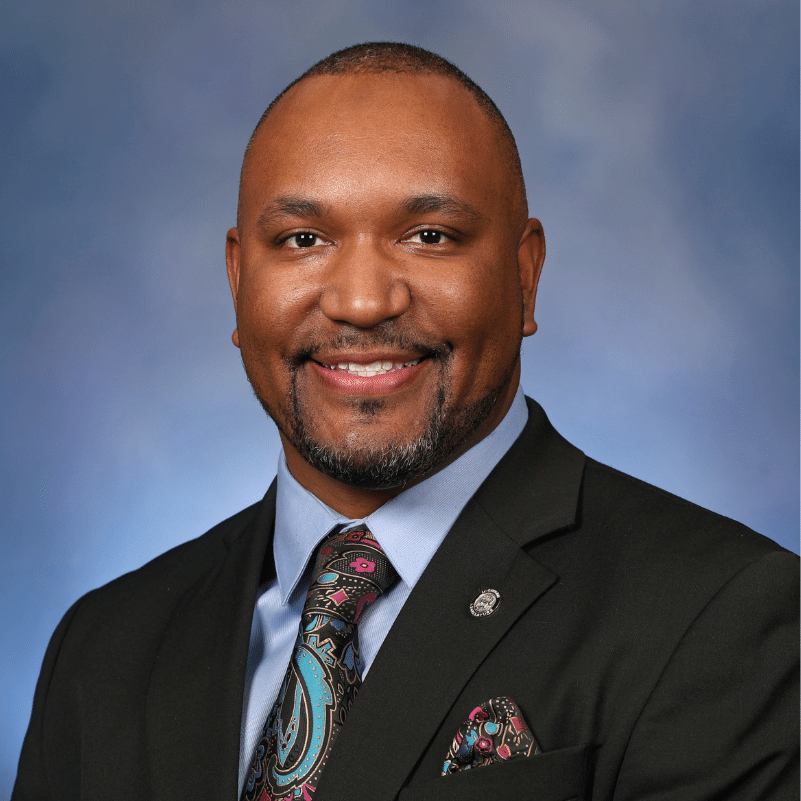
Rep. Jimmie Wilson
Sponsored bills
Maddy summaryHB 4975 requires Michigan electric utilities to automatically provide residential customers with $100 credits on their bills if they experienced 4 or more power outages lasting over an hour in the past year, or $200 credits for more than 4 outages. The bill mandates these credits be applied without customer action, directly benefiting households with frequent service disruptions. Credits will adjust every five years based on inflation using the Detroit-area Consumer Price Index, with changes announced by June 1 each adjustment year. This policy change aims to compensate for unreliable service through automatic billing adjustments under Michigan's utility regulations.
Maddy summaryHR 173 is a resolution passed by the Michigan House of Representatives to condemn all forms of political violence and reaffirm the body's commitment to civility, safety, and peaceful democratic engagement. It does not create new laws or policies but serves as a formal statement expressing the House's stance against violence targeting public officials and citizens. The resolution cites recent incidents of political violence across the U.S., including attacks on elected leaders and events like the 2025 assassination of activist Charlie Kirk. It will be transmitted to the President, Michigan Governor, and congressional leaders as a non-binding expression of the House's values.
Maddy summaryHB 4866 updates Michigan's lead-based paint regulations for renovations, repairs, and painting in older buildings. It adopts federal EPA standards with key modifications, setting specific lead dust limits (e.g., 5 micrograms per square foot on floors) and requiring post-renovation testing to ensure safety. The bill directly affects renovation contractors, property owners, and child-occupied facilities (like schools) in pre-1978 buildings where lead paint may be present. It clarifies enforcement by Michigan’s Department of Health, updates certification rules for firms, and establishes fines up to $13,000 per violation for noncompliance. The changes aim to protect public health by reducing lead exposure during renovation work.
Maddy summaryThis joint resolution proposes a constitutional amendment to clarify when Michigan's Supreme Court must determine if rebellion or invasion justifies suspending habeas corpus. It requires the court to rule within 48 hours if the governor, attorney general, or both legislative chambers (via roll call vote) request such a determination. The amendment directly affects the Supreme Court's role in emergency civil liberties decisions, ensuring a timely judicial check on potential government actions during crises. It does not change existing habeas corpus protections but adds procedural clarity to emergency suspensions.
Maddy summaryHB 4944 requires police to clearly inform individuals arrested for criminal offenses about their rights. Specifically, it mandates that officers advise arrestees of their right to remain silent, their right to have an attorney present during questioning, and that anything they say may be used against them in court. This directly affects people arrested for crimes in Michigan, ensuring they receive these standard due process warnings upon arrest. The bill amends Michigan's criminal procedure code to add this requirement as a new Section 1a in Chapter III.
Maddy summaryHB 4943 prohibits Michigan state and local governments from using public funds for legal actions that violate Section 12 of the state constitution (which protects equal protection and due process). It directly affects state agencies, cities, counties, and other local entities that manage public funds. The bill's key provision requires all government officials to ensure no state or local money is spent on lawsuits or proceedings conflicting with constitutional rights. This creates a clear legal barrier against government spending on cases deemed unconstitutional under Michigan's foundational law.
Maddy summaryHB 4942 prohibits Michigan state and local governments from using public funds to support legal actions that would violate Michigan’s constitution if the federal government suspends habeas corpus (a legal challenge to unlawful detention). It specifically blocks state/local spending on lawsuits or proceedings that conflict with Article I, Section 12 of Michigan’s 1963 Constitution, which protects individual liberty. The bill applies directly to state agencies, local governments, and officials who manage public funds. It takes effect immediately upon federal suspension of habeas corpus rights, creating a clear financial restriction for government entities.
Maddy summaryHB 4945 designates a specific segment of M-43 in East Lansing (between North Harrison Road and Hagadorn Road) as "Magic Johnson Way" under Michigan's memorial highway act. This bill amends state law to rename the roadway, affecting signage and official state maps for that location. It has no funding, regulatory, or policy changes beyond the name designation. The bill was introduced on September 11, 2025, and referred to the Transportation Committee.
Maddy summaryHB 4941 prohibits Michigan law enforcement agencies - including the state police, city, village, township, and county police - from entering into, modifying, or renewing agreements with U.S. Immigration and Customs Enforcement (ICE) under federal Section 287(g) of the immigration law. These agreements currently allow local officers to enforce federal immigration laws. The bill defines "immigration enforcement agreement" as such federal partnerships and takes effect immediately upon passage, barring any new or renewed arrangements. It directly affects all local and state law enforcement entities in Michigan by restricting their ability to collaborate on federal immigration enforcement.