

Maddy summaryHB 5586 creates a new "Office of Community Violence Intervention and Prevention Services" within Michigan's Department of Health and Human Services. The office will administer grants to community-based nonprofits, track violence trends, set statewide goals to reduce shootings and homicides, and coordinate all state violence prevention efforts. It directly affects local governments, community organizations receiving grants, and state agencies managing the program. The bill establishes concrete requirements for data collection, technical assistance, and annual reporting to measure progress toward reducing community violence.
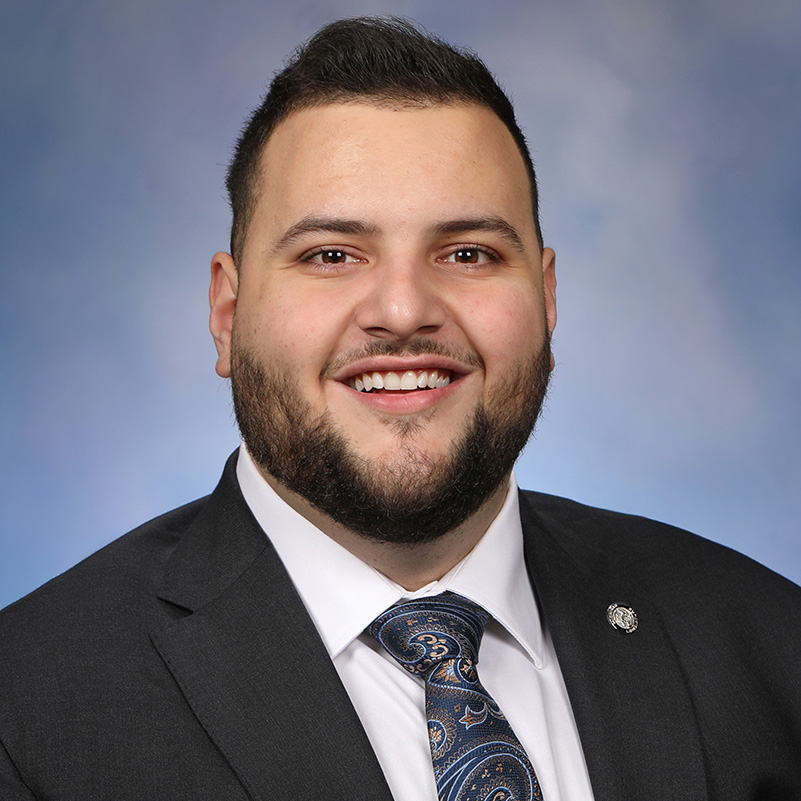
Rep. Alabas Farhat
Sponsored bills
Maddy summaryHB 5572 modifies Michigan's property tax exemption rules to expand eligibility for certain nonprofits. It adds a new exemption for conservation organizations maintaining nature areas open to the public for activities like hiking and bird watching. The bill also clarifies that nonprofits providing healthcare services (such as nursing homes, skilled nursing facilities, or adult foster care) qualify for tax exemptions if they meet specific licensing requirements. This change directly affects nonprofit hospitals, educational institutions, conservation groups, and healthcare providers seeking property tax relief.
Maddy summaryHB 5573 expands property tax exemptions for specific nonprofit organizations in Michigan. It adds new exemptions for conservation land held by qualified nonprofit groups (like nature preserves open for public recreation) and clarifies exemptions for nonprofit hospitals, skilled nursing facilities, and educational institutions. The bill specifies detailed requirements for organizations to qualify, such as perpetual land preservation for conservation groups and licensing for healthcare facilities. These changes directly affect qualifying nonprofits, conservation organizations, and healthcare providers by allowing them to exclude certain properties from local property taxes. The bill refines existing tax exemption rules without creating new tax rates or funding mechanisms.
Maddy summaryHB 5579, the "Responsible Artificial Intelligence Security for Employees Act," prohibits most employers from using automated decisions tools (like AI for hiring) or electronic monitoring tools (like tracking software) for employment decisions affecting employees or job applicants. Employers may only use these tools for specific, limited purposes, such as screening large applicant volumes for job skills or monitoring essential work functions, safety, or compliance. The bill requires employers to obtain written consent from workers, provide clear notice of monitoring, ensure data accuracy, and use tools in the least invasive way possible. It directly affects all Michigan employers and their employees/applicants, creating new rules for technology use in the workplace.
Maddy summaryHB 5587 creates a state grant program to fund community-based violence prevention initiatives in areas with high homicide rates. It establishes a "community violence intervention and prevention fund" to award grants to eligible local governments (e.g., cities or counties with 35+ homicides in 2 of 3 years) or community nonprofits with proven experience addressing violence. Grants must support evidence-based strategies focused on trauma care, economic opportunities, and reducing violence without increasing incarceration, with at least 75% of funds directed to community organizations - not law enforcement. The program requires grantees to report on outcomes and coordinate with other violence prevention efforts, and mandates annual reports on best practices from the administering office.
Maddy summaryHB 5524 creates a program to provide financial assistance to Michigan businesses that suffer revenue losses due to unexpected street closures or road construction projects extending beyond their scheduled end dates. The bill establishes a "road construction business loss reimbursement program" that offers grants covering up to $15,000 annually per business, based on a three-year average of lost revenue. To qualify, businesses must demonstrate a significant revenue decline directly tied to construction, and applications must be reviewed within 120 days using criteria like revenue decline rate, construction duration, and traffic disruption severity. The program requires the state transportation department to annually report grant usage details - including approved/rejected applications and project statuses - to relevant legislative committees.
Maddy summaryHB 5483 amends Michigan's penal code to specifically protect United States Postal Service letter carriers by adding them to the list of protected individuals under assault laws. The bill increases penalties for assaulting, obstructing, or endangering these workers based on injury severity: up to 2 years for basic assault, 4 years for serious injury requiring medical care, 15 years for serious bodily impairment, and 20 years if the assault causes death. It clarifies that existing penalties for assaulting law enforcement or emergency personnel also apply to letter carriers when they are performing their duties. The law takes effect 90 days after enactment and does not affect other potential charges for the same incident.
Maddy summaryThis resolution (HR 234) urges the Trump-Vance Administration to stop making threats against Denmark regarding Greenland. It directly addresses U.S. officials, emphasizing that Greenland is an autonomous territory within Denmark (recognized under international law) and that any political change must come from Greenlanders freely, without coercion. The resolution calls for diplomacy based on respect for sovereignty and international law, rather than threats or military pressure, to protect NATO alliance unity. As a symbolic resolution, it has no legal effect but expresses congressional concern about actions undermining U.S. alliances and international norms.
Maddy summaryHB 5454 prohibits the use of perchloroethylene (PCE) in dry cleaning solvents in Michigan, directly affecting dry cleaning businesses, manufacturers, and sellers. The bill bans manufacturing PCE solvents after December 1, 2031; selling them after June 1, 2032; and using them after December 1, 2032. It creates a state fund to provide grants and resources for dry cleaners transitioning to safer alternatives, including cost-share programs and a buy-back program for existing PCE products. The Department of Environment, Great Lakes, and Energy will administer the fund and cost-share program. Violations could result in civil fines up to $10,000.
Maddy summaryHB 5432 is a supplemental appropriations bill that allocates additional state funding for multiple departments, agencies, and the legislative branch for the 2025-2026 fiscal year. It provides specific monetary amounts to cover budget gaps or new needs identified during the fiscal year, with conditions on how the funds may be spent. This bill directly affects state government operations by ensuring funding continuity for essential services and programs across various agencies. As a procedural funding measure, it does not change policy but adjusts financial resources for existing government functions.