

Maddy summaryHB 4044 designates the wood duck (*Aix sponsa*) as Michigan's official state duck. This symbolic bill establishes a state symbol without changing laws, policies, or affecting any specific group or community. It simply adds the wood duck to Michigan's list of official state emblems, following standard procedural naming practices for state symbols.
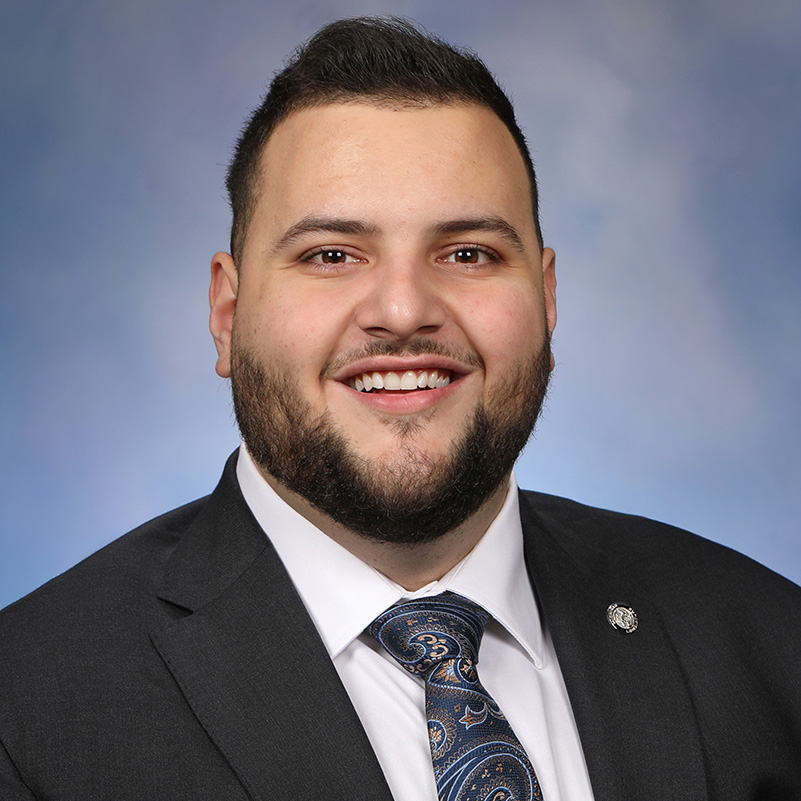
Rep. Alabas Farhat
Sponsored bills
Maddy summaryThis resolution urges Congress to pass legislation requiring the President to end U.S. military involvement in the conflict with Iran. It directly addresses the current hostilities that began on February 28, 2026, and calls for the withdrawal of American armed forces from the region. The bill cites the recent missile strike on an Iranian school that killed many children and the resulting regional instability as reasons for ending the conflict. It also highlights rising fuel prices caused by disruptions to shipping through the Strait of Hormuz. The resolution is non-binding and serves to express the intent of its sponsors rather than create immediate legal obligations.
Maddy summaryHB 4513 creates a new tax deduction for income earned from bitcoin mining under Michigan's existing "bitcoin program." It directly affects bitcoin miners operating within Michigan's designated program by allowing them to deduct this income when calculating their state individual income tax. The bill amends specific sections of Michigan's tax code (sections 30, 623, and 815) to add this deduction, making it a concrete policy change for eligible miners. This deduction is separate from other standard tax adjustments detailed in the bill.
Maddy summaryHB 4512 establishes a program allowing bitcoin mining companies to partner with Michigan to plug abandoned oil and gas wells. Companies bid to temporarily use residual oil or gas from these wells to power bitcoin mining operations, with the state covering costs through its existing orphan well fund. Bidders must submit detailed plans including startup costs, mining projections, and repayment schedules. This directly affects the state's well remediation fund and bitcoin mining businesses seeking to utilize abandoned well resources.
Maddy summaryThis bill amends Michigan's vehicle code to require drivers to pass county road worker vehicles with the same caution and speed restrictions as they must when passing stationary emergency vehicles. It defines road work vehicles as those used for construction, maintenance, or utility work displaying flashing red or amber lights, and updates the legal definitions of authorized emergency vehicles to include these road service vehicles. Drivers must reduce their speed by at least 10 miles per hour and move at least one lane or two vehicle widths away from the stationary vehicle when possible, with penalties including civil fines for violations. The changes apply to all public roadways and align the treatment of road workers with that of police, firefighters, and other emergency responders.
Maddy summaryThis bill expands the legal definition of a work zone to include areas marked by temporary traffic control devices like cones, flares, or vehicles with rotating beacons, ensuring clearer boundaries for construction and road work areas. It strengthens penalties for moving violations in work zones by doubling fines for standard violations and introducing misdemeanor or felony charges when such violations cause injury or death to workers or other individuals. The bill applies these stricter penalties only when the violation involves three or more points and excludes cases where the injured or deceased person was negligent. Like related bills HB 5703 and HB 5704, this legislation requires all three to be enacted together to take effect.
Maddy summaryThis bill proposes changes to Michigan's sentencing guidelines for crimes that result in injury or death within work zones. It directly affects prosecutors, judges, and defendants involved in such cases by modifying how sentences are calculated under existing criminal procedure law. The amendment to section 12e of the Code of Criminal Procedure would update the statutory framework governing these specific offenses. The bill is tied with related legislation HB 5702 and HB 5704, indicating coordinated legislative action on sentencing policy.
Maddy summaryHB 4510 would allow Michigan's public employee retirement funds (managed by the state treasurer as investment fiduciary) to invest in cryptocurrency meeting strict criteria. The bill requires any cryptocurrency investment to have a minimum $250 billion average market capitalization over the previous year and must be held as exchange-traded products from registered investment companies. It applies only to retirement systems where the state treasurer acts as the investment fiduciary, not all funds. The bill adds this investment option without altering existing rules for other assets.
Maddy summaryHB 4511 prohibits Michigan state and local governments from banning digital asset holdings, requiring permits for them, imposing extra taxes based solely on digital asset use, or restricting blockchain-related activities like node operations, asset transfers, or staking. It also bans state agencies from advocating for U.S. central bank digital currency and shields individuals validating transactions or operating nodes from civil liability. The bill directly affects Michigan residents, businesses, and blockchain service providers using digital assets like cryptocurrency or stablecoins. Key provisions define "digital assets" broadly and require state actions to align with blockchain protocols without unnecessary restrictions.
Maddy summaryThis resolution (HR 253) is a ceremonial statement by the Michigan House of Representatives to honor the religious observances of Ramadan (for Muslims) and Lent (for Christians). It does not create new laws or affect any group legally; it simply recognizes these traditions and their shared values of compassion and service. The resolution specifically highlights the 2026 overlap of Ramadan and Lent as a unique opportunity for interfaith unity in Michigan. It formally commends Michigan's Muslim and Christian communities for their contributions to the state's civic and cultural life.