

Maddy summaryHB 4939 amends Michigan's sentencing guidelines to specifically address the distribution of certain material by adding new provisions to the Code of Criminal Procedure (MCL 777.17d). The bill directly affects individuals convicted of distributing particular types of material, establishing new sentencing parameters for these offenses. Key provisions include creating distinct sentencing guidelines that would apply to cases involving the distribution of the specified material, moving beyond general sentencing rules. This change modifies how courts determine appropriate penalties for these specific distribution-related convictions. The bill was introduced in 2025 and referred to the Judiciary Committee for further review.
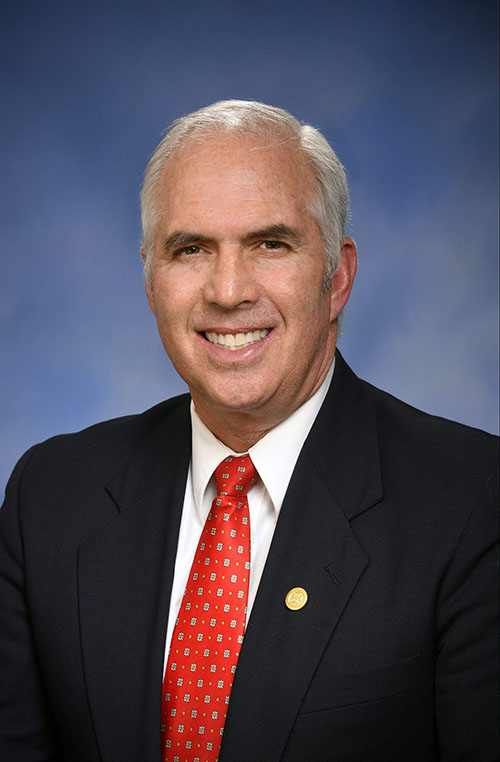
Rep. Jim DeSana
Sponsored bills
Maddy summaryHB 4938, the "Anticorruption of Public Morals Act," prohibits the online distribution of specific material defined as "prohibited" under the bill. It directly affects internet service providers, social media platforms, websites, and commercial entities by requiring them to block access to material including most pornographic content (depicting specific sexual acts, AI-generated sexual content, or content involving gender expression that "disconnects biology and gender"), with exceptions for scientific/medical research and academic content. Key mechanisms include mandatory filtering systems for ISPs, requirements for platforms to implement AI and human content moderation with 2-day response times for flagged content, and annual transparency reports. Violations carry criminal penalties (up to 25 years in prison or $125,000 fines) or civil fines of up to $500,000 per violation, enforced by a new Attorney General's division.
Maddy summaryThis resolution (HR 169) designates September 11-17, 2025, as "Patriot Week" in Michigan. It does not create new laws or policies but encourages Michigan residents, schools, and government agencies to honor American history, founding documents, and symbols during this week. The resolution specifically urges participation in activities that promote studying the nation's history and values, including recognition of the September 11, 2001, attacks and key historical figures and events. As a commemorative resolution, it has no direct legal or financial impact on individuals or entities.
Maddy summaryHB 4024 requires public K-12 schools to restrict student access to restrooms and changing areas based on biological sex. This policy directly affects all students in these schools, particularly those whose gender identity does not align with their biological sex. The bill establishes new requirements for schools to enforce this policy, mandating that facility access be determined by biological sex rather than gender identity. It passed the legislature with immediate effect on September 9, 2025, and is now in force.
Maddy summaryHR 160 is a ceremonial House resolution congratulating Pope Leo XIV on his election as the 267th pontiff of the Catholic Church and the first American-born pope. It recognizes his historic significance for American Catholics and commends his lifetime of service, humility, and commitment to pastoral care. The resolution does not enact policy or affect any individuals or groups; it is purely symbolic. It was introduced and adopted by the House on September 3, 2025, with no further legislative action required.
Maddy summaryThis bill proposes a constitutional amendment to set Michigan legislators' pay at $13.73 per hour starting January 2026, paid only for actual session and committee time attended. It requires reimbursement for mileage to Lansing at the IRS standard rate and prohibits additional compensation beyond these provisions. The amendment affects all Michigan state legislators directly, replacing current salary structures with this hourly-based system. The change must be approved by voters at the next general election.
Maddy summaryHB 4737 gradually reduces Michigan's corporate income tax rate over time. It sets a schedule where the rate starts at 6.0% for business activity before October 1, 2025, then steps down to 5.5% in 2025-2026, 5.25% in 2026-2027, 5.0% in 2027-2028, 4.75% in 2028-2029, 4.5% in 2029-2030, and finally 4.25% starting October 1, 2030. The bill directly affects corporations conducting business in Michigan, applying these changing rates to their taxable income base. It does not alter the tax base calculations or other provisions of the corporate income tax code.
Maddy summaryHB 4516 amends Michigan's unemployment benefits law to clarify when workers lose eligibility for benefits due to leaving jobs. It shifts the burden of proof to claimants to prove they left work "involuntarily" for employer-related reasons, rather than assuming voluntary departure. The bill adds specific exceptions where benefits aren't charged to employers, including for domestic violence victims, military spouses relocating due to service, and part-time workers switching employers. These changes directly affect unemployed workers applying for benefits who left their jobs, ensuring clearer standards for disqualification and employer accountability.
Maddy summaryThis resolution urges Michigan county sheriffs and local law enforcement agencies to join 287(g) agreements with U.S. Immigration and Customs Enforcement (ICE). It encourages these agencies to participate in a federal program that provides training and oversight, allowing designated officers to identify, detain, and process individuals who entered or reentered the U.S. illegally and are arrested for crimes. The resolution states this collaboration aims to enhance public safety by prioritizing the removal of criminal aliens, such as those involved in violence or drug trafficking. As a non-binding resolution, it does not change laws but formally requests local agencies consider these agreements to support federal immigration enforcement.
Maddy summaryHB 4655 prohibits Michigan state departments or licensing boards from requiring implicit bias training as a condition for health professional licensure or license renewal. The bill directly affects licensed healthcare workers (like nurses, doctors, and therapists) who would otherwise need to complete such training to obtain or maintain their licenses. It achieves this by amending Michigan's Public Health Code to add Section 16149, which bans the enforcement of rules mandating this training, and by rescinding a related section of the Michigan Administrative Code (MCL 338.7004). The bill removes a potential requirement for healthcare professionals seeking initial licensure or renewal.