

Maddy summaryHB 4422 raises the fees that licensed liquor distribution agents must pay to the state for operating under the current system. It directly affects authorized liquor distributors who hold state licenses to handle and sell alcoholic beverages. The bill increases the existing fee structure outlined in MCL 436.1205 without altering distribution rules or requirements. This change applies immediately following the bill's passage, as noted in the House vote.
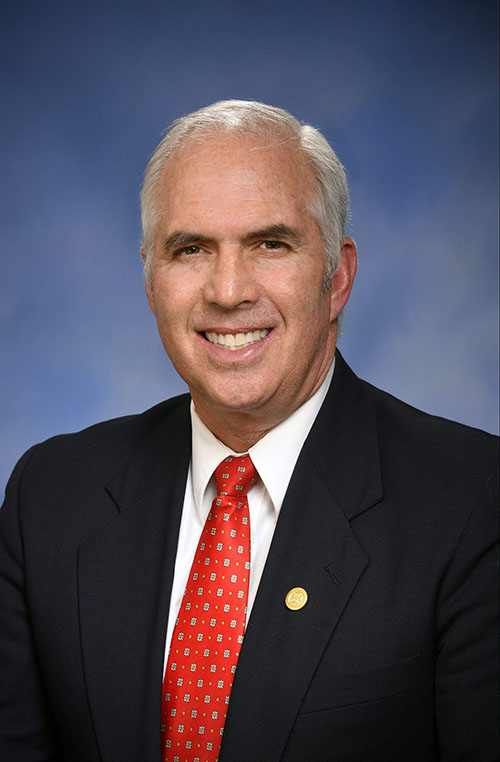
Rep. Jim DeSana
Sponsored bills
Maddy summaryThis resolution declares October 2025 as Italian-American Appreciation Month in Michigan. It directly recognizes the cultural contributions, historical impact, and community involvement of Italian-Americans in Michigan's development. The resolution does not create new laws or policies but formally designates a month for celebrating Italian-American heritage, including their roles in Michigan's neighborhoods, economy, and civic life. The declaration is symbolic and applies statewide.
Maddy summaryHB 4526 amends Michigan's condemnation law to clarify how courts review the "public necessity" of utility projects (like power lines) when property owners challenge them. It requires courts to hold hearings within 30 days of a challenge and decide within 60 days, prioritizing transmission line routes near public land, existing rights-of-way, or property boundaries. For private utility projects, courts must determine necessity based on evidence, while certificates from the Public Service Commission create a "prima facie" case for necessity. The bill also limits appeals of court rulings on necessity to require court permission, streamlining the process for utility companies and property owners.
Maddy summaryHB 4709 prohibits the construction of commercial wind turbines for electricity production in the Great Lakes or their connecting waters, and bans operating any such turbines built in violation of this rule. It directly affects commercial wind energy developers planning projects in these waters, preventing new installations. The bill also states that renewable energy credits cannot be issued for electricity generated by prohibited turbines, and allows the attorney general to seek court injunctions to stop violations. This amendment adds a specific environmental protection measure to Michigan's Clean Energy Act.
Maddy summaryHB 5096 prohibits Michigan state departments and agencies from creating or enforcing rules that apply different conditions, restrictions, or standards to vapor products (like e-cigarettes) compared to other products sold in the state. The bill directly affects state agencies, such as health or consumer protection departments, by preventing them from making separate regulations for vapor products. It requires that any rules governing vapor products must align with those applied to all other consumer products. This is a regulatory parity measure, not a ban on vapor products or their sale. The bill amends the Youth Tobacco Act to add this restriction as Section 1a.
Maddy summaryHB 5083 eliminates the state tax on wine sales in Michigan. The bill removes the existing tax rates (13.5 cents per liter for wine under 16% alcohol, 20 cents for higher-alcohol wine) from the Liquor Control Code, which currently applies to wine manufacturers and wholesalers. This change directly affects wine producers, distributors, and retailers by removing their obligation to pay this specific tax. The bill does not alter other provisions related to sacramental wine, mixed spirit drinks, or tax collection procedures.
Maddy summaryHB 5085 eliminates an excise tax on marijuana sales by amending sections 3 and 13 (MCL 333.27953 and 333.27963) of Michigan's 2018 Marijuana Regulation and Taxation Act. This change directly affects licensed marijuana businesses and consumers by removing a specific tax previously applied to marijuana products. The bill modifies the statutory definitions and tax provisions within the existing regulatory framework without altering other aspects of marijuana licensing or sales rules. It is currently in the early stages of the legislative process, having been introduced and referred to committee on September 26, 2025.
Maddy summaryHB 5084 proposes to eliminate Michigan's $6.30 per barrel tax on beer. This bill would remove the existing tax requirement for brewers, brewpubs, and wholesalers under the Liquor Control Code. The change would directly affect beer manufacturers and distributors who currently pay this tax on beer sold in Michigan. The bill focuses solely on removing the tax rate and related collection mechanisms, without adding new provisions or exemptions.
Maddy summaryThis resolution symbolically declares September 22-26, 2025, as Farm Safety and Health Week in Michigan. It recognizes the state's agricultural workforce (including approximately 44,000 farms) and aligns with the national observance focused on safety practices like equipment handling, rural roadway safety, and youth protection on farms. As a ceremonial resolution, it does not create new laws or directly affect any individuals or entities. The declaration serves to honor agricultural workers and promote safety awareness during peak farming season.
Maddy summaryHB 4975 requires Michigan electric utilities to automatically provide residential customers with $100 credits on their bills if they experienced 4 or more power outages lasting over an hour in the past year, or $200 credits for more than 4 outages. The bill mandates these credits be applied without customer action, directly benefiting households with frequent service disruptions. Credits will adjust every five years based on inflation using the Detroit-area Consumer Price Index, with changes announced by June 1 each adjustment year. This policy change aims to compensate for unreliable service through automatic billing adjustments under Michigan's utility regulations.