

Maddy summaryHB 4652 requires Michigan's governor to announce a special election date to fill a vacant legislative seat within 30 days of the vacancy occurring, and to hold that election within 180 days. This bill directly affects state senators and representatives whose seats become vacant during their term, as it sets strict deadlines for filling those positions. The key mechanism establishes clear timeframes for the governor to act, replacing previous flexibility with fixed deadlines under Michigan's election law. It amends sections 178, 634, and 641 of the Michigan Election Code to enforce these timelines. The bill does not change how vacancies may be filled at the next general election if the governor chooses that option.
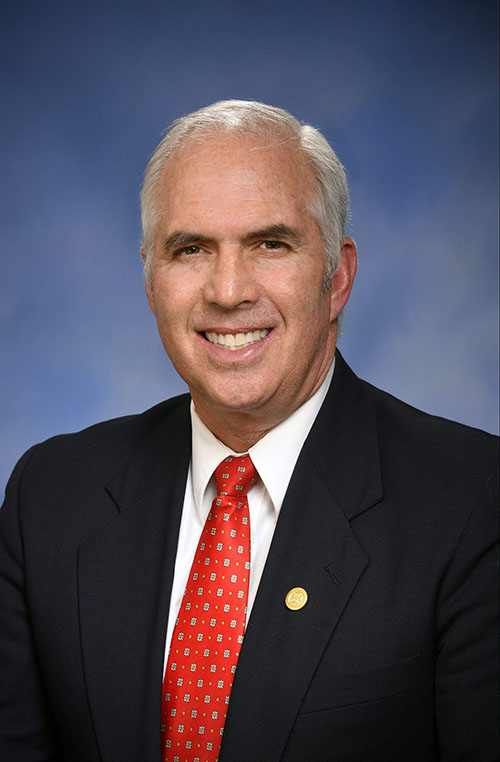
Rep. Jim DeSana
Sponsored bills
Maddy summaryHB 4653 sets specific timelines for holding special elections to fill vacant legislative seats in Michigan. It requires the governor to announce the special election date within 30 days of a vacancy occurring and mandates that the election be held no later than 180 days after the vacancy begins. The bill directly affects voters in districts with vacancies and the governor's office, establishing clear deadlines for the election process. This procedural bill amends Michigan's election law to standardize the timeline for filling legislative vacancies, ensuring elections occur within defined windows.
Maddy summaryThis bill amends Michigan's Natural Resources and Environmental Protection Act to clarify that fur harvester license holders may hunt coyotes year-round. It directly affects licensed hunters who hold a fur harvester's license, removing ambiguity about year-round coyote hunting eligibility. The key change updates Section 43531(4) to explicitly permit year-round coyote hunting under the existing license framework, without altering fees or other license requirements.
Maddy summaryHB 4559, the "Promotion of Governmental Services Act," requires Michigan state agencies and local governments (like counties or cities) to stop using the word "free" when advertising services funded by taxes, fines, or fees. Instead, they must use the phrase "taxpayer funded" in all promotional materials. The bill directly affects how government entities market services such as public libraries, parks, or community programs that cost residents nothing out-of-pocket. This change aims to clarify that these services are supported by public money, not truly cost-free. The bill is currently in committee after being introduced on June 5, 2025.
Maddy summaryHB 4552 prevents Michigan health authorities from creating stricter rules that would exclude unvaccinated students from school outside of epidemics. It specifically blocks the Department of Health and Human Services from promulgating rules allowing school exclusion based on lack of vaccination documentation, except during disease outbreaks. The bill preserves existing exemption processes for medical or religious reasons, prohibiting new requirements or forms for these exemptions. This directly affects schools, health departments, and families seeking vaccine exemptions under current law.
Maddy summaryHB 4553 strengthens Michigan school immunization requirements by prohibiting schools from accepting less stringent exemption rules than state standards. It requires children enrolling in public or nonpublic schools (or entering grade 7 for the first time) to submit one of three documents: a physician’s immunization statement, a parent/guardian religious exemption form, or a physician’s compliance-in-progress statement. The bill also mandates annual reporting of student immunization and vision screening status (for kindergarten) to health departments. It directly affects all Michigan schools, parents/guardians of enrolled students, and local health departments responsible for data reporting. The bill is tied to companion legislation (HB 4552) and is currently in committee referral.
Maddy summaryThis bill proposes a constitutional amendment to Michigan's budget rules (Article IX, Section 28), directly affecting how the state sets annual spending limits. It replaces current spending caps with a new formula tying budget growth to inflation, population changes, and voter-approved revenue increases. Any state revenue exceeding this calculated limit must be refunded to taxpayers via law. The amendment modifies how the legislature calculates yearly spending authority, requiring excess funds to flow back to citizens rather than remaining in the state budget.
Maddy summaryThis resolution proposes impeaching Michigan Secretary of State Jocelyn Benson under Article XI, Section 7 of the Michigan Constitution, alleging she violated her oath by exceeding her legal authority and breaching election laws. It specifically cites her failure to follow state rulemaking procedures (Administrative Procedures Act) when issuing election guidance, ignoring court rulings on her policies, and an affiliated PAC's campaign contribution to a Supreme Court justice during an active case challenging her actions. The resolution formally directs impeachment proceedings against her for "corrupt conduct in office and for crimes and misdemeanors." It does not enact new policy but initiates a constitutional process to remove her from office.
Maddy summaryHB 4203 amends Michigan's Vehicle Code to revise exemptions for tow trucks, wreckers, and road service vehicles from seasonal weight restrictions on state highways. The bill allows these vehicles to operate during restricted periods (typically winter months) when responding to emergencies or providing essential roadside assistance. This change directly affects towing and road service companies by permitting them to operate under weight limits they previously could not during certain seasons. The amendment applies specifically to vehicles performing emergency response or required road service functions.
Maddy summaryHB 4469 amends Michigan's Elliott-Larsen Civil Rights Act to allow K-12 public and private schools subject to Title IX (federal education law) to base athletic participation eligibility on a student's biological sex as listed on their original birth certificate. This specifically exempts schools from the state's anti-discrimination law when determining sports team placement for students in grades K-12. The provision directly affects K-12 educational institutions, enabling them to use birth certificate sex as the criterion for athletic eligibility rather than other factors. The bill creates a clear policy change by overriding the general anti-discrimination protections in the civil rights law for this specific athletic context.