

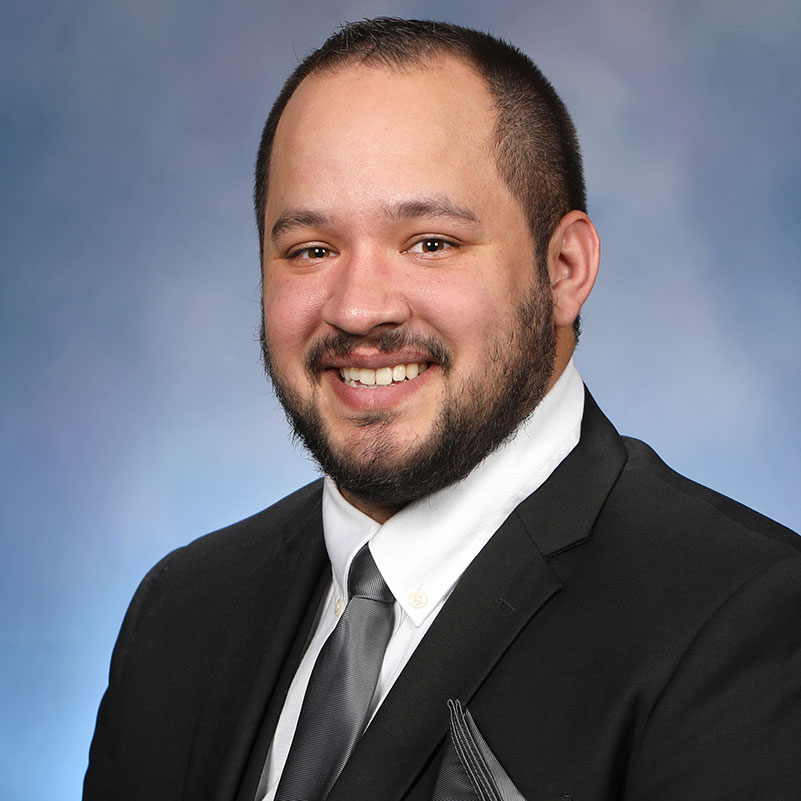
Photo of Dylan Wegela
D Michigan House · District 26 On the 2026 ballot

Rep. Dylan Wegela

Compare
Total votes
1,831
all sessions
Attendance
100%
5 missed
Higher than 83% of chamber peers
With party
82%
of cast votes
Lower than 99% of chamber peers
Bipartisan score
9%
crosses aisle rarely
Higher than 97% of chamber peers
Sponsored
755
bills & resolutions
Near the chamber average
Committees
3
assignments
755 bills and resolutions

Sponsored bills

Total
755
Primary
42
Co-sponsor
713
This page
755
matching current filters
Co-sponsor HB 5954
In committee · Michigan House · Co-sponsor
Labor: hours and wages; scheduling standards for certain employers; provide for. Creates new act.

Maddy summaryThis Michigan bill, known as the Employee Fair Scheduling Act, establishes new rules for larger employers in retail, hospitality, and food service industries to provide more predictable work schedules. It requires companies with at least 20 employees to give new hires a written estimate of their expected hours and to post detailed work schedules at least 14 days in advance. The legislation also mandates compensation for certain last-minute schedule changes, allows employees to request schedule adjustments, and prohibits retaliation against workers who exercise these rights.

In committee May 13, 2026 1 co-sponsor
Co-sponsor HB 5928
In committee · Michigan House · Co-sponsor
Property: land sales; purchase of residential property by certain businesses; prohibit. Creates new act. TIE BAR WITH: HB 5929'26

Maddy summaryThis bill, titled the "Homes Are for People Act," prohibits hedge funds from purchasing or owning single-family homes in Michigan. It defines a hedge fund as an organization managing at least $50 million in assets and a single-family home as a property with one to four units that is not a vacant foreclosure or a government-funded project. While new purchases by these funds are banned, the law allows hedge funds to keep any single-family homes they already own when the act takes effect. Any property acquired in violation of this rule would be subject to legal forfeiture.

In committee May 12, 2026 1 co-sponsor
Co-sponsor HB 5925
In committee · Michigan House · Co-sponsor
Corporate income tax: deductions; federal deduction for certain outsourcing expenses; add back. Amends sec. 623 of 1967 PA 281 (MCL 206.623).

Maddy summaryHB 5925 amends Michigan's corporate income tax law to require companies to add back certain expenses related to outsourcing and relocating business operations out of the state. Specifically, the bill mandates that businesses must include specified outsourcing expenses in their taxable income if those costs were incurred to eliminate a trade or business located in Michigan or to relocate a business that was previously in the state to a new location outside of it. The legislation defines these eligible expenses as costs associated with ending or moving a business, such as permit fees, lease brokerage fees, and equipment installation costs. This change directly affects corporations with business activity in Michigan that have undertaken outsourcing or relocation activities, requiring them to pay additional state taxes on these specific expenditures.

In committee May 12, 2026 1 co-sponsor
Co-sponsor HB 5930
In committee · Michigan House · Co-sponsor
Property: land sales; property eligible for forfeiture; modify. Amends sec. 4702 of 1961 PA 236 (MCL 600.4702). TIE BAR WITH: HB 5928'26, HB 5929'26

Maddy summaryThis bill modifies Michigan's laws regarding the seizure and forfeiture of property connected to criminal activities. It directly affects property owners, creditors, and law enforcement agencies by clarifying which assets can be taken by the government. The legislation updates rules on what constitutes forfeitable property, specifically protecting primary residences of spouses and children unless they knew about and agreed to the crime, while also detailing protections for homeowners with unpaid land contracts and security interests. Additionally, it sets limits on how much money can be recovered from substituted proceeds, ensuring the government only takes the value of the original crime proceeds plus specific legal costs. The bill will only become effective if two related companion bills are also passed by the legislature.

In committee May 12, 2026 1 co-sponsor
Primary HB 5929
In committee · Michigan House · Lead sponsor
Property: land sales; definition of a crime as related to property eligible for forfeiture; modify. Amends sec. 4701 of 1961 PA 236 (MCL 600.4701). TIE BAR WITH: HB 5928'26, HB 5930'26

Maddy summaryThis bill updates Michigan's legal definitions regarding property forfeiture by specifying which crimes allow the government to seize assets. It directly affects individuals and businesses involved in offenses related to environmental protection, healthcare fraud, antitrust violations, securities law, and various criminal acts. The key mechanism is expanding the list of qualifying crimes to include specific violations of environmental and financial regulations, while also clarifying terms like "instrumentality," "proceeds," and "willful blindness" to ensure consistent application in court. By tying this legislation to companion bills, the measure ensures that these new definitions only take effect if the related procedural bills are also passed.

In committee May 12, 2026 0 co-sponsors
Co-sponsor HB 5924
In committee · Michigan House · Co-sponsor
Communications: broadcasting; regulations regarding volume of commercial advertisements; provide for. Creates new act.

Maddy summaryThis bill, known as the Commercial Advertising Loudness Mitigation Act, would require video streaming services in Michigan to ensure that commercial advertisements are not louder than the accompanying video content. Starting July 1, 2027, these services must regulate audio levels so that ads do not exceed the volume of the programs or videos they interrupt. The law applies to internet-based streaming platforms but excludes traditional television stations, cable operators, and services that do not include ads. Violations of this rule could result in a civil fine of up to $10,000 for each instance, which would be collected by the state attorney general and deposited into the general fund.

In committee Apr 30, 2026 1 co-sponsor
Co-sponsor HR 301
Passed · Michigan House · Co-sponsor
A resolution to declare May 4-10, 2026, as Maternal Mental Health Awareness Week in the state of Michigan.

Maddy summaryThis bill designates the week of May 4-10, 2026, as Maternal Mental Health Awareness Week in Michigan. It aims to highlight the importance of recognizing postpartum depression and other maternal mental health issues among women of all backgrounds. The resolution encourages the public and healthcare providers to share information about warning signs and available resources during this designated period. By setting aside this specific time frame, the bill seeks to reduce stigma and promote awareness rather than implementing new laws or funding changes.

Passed Apr 30, 2026 1 co-sponsor
Co-sponsor HR 300
Passed · Michigan House · Co-sponsor
A resolution to declare May 4-8, 2026, as Teacher Appreciation Week in the state of Michigan.

Maddy summaryThis bill designates the week of May 4-8, 2026, as Teacher Appreciation Week throughout Michigan. It directly affects teachers, students, parents, and the general public by encouraging them to recognize and thank educators for their contributions. The resolution contains no new laws or funding, but rather serves as a formal declaration to honor the teaching profession.

Passed Apr 30, 2026 1 co-sponsor
Co-sponsor HB 5897
In committee · Michigan House · Co-sponsor
Environmental protection: hazardous waste; Michigan PFAS action response team; establish. Creates new act.

Maddy summaryThis bill creates the Michigan PFAS action response team (MPART), a new state entity dedicated to addressing contamination from PFAS chemicals, commonly known as 'forever chemicals.' The team will be composed of directors from various state departments, including environmental protection and health services, who will work together to identify affected sites, develop cleanup plans, and coordinate public health responses. MPART is authorized to conduct investigations, hire experts, share information with local and federal agencies, and recommend changes to existing laws to better manage environmental and public safety threats related to PFAS.

In committee Apr 28, 2026 1 co-sponsor
Co-sponsor HB 5898
In committee · Michigan House · Co-sponsor
Environmental protection: hazardous products; citizen's advisory working group; establish. Creates new act. TIE BAR WITH: HB 5897'26

Maddy summaryThis bill creates a new Citizen's Advisory Working Group within the Michigan Department of Environment, Great Lakes, and Energy to assist with PFAS contamination efforts. The group will be made up of current or former residents from communities affected by PFAS contamination, and its members will serve without pay but can receive reimbursement for necessary expenses. The group's main duties include advising the Michigan PFAS Action Response Team on community outreach, reviewing existing strategies, and making recommendations to improve public awareness of health risks related to PFAS.

In committee Apr 28, 2026 1 co-sponsor
Showing 61 to 70 of 755 bills
Previous 1 6 7 8 76 Next