

Maddy summaryHouse Bill 4465 amends Michigan's criminal procedure to establish guidelines for taking booking photographs of individuals wearing religious garb during an arrest. It requires law enforcement to make reasonable efforts to provide a same-sex officer or staff member and a private setting for the removal of religious head coverings for photographs, if requested due to sincerely held religious beliefs. The bill outlines specific photo procedures, including taking pictures with and without certain coverings, primarily for identification. Photos taken without religious garb are generally confidential but may be used for specific law enforcement, investigative, or legal purposes. Additionally, it ensures replacement religious garb is provided for individuals not immediately released.
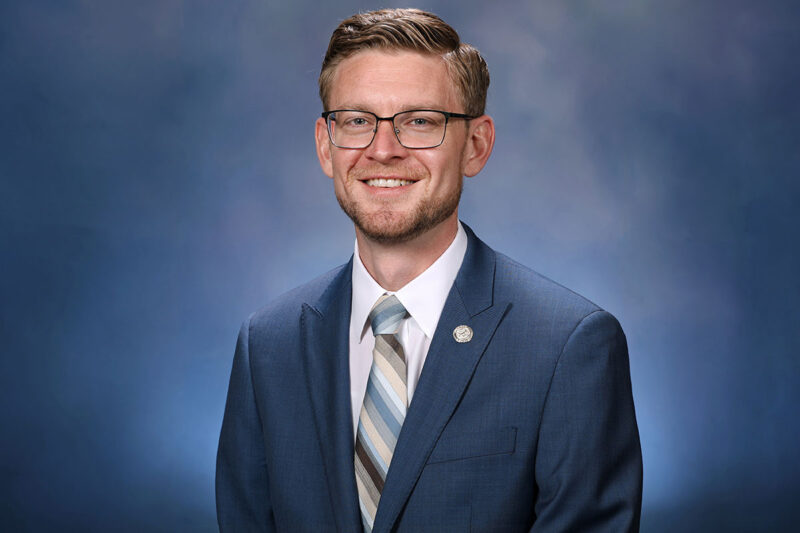
Rep. Peter Herzberg
Sponsored bills
Maddy summaryHouse Bill No. 4249 proposes to adjust and supplement state funding for various state departments, agencies, the judicial branch, and the legislative branch. It specifically aims to provide funding for ambulance providers. The bill outlines the conditions for the expenditure of these appropriations for the fiscal year ending September 30, 2025.
Maddy summaryHouse Resolution 89 is a resolution introduced in the Michigan House of Representatives. It formally affirms the constitutional right of the people of Michigan to propose and approve amendments to the state's constitution. This right includes amendments that impact federal elections, such as those passed as Proposal 3 of 2018 and Proposal 2 of 2022. The resolution underscores the ability of Michigan citizens to directly participate in amending their state's foundational document.
Maddy summaryHB 4288 prohibits Michigan state agencies from hiring for unclassified positions based on factors other than objective merit, such as education or work experience. It directly affects state agencies hiring for roles outside the classified civil service (e.g., certain executive branch positions). The bill requires hiring decisions to rely solely on merit-based criteria and imposes civil fines of up to $10,000 per violation, with the attorney general authorized to collect penalties. This legislation creates new requirements for state hiring practices under Michigan law.
Maddy summaryHouse Resolution No. 83 declares April 30-May 6, 2025, as Junior Achievement Week in the state of Michigan. This resolution recognizes Junior Achievement's contributions to financial literacy education for youth across the state.
Maddy summaryHouse Bill 4389 proposes to establish a new fee on the disposal of hazardous waste in Class I multisource commercial injection wells in Michigan. Owners and operators of these wells would pay 0.417 cents per gallon of waste injected, generally assessing this fee against off-site waste generators. The collected fees would be deposited into a new "disposal well host community fund." This fund would then provide annual grants to cities and townships hosting these wells to promote public health, safety, or welfare in their jurisdictions. The bill also includes provisions for annual fee adjustments based on inflation and outlines specific waste types that are exempt from the fee.
Maddy summaryHB 4393 proposes amendments to Michigan's Natural Resources and Environmental Protection Act. The bill aims to increase disposal fees for hazardous waste and landfills. Additionally, it seeks to introduce limitations on certain types of disposal wells and the disposal of Technologically Enhanced Naturally Occurring Radioactive Material (TENORM). These changes would directly impact entities involved in hazardous waste management, landfill operations, and specific disposal well activities within the state.
Maddy summaryHB 4260 redirects $115 million annually from Michigan's 4% general sales tax revenue into the Public Safety and Violence Prevention Fund starting with the 2025-2026 fiscal year. This change affects state budget allocations, shifting funds previously going to the general fund toward public safety and violence prevention programs. The bill amends Michigan's General Sales Tax Act (MCL 205.75) to establish this specific annual transfer, with the amount adjusted based on actual tax collections. It does not create new taxes but reallocates existing revenue streams.
Maddy summaryHB 4261 creates the Public Safety and Violence Prevention Fund within Michigan's trust fund system. It establishes the fund using money from the general sales tax (Section 25 of 1933 PA 167), donations, and investment earnings, with funds permanently staying in the account instead of lapsing to the general fund. Starting September 30, 2026, the state treasurer will distribute the fund’s revenues: 2% to health services for community violence intervention grants, 2% to crime victim funds, and the remainder based on each city/village/township’s violent crime rate (with a 5% reduction for areas not meeting crime reduction targets). This directly affects local governments receiving funds, the Department of Health and Human Services (administering grants), and crime victim programs.
Maddy summaryHouse Bill 4370 proposes a new individual income tax credit for Michigan taxpayers, directly affecting eligible students and their families. Beginning in tax year 2026, taxpayers could claim a credit equal to the sales or use tax paid on textbooks purchased for themselves or their dependents. To qualify, the student must be enrolled in an eligible Michigan institution and meet specific financial aid criteria, such as being a Federal Pell Grant recipient or a professional/graduate student who would have been Pell-eligible based on financial need. Any portion of the credit that exceeds a taxpayer's liability would be refunded.