

Maddy summaryHB 4385 amends Michigan's shoreland protection law to allow property owners to install temporary erosion control structures without a permit during high water events. This directly affects homeowners and landowners near water bodies who face immediate erosion risks during flooding. The bill removes the standard permitting requirement for these temporary structures when water levels are high, as defined by the law. It modifies specific sections of the Natural Resources Code (MCL 324.32312 et seq.) and adds a new provision (32510a) to enable this change. The bill is currently in committee review.
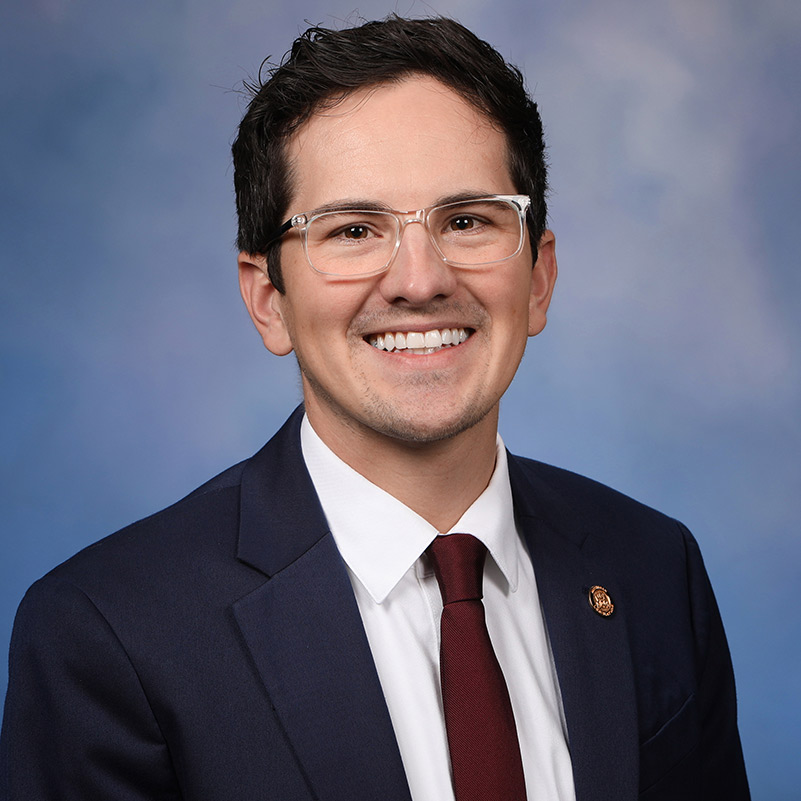
Rep. Jason Morgan
Sponsored bills
Maddy summaryHB 4661 creates a grant program to help Michigan law enforcement agencies modernize communication with crime victims using text messages, emails, and multilingual support. It requires agencies to provide automated updates (like arrest notifications or case status changes) without requiring victims to download apps or create accounts. The bill establishes a fund to distribute grant money to state/local agencies, law enforcement, or local governments that meet specific standards for transparent, efficient communication. These standards include real-time notifications, community feedback tools, and multilingual messaging options accessible through simple email or text. The law directly affects crime victims receiving updates and agencies managing victim communication systems.
Maddy summaryHB 4662 allows Michigan courts, law enforcement, and other agencies to send crime victim notices (like case updates) via email or text message, in addition to traditional mail, when victims consent and provide contact details. Agencies must follow state communication standards and cannot use electronic notices if a victim has opted out. This update to the Crime Victim's Rights Act modernizes notification methods while ensuring victims retain full control over how they receive information. It directly affects crime victims in Michigan whose cases involve these notification processes.
Maddy summaryThis resolution declares June 12, 2025, as "Black Men Awareness Day" in Michigan. It is a symbolic recognition meant to honor Black men's contributions to Michigan's history, culture, and communities. The resolution does not create new laws, policies, or funding mechanisms - it solely establishes a designated day for awareness. It directly affects Michigan residents through this official state acknowledgment. The bill was introduced and adopted by the Michigan House of Representatives on June 12, 2025.
Maddy summaryHB 4600 amends Michigan's law on terrorism threats and false reports, specifically modifying Section 543m of the Penal Code. The bill clarifies that making a threat of terrorism (even without intent to carry it out) or knowingly reporting a false terrorism incident can be prosecuted as a felony. It removes the defense that a defendant lacked the intent or capability to commit the threatened act. This law directly affects individuals who make threatening communications about terrorism or falsely report terrorism incidents, with penalties including up to 20 years in prison or a $20,000 fine. The bill was introduced on June 10, 2025, and referred to the Judiciary Committee.
Maddy summaryHB 4603 imposes a progressive surcharge on Michigan corporations required to disclose pay ratios under federal SEC rules (17 CFR 229.402(u)). The surcharge rate (0% to 50%) increases based on the corporation's disclosed CEO-to-median-worker pay ratio, starting October 1, 2025. It applies only to corporations already filing these SEC disclosures, with rates rising from 0% for ratios under 50:1 up to 50% for ratios of 500:1 or higher. The surcharge is calculated on the corporation’s state tax liability before credits and is administered under Michigan’s existing tax laws. It does not apply to corporations not required to file state tax returns.
Maddy summaryHB 4604 updates Michigan's law recognizing out-of-state marriages to use gender-neutral language, removing the current reference to "a man and a woman." It repeals the provision that deemed same-sex marriages invalid under Michigan law for recognition purposes. The bill would ensure marriages legally performed in other states - regardless of the spouses' gender - are recognized as valid in Michigan. However, this change is conditional: it only takes effect if the related constitutional amendment (HJR F'25) is approved by voters. This affects how Michigan law treats marriages solemnized in other states, not Michigan's own marriage eligibility rules.
Maddy summaryHB 4616 updates Michigan's marriage laws to remove gender-specific language. It amends sections 2, 3, and 9 of the 1846 Revised Statutes (MCL 551.2, 551.3, and 551.9) to replace terms like "man and woman" with gender-neutral language, affecting all couples entering marriage in Michigan. The bill removes gender references from the definition of marriage, prohibited relationships, and the solemnization requirements. It repeals outdated sections (MCL 551.1 and 551.4) that contained gendered language. The change applies to all marriage contracts and ceremonies under current law.
Maddy summaryHB 4613 updates Michigan law to replace gender-specific terms like "husband and wife" with "spouses" in rules about joint ownership of personal property. It clarifies that certain personal property (such as bonds, stocks, or promissory notes) held by married couples will automatically be considered joint tenancy with survivorship rights - meaning the surviving spouse inherits the property - unless the document specifies otherwise. This change applies to personal property, not real estate, and aligns existing rules with modern marriage terminology. The bill requires a constitutional amendment (HJR F'25) to take effect, as noted in its enacting section.
Maddy summaryHB 4615 updates Michigan's Uniform Veterans' Guardianship Act to remove gendered language. It replaces references like "his wife" with the gender-neutral term "spouse" in Section 13 (MCL 35.83), ensuring the law applies equally to all veterans under guardianship regardless of their spouse's gender. This change directly affects veterans who have appointed guardians and their spouses, making the legal language inclusive without altering existing support or maintenance provisions for wards.