

Maddy summaryThis bill modifies Michigan's laws regarding the seizure and forfeiture of property connected to criminal activities. It directly affects property owners, creditors, and law enforcement agencies by clarifying which assets can be taken by the government. The legislation updates rules on what constitutes forfeitable property, specifically protecting primary residences of spouses and children unless they knew about and agreed to the crime, while also detailing protections for homeowners with unpaid land contracts and security interests. Additionally, it sets limits on how much money can be recovered from substituted proceeds, ensuring the government only takes the value of the original crime proceeds plus specific legal costs. The bill will only become effective if two related companion bills are also passed by the legislature.
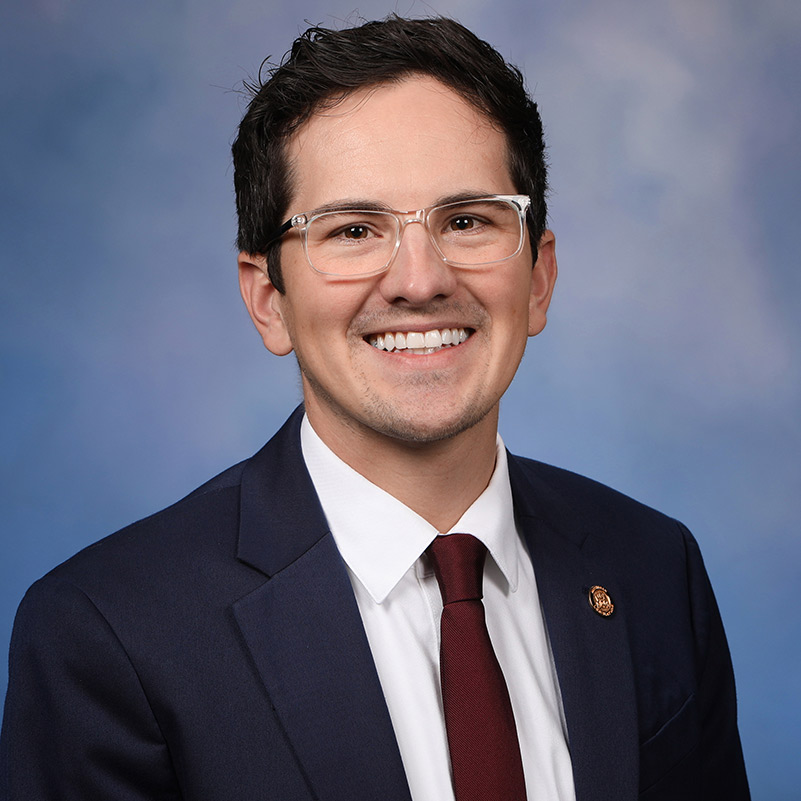
Rep. Jason Morgan
Sponsored bills
Maddy summaryThis bill updates Michigan's legal definitions regarding property forfeiture by specifying which crimes allow the government to seize assets. It directly affects individuals and businesses involved in offenses related to environmental protection, healthcare fraud, antitrust violations, securities law, and various criminal acts. The key mechanism is expanding the list of qualifying crimes to include specific violations of environmental and financial regulations, while also clarifying terms like "instrumentality," "proceeds," and "willful blindness" to ensure consistent application in court. By tying this legislation to companion bills, the measure ensures that these new definitions only take effect if the related procedural bills are also passed.
Maddy summaryThis bill, known as the Commercial Advertising Loudness Mitigation Act, would require video streaming services in Michigan to ensure that commercial advertisements are not louder than the accompanying video content. Starting July 1, 2027, these services must regulate audio levels so that ads do not exceed the volume of the programs or videos they interrupt. The law applies to internet-based streaming platforms but excludes traditional television stations, cable operators, and services that do not include ads. Violations of this rule could result in a civil fine of up to $10,000 for each instance, which would be collected by the state attorney general and deposited into the general fund.
Maddy summaryThis resolution designates May 2026 as Motorcycle Safety Awareness Month in Michigan to promote safer riding practices among the state's 228,926 registered motorcycle owners. The measure encourages riders to wear protective gear, maintain their vehicles properly, and follow traffic laws while also urging other drivers to be more vigilant when sharing the road with motorcycles. As a symbolic gesture rather than a law with enforceable penalties, the bill aims to raise public awareness about the importance of defensive driving and rider education. It was introduced by Representative Gregory Alexander and adopted by the House of Representatives to highlight the shared responsibility of all road users in preventing crashes and fatalities.
Maddy summaryThis bill designates the week of May 4-8, 2026, as Teacher Appreciation Week throughout Michigan. It directly affects teachers, students, parents, and the general public by encouraging them to recognize and thank educators for their contributions. The resolution contains no new laws or funding, but rather serves as a formal declaration to honor the teaching profession.
Maddy summaryThis resolution officially designates May 2026 as Jewish American Heritage Month within the state of Michigan. It aims to honor the history, culture, and contributions of American Jews to the state and the nation. The measure does not change laws or create new programs but serves as a formal declaration of recognition.
Maddy summaryThis bill creates the Michigan PFAS action response team (MPART), a new state entity dedicated to addressing contamination from PFAS chemicals, commonly known as 'forever chemicals.' The team will be composed of directors from various state departments, including environmental protection and health services, who will work together to identify affected sites, develop cleanup plans, and coordinate public health responses. MPART is authorized to conduct investigations, hire experts, share information with local and federal agencies, and recommend changes to existing laws to better manage environmental and public safety threats related to PFAS.
Maddy summaryThis bill creates a new Citizen's Advisory Working Group within the Michigan Department of Environment, Great Lakes, and Energy to assist with PFAS contamination efforts. The group will be made up of current or former residents from communities affected by PFAS contamination, and its members will serve without pay but can receive reimbursement for necessary expenses. The group's main duties include advising the Michigan PFAS Action Response Team on community outreach, reviewing existing strategies, and making recommendations to improve public awareness of health risks related to PFAS.
Maddy summaryThis bill, known as the Hazardous Products Act, would ban the sale and manufacture of household items containing intentionally added PFAS chemicals starting in 2027. The legislation specifically targets a wide range of consumer goods, including clothing, carpets, cookware, cosmetics, baby products, and upholstery, while explicitly excluding military equipment and personal protective gear. To enforce these restrictions, the bill establishes penalties for violations, ranging from misdemeanor fines for first offenses to felony charges for repeat offenders, and grants individuals the right to sue for damages or seek court orders to stop non-compliant production.
Maddy summaryThis bill creates a grant program within Michigan's Natural Resources and Environmental Protection Act to assist farmers whose land, crops, or water are contaminated with PFAS chemicals. The program would provide financial aid for medical testing, purchasing or selling land, cleaning up contamination, and replacing lost income or mortgage payments. Funding for these grants would come from a new state fund, potentially financed by increased fines on large corporations that violate environmental laws. Farmers applying for assistance would need to submit detailed financial records and a plan explaining how they intend to use the funds. The bill also defines specific criteria for what constitutes PFAS contamination and outlines the process for the state department to administer the program.