

Maddy summaryThis bill updates Michigan's public health code to allow occupational therapists and occupational therapy assistants to practice under a national licensure compact. The key provision authorizes individuals who hold a compact privilege from other states to engage in practice within Michigan as if they were fully licensed under state law. By incorporating this compact, the legislation aims to facilitate easier mobility for these healthcare professionals across state lines while maintaining the same professional standards and obligations. The changes apply directly to occupational therapy practitioners and the facilities that employ them, ensuring that out-of-state compact members are recognized and regulated consistently with local licensees.
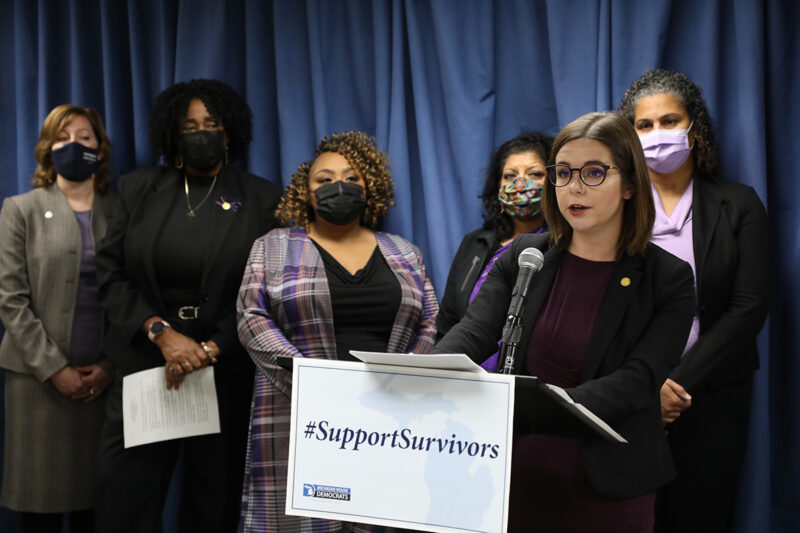
Rep. Laurie Pohutsky
Sponsored bills
Maddy summaryThis bill proposes minor technical corrections to Michigan's Code of Criminal Procedure, specifically updating a cross-reference within the sentencing guidelines section. The legislation does not introduce new laws or alter existing penalties but instead ensures that internal references in the statute accurately reflect recent amendments made to other sections. By updating these citations, the bill aims to maintain consistency and clarity in how sentencing rules are applied by courts. Directly affected parties are legal professionals and judges who rely on the code for sentencing decisions, though the changes are administrative rather than substantive.
Maddy summaryThis bill adds a new section to Michigan's civil procedure laws to allow the state and private citizens to sue firearm industry members for creating a public nuisance through the sale, manufacture, or marketing of firearms and related products. The legislation requires these companies to implement reasonable controls to prevent sales to prohibited individuals, stop product theft, and avoid promoting illegal use, while holding them liable for foreseeable harm caused by their products even if third parties acted unlawfully. If a violation occurs, the attorney general or an injured person can seek court orders to stop the conduct, force the company to pay for cleanup, and recover compensatory and punitive damages along with legal fees. The bill explicitly defines key terms such as "firearm industry member" and "firearm-related product" to include items like 3D printers and accessories that enhance a gun's firing capabilities, ensuring the law covers a broad range of items. Additionally, the statute clarifies that proving intent to harm is not necessary to win a case and does not limit existing legal rights under other state laws.
Maddy summaryThis bill creates a task force to improve Michigan's low-income water affordability program by bringing together representatives from various water providers, community agencies, and advocacy groups. The task force will develop new guidance, create educational materials, and explore ways to expand the program to help more households afford their water and sewer bills. Additionally, the bill outlines how state funds will be distributed to cover the difference between actual utility bills and discounted rates, as well as to assist with necessary plumbing repairs. The legislation will only take effect if three related Senate bills are also passed into law.
Maddy summaryHB 6185 amends Michigan's firearm laws to require federally licensed dealers to sell guns with a trigger lock or a secure storage container, unless the buyer provides their own safety device or the firearm is an antique. The bill also mandates that dealers provide free safety brochures and warning notices to purchasers and retain records of these transactions for six years. Additionally, the legislation clarifies that firearm manufacturers and producers are generally immune from civil lawsuits by local governments, except in cases involving specific contract breaches or product defects that cause injury to government employees or property. This provision aims to limit liability for manufacturers while reserving the right for the state attorney general to bring certain legal actions.
Maddy summaryThis bill amends the Michigan Gaming Control and Revenue Act to require local labor unions representing casino employees to register with the state board and submit detailed personal information about their designated officials and staff. The new provisions mandate that unions provide extensive data, including full names, addresses, compensation details, criminal history, and photographs for these individuals, with the option to use existing U.S. Department of Labor reports to satisfy some requirements. Additionally, the legislation establishes a disqualification process that allows the board to bar union officers from negotiating wages or collecting dues if they have convictions for specific crimes such as gambling, theft, fraud, or prostitution, provided there is clear and convincing evidence of a pattern of behavior. Information submitted under this section is exempt from public disclosure under the state's freedom of information act, and the board retains the authority to waive disqualifications or rescind bans based on a finding that justice requires it.
Maddy summaryThis bill updates Michigan's corrections code to improve mental health care and HIV testing for incarcerated individuals. It requires facilities to create detailed discharge plans for people leaving prison who are receiving mental health services, including specific assessments, medication continuity, and connections to community care. Additionally, the legislation mandates that all incoming prisoners undergo HIV testing within 60 days of arrival, with positive results triggering specific housing protocols and counseling. The bill also establishes requirements for staff exposure to blood or body fluids and calls for ongoing education programs on HIV prevention and treatment within correctional facilities.
Maddy summaryThis bill proposes to update Michigan's sentencing guidelines to include specific rules for crimes committed to prevent access to health care facilities. It directly affects individuals charged with offenses such as blocking entry to hospitals or clinics, ensuring these acts are treated under established legal frameworks. The key mechanism involves amending an existing section of the state's criminal procedure code to formally define and guide sentencing for these particular violations. By clarifying how these crimes should be punished, the legislation aims to provide consistent judicial outcomes without changing the underlying definitions of the offenses themselves.
Maddy summaryThis bill, known as the Judicial Protection Act, establishes new safety and privacy measures for judges in Michigan and their immediate family members. It allows judges to request that government agencies and private entities stop sharing specific personal details, such as home addresses, phone numbers, and financial information, with the public. To enforce this, the law creates a formal process where judges can submit written requests to remove or prevent the posting of this sensitive data. The protections apply to state, federal, and tribal court judges within the state, as well as their spouses, children, parents, and other relatives living at the same address.
Maddy summaryThis bill amends Michigan's no-fault insurance laws to correct cross-references and clarify how benefits are paid in specific situations. It primarily affects drivers, passengers, and their families by updating the rules for claiming personal protection insurance benefits when multiple policies are involved or when traveling in certain vehicles like school buses and ride-share cars. The legislation establishes a clear order of priority for insurers to pay claims in motorcycle accidents and clarifies how benefits are distributed when an injured person is covered by more than one policy. Additionally, it ensures that transportation network company vehicles, such as those used by ride-sharing apps, are properly included in the existing insurance coverage framework.