

Maddy summaryHB 5182 amends Michigan's worker compensation law to clarify injured workers' access to medical care. It requires employers to provide payment for treatment from a worker's chosen doctor within 10 days of notice, or face a $100 daily penalty (capped at $25,000). The bill also establishes a preauthorization process for medical treatments, requiring employers to respond to requests within 10 business days or risk delays in care. These changes directly affect injured workers seeking medical treatment and employers/carriers responsible for covering costs under the law.
Rep. Laurie Pohutsky
Sponsored bills
Maddy summaryHB 5165 requires Michigan's Department of Environment to transition from paper-based to electronic submissions for environmental compliance documents related to underground storage tanks starting October 1, 2026. It directly affects businesses managing underground fuel tanks, as well as other entities submitting registrations, inspection reports, and test results under Part 211 of Michigan's environmental law. The bill mandates a web-based digital system with features like mobile access, GPS tracking for facilities, embedded digital cameras for inspections, and 24/7 searchable document storage. This replaces current paper-based processes with a standardized electronic platform for all required submissions. The key change is making digital submission mandatory for all specified documents, improving data accessibility and management for the department.
Maddy summaryHB 5177 expands Michigan's workers' compensation coverage to include specific volunteer roles by amending the definition of "employee" in the Worker's Disability Compensation Act. It directly affects on-call members of volunteer underwater diving teams, safety patrol officers (including school volunteers), volunteer civil defense workers, and on-call members of life support agencies who are injured while performing duties - whether paid or unpaid. The bill ensures these volunteers receive full workers' compensation benefits, including wage replacement calculated using the state average weekly wage at the time of injury. This change extends existing protections to these volunteer groups without altering their status as non-employees under other laws.
Maddy summaryThis resolution urges the Trump administration and USDA to use existing emergency funds to continue SNAP food assistance benefits for 42 million Americans who would lose them on November 1 if the federal government remains shut down. It directly affects low-income households, including 1.4 million Michiganders, who rely on SNAP to afford food and other essentials. The bill cites prior government practice and GAO confirmation that contingency funds can legally cover SNAP benefits during shutdowns, as was done for the WIC program. The resolution formally requests this action to prevent a disruption in critical food support.
Maddy summaryThis resolution urges President Trump and Congress to restore Supplemental Nutrition Assistance Program (SNAP) benefits for Michigan's 1.4 million recipients who would lose November payments due to a federal funding lapse. It highlights SNAP's critical role in supporting low-income families, including 43% with children, 36% with older adults, and 51% with disabled individuals. The resolution requests immediate action to ensure benefits continue for November and throughout the funding gap, emphasizing the risk of worsened food insecurity. As a non-binding resolution, it does not change policy but formally expresses concern about the impact on vulnerable Michiganders.
Maddy summaryThis resolution declares October 2025 as Breast Cancer Awareness Month in Michigan. It symbolically recognizes the importance of early detection and breast cancer prevention, referencing statistics on diagnoses and mortality rates in the state and nation. The resolution does not create new policies, funding, or requirements - it solely serves to highlight awareness efforts during October 2025 for all Michiganders.
Maddy summaryThis resolution ceremonially recognizes physical therapy professionals in Michigan by designating October 2025 as Physical Therapy Month. It encourages all Michigan residents to learn about physical therapy benefits, express gratitude to practitioners, and explore how the field supports community health. The bill has no binding policy changes or funding provisions - its purpose is purely symbolic recognition of the profession's role in healthcare. It directly affects Michigan residents and physical therapy practitioners by highlighting their contributions during a designated month.
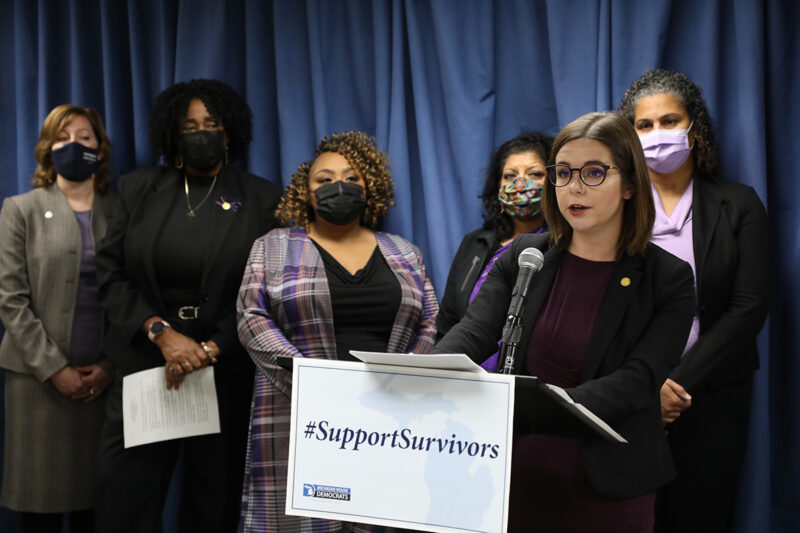
Maddy summaryHB 5071 provides supplemental state funding for programs addressing violence against women, specifically allocating money to support existing grant programs under Michigan's Violence Against Women Act (VAWA) initiatives. This bill directly affects state agencies and local organizations administering these grants, such as domestic violence shelters and legal aid services. The key mechanism is creating a new appropriation within the state budget for fiscal year 2026 to cover costs not previously funded. It does not change eligibility or program rules but ensures continued funding for these services through a dedicated budget line. The bill is currently under review by the Appropriations Committee after its introduction on September 26, 2025.
Maddy summaryHB 5072 allocates supplemental state funds specifically for testing sexual assault kits in Michigan for the fiscal year ending September 30, 2026. It directly affects state law enforcement agencies and crime laboratories responsible for processing these kits by providing dedicated budget resources. The bill creates a new appropriation within the state budget to cover testing costs, ensuring these kits can be processed without relying on existing funding streams. This is a funding measure, not a policy change to how kits are collected or handled.
Maddy summaryHB 5070 is a supplemental appropriations bill that allocates additional state funds for Michigan's prenatal and infant support program. It directly affects the program by providing dedicated funding for services supporting pregnant individuals and infants. The bill creates a formal funding mechanism (an appropriation act) to ensure these funds are available for the 2026 fiscal year. As a procedural budget measure, it does not change program eligibility or service rules but secures financial resources for existing support services.