

Maddy summaryHB 4797 creates a grant program to provide funding to public broadcast stations in Michigan, directly affecting local public radio and TV stations that serve educational, cultural, or civic needs. The bill requires stations to apply with documentation about their local service, financial need, and how funds will maintain public interest programming. It establishes a "public media fund" in the state treasury, appropriating $13 million for fiscal year 2025 to award grants of up to $1.5 million per station for programming, staffing, or infrastructure. The Michigan Department of Education administers the program, prioritizing stations demonstrating commitment to noncommercial, community-focused broadcasting.
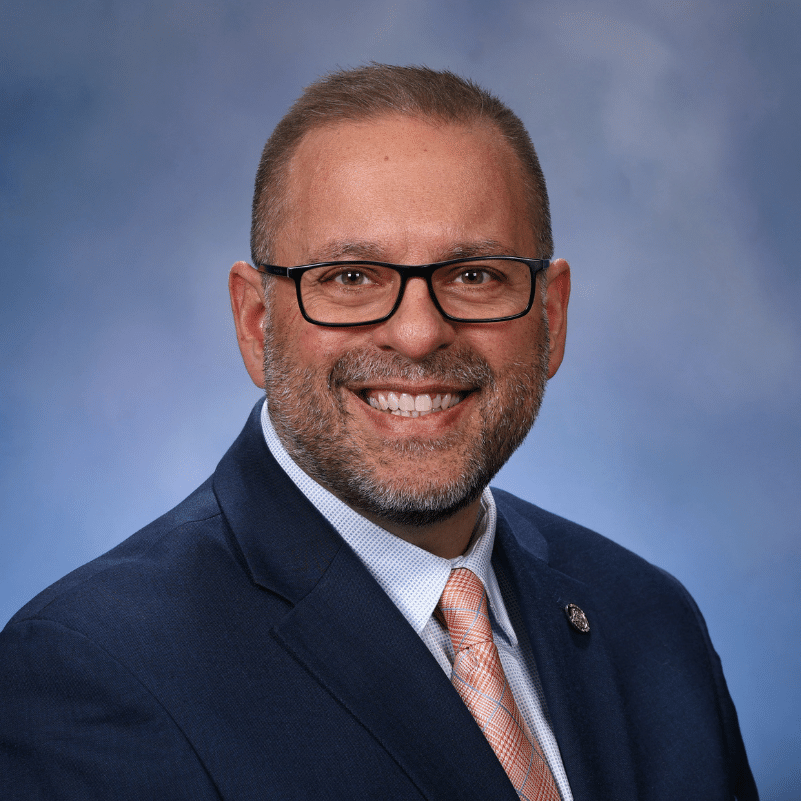
Rep. Mike McFall
Sponsored bills
Maddy summaryThis resolution urges Congress to create a legal pathway allowing Medicaid patients to sue states that restrict their provider choice, following a Supreme Court ruling that removed this right. It also asks Michigan's health department to monitor state and federal policies affecting access to Medicaid providers, like clinics offering reproductive care. The resolution directly addresses 2.2 million Michigan Medicaid enrollees, particularly low-income, LGBTQ+, rural, and reproductive healthcare patients, who face potential barriers after the Medina v. Planned Parenthood Supreme Court decision. It does not create new law but requests specific actions to protect existing provider-choice policies. The resolution was introduced in August 2025 and referred to the Government Operations Committee.
Maddy summaryThis is a symbolic House resolution (not a binding law) reaffirming support for the existing 22nd Amendment, which limits U.S. presidents to two terms. It does not change any law or affect any individuals, as the two-term limit has been part of the Constitution since 1951. The resolution states that all presidents since its ratification have respected the limit and rejects any efforts to undermine or weaken the amendment. It is a non-binding statement of congressional support, not a new policy or legislative action.
Maddy summaryThis House resolution (HR 152) opposes the Trump administration's actions that would terminate federal workers without just cause and eliminate their right to collectively bargain. It specifically targets executive orders from March 2025 that banned collective bargaining for nearly a million federal employees. The resolution, introduced by Rep. Weiss and referred to the Government Operations Committee, is a symbolic statement urging the administration to cease these actions. It does not create new law but expresses legislative disapproval of policies affecting federal workers' job security and labor rights.
Maddy summaryHB 4758 requires Michigan Works agencies to create teams providing job transition services to two groups: individuals who lost federal jobs involuntarily between January 2025 and January 2027 (dislocated federal employees), and veterans. The bill mandates these teams to analyze job matches with public employers, assess transferable skills, and refer individuals to both public and private employers needing staff. It also requires assistance with filing for unemployment benefits under Michigan’s existing employment security system. The law applies specifically to Michigan Works agencies and public employers like state/local governments, schools, and community colleges. This bill creates a new coordination framework but does not establish new benefits or funding.
Maddy summaryHB 4759 encourages public employers (like state agencies, cities, schools, and community colleges) to use an expedited hiring process for dislocated federal employees who are referred through the state's reemployment services program. The bill requires public employers receiving such referrals to prioritize these candidates, though it does not mandate hiring. Key provisions include defining "public employer" broadly and specifying that this process must follow existing constitutional hiring rules for state positions. It does not override other laws but depends on another bill (HB 4758) being enacted first. The measure directly affects dislocated federal workers seeking new jobs and public employers hiring for open positions.
Maddy summaryHB 4742 amends Michigan's environmental permit process to address projects in communities disproportionately affected by pollution (environmentally overburdened communities). It adds a new section (Subpart 2) requiring state agencies to consider community impacts when denying permits or imposing additional conditions for such projects. The bill also repeals the Environmental Permit Review Commission, which previously reviewed permit decisions. This directly affects developers seeking permits in these communities and state agencies responsible for environmental permitting under the Natural Resources and Environmental Protection Act.
Maddy summaryHB 4730 adds Krabbe disease to the list of conditions screened for in newborns in Michigan. The bill amends state law to require healthcare providers to test all newborns for Krabbe disease, a rare but treatable neurological disorder, alongside existing conditions like phenylketonuria and sickle cell anemia. This affects all newborns in Michigan and their healthcare providers, who must administer the test at birth without requiring parental consent under current rules. The change aligns Krabbe disease with other treatable conditions already included in the state's mandatory newborn screening program.
Maddy summaryHB 4732 increases penalties for harming police and search-and-rescue dogs or horses used in law enforcement. It makes intentionally killing or causing serious physical harm to these animals a felony (up to 5 years in prison or $10,000 fine), while lesser harm or interference during duties is a misdemeanor (up to 1 year or $5,000 fine), or a felony if committed during another crime. The law applies specifically to animals trained and deployed by Michigan law enforcement agencies for police or search-and-rescue operations. It does not affect other animals or alter existing penalties for unrelated offenses.
Maddy summaryHB 4731 amends Michigan's Fireworks Safety Act to allow local governments to regulate when and where residents can use consumer fireworks on specific holidays (like New Year's Eve, Memorial Day weekend, July 4, and Labor Day weekend), while prohibiting them from banning fireworks sales. It requires retailers to provide clear notices about permitted usage times and local rules with each purchase. The bill also permits local ordinances governing temporary structures (like tents) used for fireworks sales, but does not allow bans on retail sales or transportation. This directly affects local governments, retailers, and residents by clarifying permissible usage windows and retailer responsibilities.