

Maddy summaryHB 4012 allows ambulances in Michigan to transport injured police dogs or retired police dogs needing emergency veterinary care, provided no human emergencies require immediate transport. It requires a police officer to accompany the dog during transport and defines "retired police dog" as a dog retired due to age or disease after law enforcement service. The bill directly affects police departments, ambulance services, and veterinary facilities by clarifying ambulance protocols for these animals. It amends Michigan's Public Health Code to ensure such transport is permitted under specific conditions without prioritizing human emergencies. The bill passed the Michigan House with 61-43 support in September 2025.
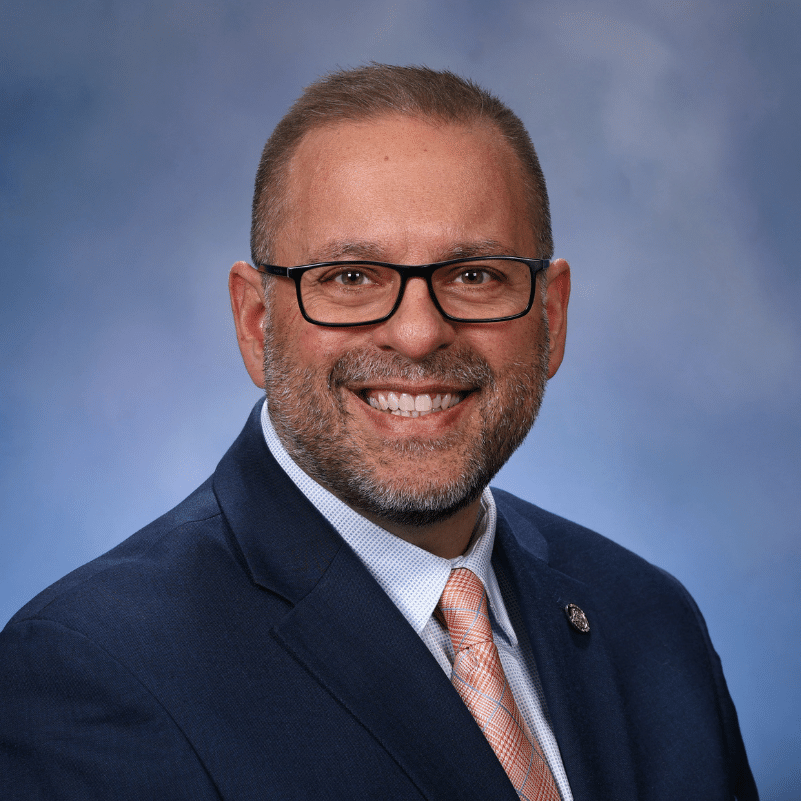
Rep. Mike McFall
Sponsored bills
Maddy summaryThis resolution (HR 170) symbolically declares September 10, 2025, as "World Suicide Prevention Day" in Michigan. It recognizes suicide as a critical public health issue in the state, noting it is the second leading cause of death for Michiganders aged 10-24. The resolution aims to raise awareness, honor those lost to suicide, support survivors, and encourage community efforts in suicide prevention. It does not create new laws or funding but serves as a formal acknowledgment of ongoing mental health advocacy.
Maddy summaryHB 4362 requires law enforcement to share missing senior or vulnerable adult reports with local police, broadcasters, and newspapers, which must then broadcast a public alert with the person's description and relevant details. The state will establish a system using existing wireless emergency networks to send text alerts directly to mobile devices in the affected area. This alert system can only activate after law enforcement completes a report and receives approval from the state police. The bill creates a standardized process to rapidly disseminate information about missing individuals, aiming to improve public awareness and search efficiency.
Maddy summaryThis resolution (HR 164) addresses the July 2025 detentions of 16 Hmong and Laotian refugees in Michigan by U.S. Immigration and Customs Enforcement (ICE), who were unexpectedly taken into custody during routine check-ins and later deported to Laos without adequate notice or due process. It demands federal transparency regarding the legal basis for these detentions, urges ICE to provide timely legal counsel and family notification for detainees, and calls for case-by-case reviews of individuals with strong Michigan ties. The resolution specifically highlights concerns about rapid transfers across facilities and the lack of a U.S.-Laos repatriation agreement requiring travel documents. It is directed to the U.S. Department of Homeland Security and Michigan’s congressional delegation, seeking improved oversight and humane treatment.
Maddy summaryHB 4827 amends Michigan's Consumer Protection Act to require businesses to clearly disclose automatic renewal terms in consumer contracts. It specifically mandates that companies must prominently state conditions for free trials or services, such as how to cancel before charges apply, to prevent misleading consumers. This directly affects subscription-based businesses, app providers, and any service using automatic renewal clauses. The key provision requires transparent, upfront disclosure of renewal mechanics - like pricing, timing, and cancellation steps - before consumers agree to the contract. This change aims to reduce unexpected charges by ensuring consumers understand renewal terms from the start.
Maddy summaryHB 4826 requires businesses selling services or goods with automatic renewal provisions to clearly disclose key terms in consumer contracts using 14-point type. This includes details on renewal periods, pricing changes (like after free trials), cancellation procedures, and a method to cancel easily (e.g., website link or toll-free number). Businesses must also send electronic reminders 30-60 days before renewal and provide 30 days to cancel after notice. The law applies to most consumer contracts but excludes telecom/broadband services regulated by the Michigan Public Service Commission and certain insurance contracts. It aims to prevent surprise charges and make cancellation straightforward for consumers.
Maddy summaryHB 4828 amends Michigan's Natural Resources Act to modify how recreation passport fee revenue is distributed to state parks, local recreation facilities, and forest systems. The bill changes the allocation formula based on the prior year's participation rate in the recreation passport program: if participation was below 55%, 50% of remaining funds go to park capital improvements, while 70% goes there if participation is 55% or higher. Funds also support park operations (30% or 2.75%), historic resources (2.75%), boating access promotions (0.25%), local recreation facilities (10% or 20%), and forest trails (7%). This directly affects Michigan state parks, local governments receiving recreation funds, and state forest campgrounds.
Maddy summaryHB 4048 adds a new sentencing guideline for distributing intimate deepfake sexual images with aggravating circumstances, classifying it as a Class F felony punishable by up to 3 years in prison. This directly affects individuals convicted of disseminating such deepfakes, particularly those with prior offenses under Michigan law. The bill amends sentencing guidelines in Chapter XVII of the Michigan Penal Code to specifically address this crime, establishing a clear penalty framework for courts to apply. It became effective immediately upon the Governor's approval on August 26, 2025.
Maddy summaryHB 4796 would require any armed military force from another state, territory, or district to obtain the Michigan governor's permission before entering the state to perform military duty. This applies to out-of-state military units but excludes U.S. military forces acting under valid presidential authority. The bill amends Michigan's Military Act to add this authorization requirement as a new Section 132. It directly affects military forces from other jurisdictions seeking to conduct training or operations within Michigan. The policy change aims to clarify state authority over military activity on Michigan soil.
Maddy summaryHB 4792 creates a special license plate for Michigan vehicles, with sales proceeds funding animal welfare. The plate design will support efforts to address pet overpopulation and provide humane care for homeless and abused animals in shelters and rescues. Money from plate sales will go into a dedicated "Protecting Michigan's Pets Fund" managed by the state treasurer, with quarterly disbursements to the Michigan Pet Alliance. This bill directly affects vehicle owners who purchase the plate, directing funds specifically toward spay/neuter programs and animal health care services.