

Maddy summaryThis bill proposes renaming a specific section of Interstate 75 in Wayne County to honor Motor Carrier Officer Daniel M. Kerstetter. The designated stretch of road runs from Northline Road northward to London Avenue. By amending the Michigan Memorial Highway Act, the legislation formally establishes this new name for the roadway. The change directly affects the state's transportation records and signage along that portion of the highway.
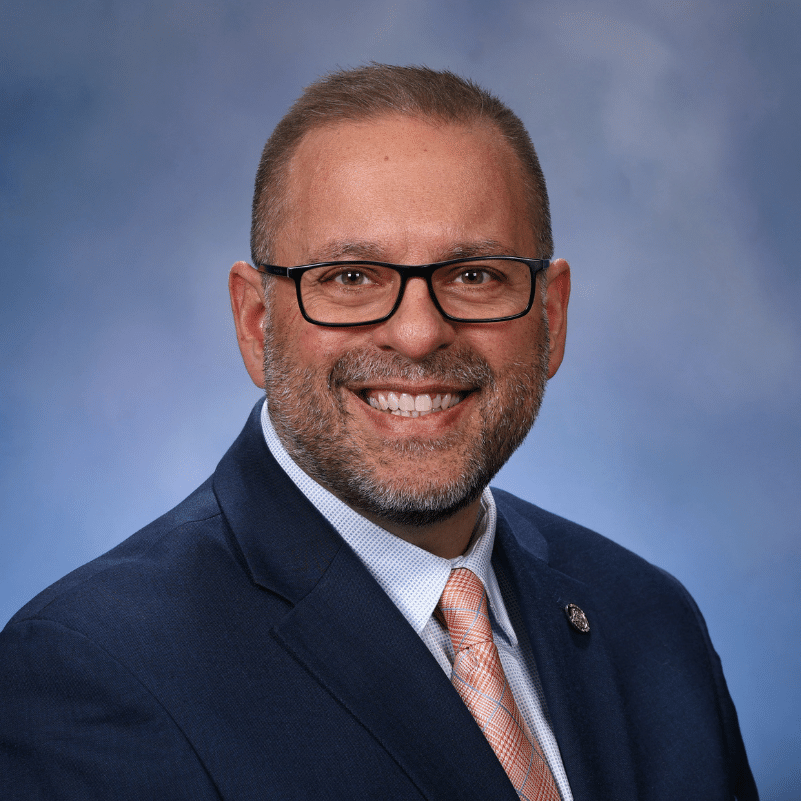
Rep. Mike McFall
Sponsored bills
Maddy summaryHB 6021 amends Michigan's Skilled Trades Regulation Act to update rules for licensing, fees, and enforcement across various trades. The bill clarifies that the state department must set specific fees for licenses and permits and introduces a mechanism for issuing license verification documents upon request. It also establishes stricter penalties for unlicensed practice, including higher fines and potential jail time for repeat offenders, while adding provisions to stop illegal construction immediately. Additionally, the legislation increases application fees to three times the standard amount for individuals previously convicted of license violations and imposes a three-year ban on reapplying for those who fraudulently use license cards.
Maddy summaryThis bill requires health insurers in Michigan to treat the closure or removal of a health system from their network as a qualifying event for a special enrollment period. Under this rule, individuals who lose access to their current doctors or hospitals due to these changes would be allowed to sign up for new health insurance plans outside of the usual annual open enrollment window. The legislation defines a "health system" broadly to include hospitals, physician practices, and other related care facilities that operate under common ownership or control. By codifying this requirement, the bill aims to ensure that people can maintain continuous coverage when their existing healthcare options are no longer available.
Maddy summaryThis bill is a resolution that asks Congress to propose a new constitutional amendment allowing both state and federal governments to set reasonable limits on election spending. The proposed amendment would explicitly permit lawmakers to distinguish between individual voters and artificial entities like corporations, unions, and artificial intelligence when regulating campaign finance. By clarifying that such spending restrictions are constitutional, the measure aims to prevent unlimited money from influencing election outcomes while protecting the free speech rights of average citizens. Although introduced in the House of Representatives, the resolution does not become law on its own but instead seeks to initiate the process for amending the U.S. Constitution.
Maddy summaryThis House resolution urges President Trump, the IRS, and other parties to cancel a settlement agreement that established the "Anti-Weaponization Fund." The bill directly addresses the use of taxpayer money to fund individuals convicted of crimes related to the January 6 Capitol attack, including those linked to extremist groups. It calls for the rescission of the agreement, arguing that public funds should not support those who engaged in political violence or attempted to overturn election results. The resolution is a formal statement of opposition rather than a law that immediately changes policy.
Maddy summaryHB 5992 restores and updates the legal framework for the Michigan Film and Digital Media Office, which is responsible for promoting the state as a location for film, television, and digital media production. The bill redefines key terms to include various forms of media and outlines the office's duties, such as assisting producers with location scouting, providing technical support, and coordinating with local and federal agencies. Additionally, it removes a section related to film credits, aligning the legislation with current administrative practices.
Maddy summaryHB 5991 amends Michigan's corporate income tax law to restore and clarify the state's film incentive credit program. The bill defines specific terms related to film production, such as qualified productions, accredited production certificates, and digital interactive media, to establish clear rules for eligibility. It requires applicants to provide detailed economic impact data, including job creation statistics and expenditure breakdowns, to receive tax credits. This legislation directly affects film and digital media companies operating in Michigan that wish to claim financial incentives for local production activities.
Maddy summaryThis bill requires Michigan health insurers and health maintenance organizations to offer a program that synchronizes multiple maintenance prescription drugs for patients with chronic long-term conditions, provided the patient, physician, and pharmacist agree it is in the patient's best interest. The law mandates that if a step therapy protocol is used to restrict drug coverage, the criteria for these protocols must be based on high-quality clinical practice guidelines developed by an unbiased, multidisciplinary panel that includes public review opportunities. Additionally, the bill establishes specific conditions under which a step therapy exception must be granted quickly, such as when a drug is contraindicated, ineffective, or causes harm, and it ensures that all relevant clinical review criteria are transparently available to patients and healthcare providers.
Maddy summaryHB 4696 amends Michigan's Guardianship Assistance Act (MCL 722.872) to expand the definition of "relative" for eligibility purposes. The bill adds that a "relative" may include individuals not related within the fifth degree by blood or marriage if they have a strong emotional connection to the child or the child's parent (especially for infants), as determined by the Department of Health and Human Services or the child's tribe for Indian children. This change directly affects foster youth and potential guardians seeking guardianship assistance payments by broadening who qualifies as a "relative" under the law. The amendment is tied to companion bill HB 4697 and would take effect only if both bills pass.
Maddy summaryThis bill amends Michigan's Guardianship Assistance Act to clarify eligibility for state-funded guardianship payments. It specifies that relatives or licensed foster parents caring for a child for at least six months may qualify, requiring background checks and fingerprinting for all adults in the home. The bill distinguishes between federal IV-E funding (for children meeting specific federal criteria) and state funding for other eligible children. It also ensures siblings placed together in a relative guardianship can each receive payments if they meet the criteria. The policy directly affects guardians caring for children in relative or foster care arrangements.