

Maddy summaryHB 5015 requires youth under a Michigan youth agency's care (public wards) who have been found responsible for specific crimes - including prostitution-related offenses (like MCL 750.451, 750.454, or 750.462) - to provide DNA samples and pay a $60 fee. The youth agency must collect these samples without the youth's consent or a court order, and the DNA profiles can only be used for law enforcement, court proceedings, or anonymized research. The fee covers costs for DNA profiling under Michigan's existing system, and youth already having a DNA sample from law enforcement is exempt. This bill directly affects minors in youth rehabilitation programs convicted of listed crimes.
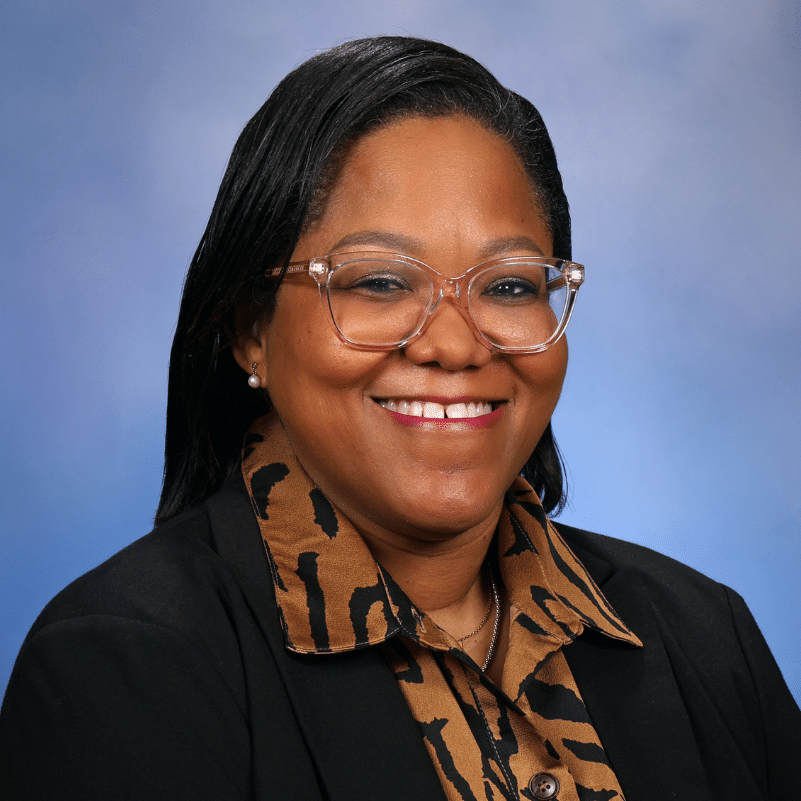
Rep. Kimberly Edwards
Sponsored bills
Maddy summaryHB 5009 expands Michigan's expungement law to allow individuals convicted of offenses under MCL 750.448-450 (related to human trafficking crimes) to have those convictions set aside if they committed the offense as a direct result of being a human trafficking victim. This applies to people who were trafficked victims at the time of the offense, while still requiring applicants to meet the existing limits under the law (e.g., no more than 3 total felony convictions). The bill amends MCL 780.621 to add this exception, ensuring trafficking victims can seek relief without exceeding standard eligibility thresholds. It directly affects survivors of human trafficking who have convictions for specific offenses tied to their victimization.
Maddy summaryHB 5024 amends Michigan's Child Protection Law to update the definition of "confirmed sexual exploitation" to explicitly include cases where a child is forced into prostitution or commercial sexual activity. This change directly affects child welfare agencies, courts, and legal advocates who investigate and respond to child abuse cases. The bill refines existing terminology to ensure consistent identification of exploitation incidents involving minors in commercial sex, aligning with broader child protection standards. It does not create new penalties but clarifies how such cases are documented and addressed within the state's child welfare system.
Maddy summaryHB 5028 amends Michigan's sentencing guidelines to update legal references related to prostitution offenses. It replaces terms like "prostitute" with more neutral language in sentencing calculations under MCL 777.16w. This change affects judges and courts when determining penalties for individuals convicted of prostitution-related crimes. The bill modifies how these offenses are described in legal guidelines but does not alter the actual penalties for the crimes.
Maddy summaryHB 4973 requires electric utilities in Michigan to automatically provide bill credits to customers experiencing power outages during a billing cycle. Residential customers receive credits ranging from $5 per hour for short outages up to $25 per hour for outages lasting 72+ hours, while nonresidential credits use a formula based on the customer's average hourly energy use. Credits apply to the next bill and carry forward if they exceed the current bill amount. The credits adjust every five years using the Consumer Price Index to account for inflation, as specified in the bill's Section 9g.
Maddy summaryHB 4978 amends Michigan's Public Utilities Act to change the process for utilities seeking rate increases. It requires electric utilities serving over 1 million customers to coordinate with the Public Service Commission (PSC) before filing rate cases to avoid overlapping filings, and the PSC may order a 21-day spacing between such filings. Gas utilities serving fewer than 1 million customers can now request partial, immediate rate relief, with the PSC required to decide within 180 days. If the PSC doesn't issue a final order within 180 days for a rate case, the utility may implement the proposed rate increase but must refund overpayments if the final order is lower.
Maddy summaryHB 4977 requires Michigan electric utilities to include standardized outage information on customer bills, directly affecting residential and business electricity users. The bill mandates disclosure of three specific metrics per billing cycle: the number of service interruptions lasting over 5 minutes, total interruption duration, and the number of momentary interruptions (under 5 minutes). Utilities must also annually report outage causes affecting over 1,000 customers, tree trimming efforts, grid reliability projects, and worst-performing circuits to the public service commission. Violations can result in fines up to $1,000 per incident, with customer reports or meter data used as evidence.
Maddy summaryHB 4976 prohibits electric utilities in Michigan from seeking to recover revenue they were required to pay as service outage credits to customers. This directly affects electric utilities serving Michigan residents and businesses, as it prevents them from later reclaiming refunds paid for power outages. The key provision states that once an electric utility issues outage credits (refunds for service interruptions), it cannot attempt to get that money back through future rate adjustments. This ensures customers who received outage credits retain the full benefit without utilities offsetting those payments against future bills.
Maddy summaryHB 4975 requires Michigan electric utilities to automatically provide residential customers with $100 credits on their bills if they experienced 4 or more power outages lasting over an hour in the past year, or $200 credits for more than 4 outages. The bill mandates these credits be applied without customer action, directly benefiting households with frequent service disruptions. Credits will adjust every five years based on inflation using the Detroit-area Consumer Price Index, with changes announced by June 1 each adjustment year. This policy change aims to compensate for unreliable service through automatic billing adjustments under Michigan's utility regulations.
Maddy summaryHR 173 is a resolution passed by the Michigan House of Representatives to condemn all forms of political violence and reaffirm the body's commitment to civility, safety, and peaceful democratic engagement. It does not create new laws or policies but serves as a formal statement expressing the House's stance against violence targeting public officials and citizens. The resolution cites recent incidents of political violence across the U.S., including attacks on elected leaders and events like the 2025 assassination of activist Charlie Kirk. It will be transmitted to the President, Michigan Governor, and congressional leaders as a non-binding expression of the House's values.