

Maddy summaryHB 4756 amends Michigan's Capitol Historic Site Act to allow licensed individuals (including those with out-of-state permits) to carry concealed pistols inside the state capitol building. It specifically requires that such individuals present their concealed pistol license to capitol security officers or legislative sergeants at arms upon request. This bill directly affects licensed gun carriers who currently face restrictions within the capitol building. The change removes the existing prohibition on concealed carry in the capitol, aligning with the commission's role in managing the site without restricting licensed carry.
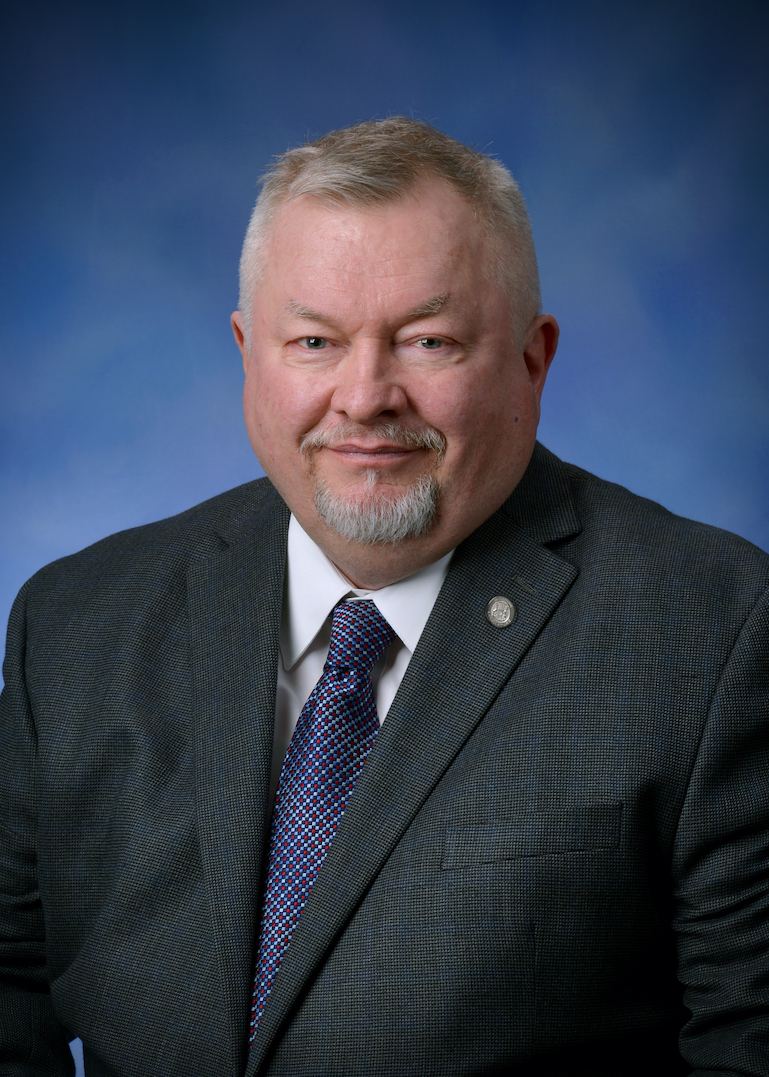
Rep. Greg Markkanen
Sponsored bills
Maddy summaryHB 4752 defines "conversion therapy" in Michigan's Mental Health Code to prohibit mental health professionals from attempting to change a minor's sexual orientation or gender identity. The bill specifically clarifies that this definition excludes counseling supporting gender transition, providing acceptance, or facilitating identity exploration without seeking to alter orientation or identity. It amends Section 100a of the Mental Health Code (MCL 330.1100a) to include this definition, directly affecting mental health providers working with children and adolescents. This is a definitional change, not a new restriction, aimed at clarifying legal standards for mental health services involving minors.
Maddy summaryHB 4390 expands Michigan's vehicle code to allow testing of oral fluid (such as saliva) for controlled substances, alongside blood, breath, or urine, when determining impairment. It directly affects commercial drivers who refuse chemical tests for controlled substances or alcohol while operating commercial vehicles. The bill adds a new definition of "other bodily fluid" to include oral fluid and creates a process for "preliminary oral fluid analysis" conducted by certified experts at the scene. This change updates existing suspension rules for commercial drivers who refuse testing, ensuring consistent enforcement for controlled substances alongside alcohol. The policy change specifically targets commercial motor vehicle operators who decline chemical tests for drugs or alcohol.
Maddy summaryHB 4391 expands Michigan's vehicle code to allow law enforcement to test for intoxication using other bodily fluids beyond blood or breath, such as urine or saliva. It directly affects drivers suspected of operating a vehicle while impaired, updating sections 625a, 625c, and 625g of the 1949 Michigan Vehicle Code (MCL 257.625a et seq.). The bill amends existing testing methods to include these additional fluids, providing more flexibility for officers during DUI investigations. The bill passed the Michigan House on July 17, 2025, with immediate effect.
Maddy summaryHB 4369 bans specific substances from being served in school meals under Michigan's education food laws. It directly affects school food programs by prohibiting these substances in meals provided to students. The bill amends Michigan Compiled Law (MCL) 289.1101-289.8111 by adding Section 7134, which establishes the ban. This is a concrete policy change to regulate school food content, with no additional context provided on the specific substances or implementation details.
Maddy summaryHB 4721 creates tax credits for biodiesel sales and production in Michigan, effective 2025-2030. Retail fuel dealers receive credits of $0.02-$0.07 per gallon for selling biodiesel blends (6-9%, 10-19%, or 20%+), while biodiesel producers get $0.02 per gallon. Total credits are capped at $16 million annually for retailers and $2 million for producers, with excess claims distributed proportionally. The bill directly affects Michigan fuel retailers and biodiesel producers by reducing their income tax liability based on specific blend volumes sold or produced.
Maddy summaryHB 4712 creates a new program through which the Michigan Department of Military and Veterans Affairs will reimburse eligible Michigan National Guard members for premiums paid toward Tricare Reserve Select or Tricare Dental coverage. The program allows the department to award grants to qualifying members who apply using a department-provided form, covering premiums for these specific health plans. It directly affects Guard members who are not on active duty and lack other employer or private health insurance. The bill establishes the framework for administering these reimbursements but does not specify funding amounts or application deadlines.
Maddy summaryHB 4722 creates tax credits to incentivize biodiesel use in Michigan. Retail fuel dealers selling biodiesel blends (6-9% at $0.02/gal, 10-19% at $0.05/gal, 20%+ at $0.07/gal) can claim credits, while biodiesel producers get $0.02 per gallon produced. Credits apply for tax years 2025-2030, with a $16 million total cap for retailers and a $2 million cap for producers. This directly affects Michigan fuel retailers and biodiesel manufacturers by reducing their income tax liability for qualifying sales and production.
Maddy summaryHB 4516 amends Michigan's unemployment benefits law to clarify when workers lose eligibility for benefits due to leaving jobs. It shifts the burden of proof to claimants to prove they left work "involuntarily" for employer-related reasons, rather than assuming voluntary departure. The bill adds specific exceptions where benefits aren't charged to employers, including for domestic violence victims, military spouses relocating due to service, and part-time workers switching employers. These changes directly affect unemployed workers applying for benefits who left their jobs, ensuring clearer standards for disqualification and employer accountability.
Maddy summaryHB 4367 creates Michigan's "Purple Star School Program" to support military-connected students in public schools. It requires schools to designate a military liaison, maintain an easily accessible website with relocation and support resources, implement transition programs for military-connected students, provide staff training, and offer at least one community initiative like monthly recognition or military partnerships. The program applies to all public schools serving military-connected pupils, defined as students whose families include active/reserve military members or those who lost a service member in action. Schools must meet all these requirements to earn the "Purple Star" designation by 2026. The law aims to improve support systems for military-connected students through concrete, school-level actions.