

Maddy summaryHB 4426 amends Michigan's Motor Carrier Safety Act (MCL 480.12d) to set a minimum age of 21 for drivers transporting hazardous materials requiring placards under federal rules. It maintains the existing 18-year-old minimum for most commercial driving but specifically raises the age requirement for hazardous materials transport. The bill does not change medical waiver or grandfathered driver provisions. This change directly affects commercial drivers operating in Michigan who transport hazardous materials requiring placards.
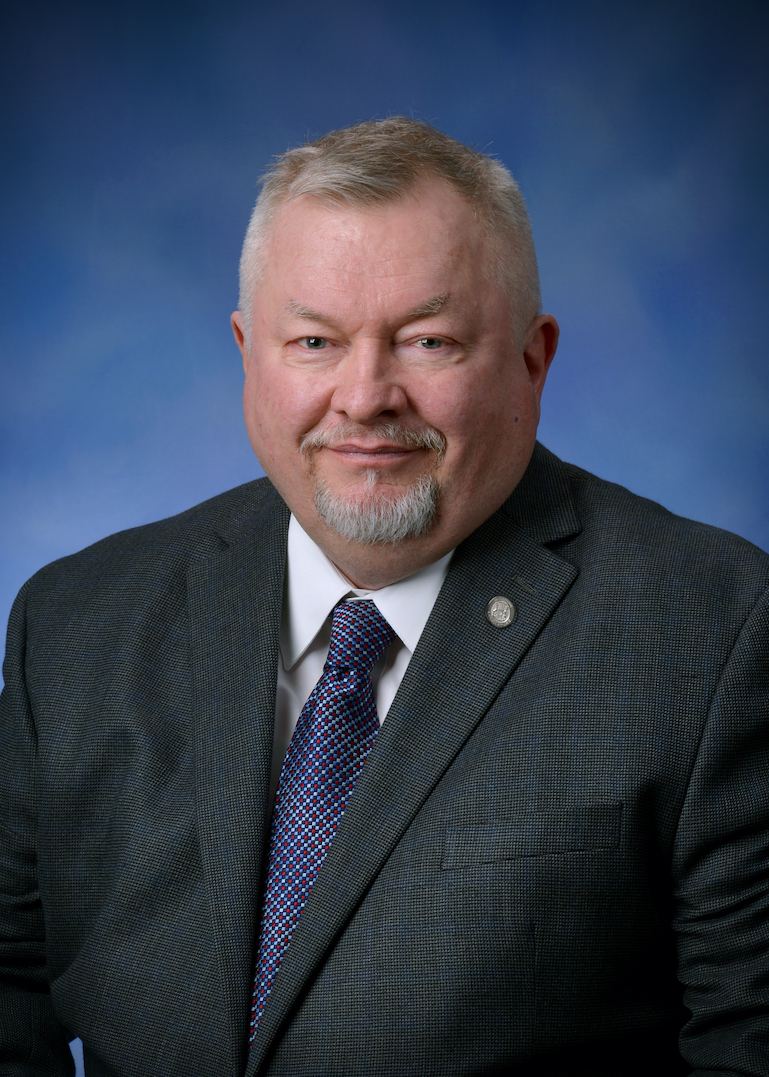
Rep. Greg Markkanen
Sponsored bills
Maddy summaryThis resolution officially designates June 27, 2025, as National PTSD Awareness Day in Michigan. It encourages Michigan residents to learn about PTSD, reduce stigma, and support those affected - including veterans, first responders, and trauma survivors - while aligning with the existing U.S. Senate observance honoring Staff Sergeant Joe Biel. The bill has no new funding or legal requirements; it is a symbolic gesture to promote awareness and compassion.
Maddy summaryHB 4655 prohibits Michigan state departments or licensing boards from requiring implicit bias training as a condition for health professional licensure or license renewal. The bill directly affects licensed healthcare workers (like nurses, doctors, and therapists) who would otherwise need to complete such training to obtain or maintain their licenses. It achieves this by amending Michigan's Public Health Code to add Section 16149, which bans the enforcement of rules mandating this training, and by rescinding a related section of the Michigan Administrative Code (MCL 338.7004). The bill removes a potential requirement for healthcare professionals seeking initial licensure or renewal.
Maddy summaryHB 4656 prohibits highway officials from completely shutting down all lanes of a road during construction if it would cut off a community’s only access point or if the only alternative route is frequently blocked by railroad crossings. The bill amends Michigan law to require that such closures only occur when absolutely necessary for construction, and even then, must be temporary with work completed expediently to reopen at least partial access as soon as possible. It directly affects communities relying on single road access and highway officials managing construction projects. The key provision prevents full closures that isolate communities, while allowing temporary full shutdowns only when no feasible alternative exists for maintaining traffic flow.
Maddy summaryHB 4580 allocates funding for Michigan's public universities during the 2025-2026 fiscal year. It amends specific sections of Michigan law (MCL 388.1836 and 388.1841) to establish the budget for higher education institutions. The bill directly affects public universities by providing their state funding for the upcoming fiscal year. It passed the House with strong support (56-41) and is now moving to the appropriations committee for further review.
Maddy summaryHB 4579 allocates state funding to Michigan community colleges for the 2025-2026 fiscal year. It amends sections of existing law (MCL 388.1801 and 388.1806) to establish specific budget amounts for college operations. This directly affects all public community colleges in Michigan, which will use these funds for essential expenses like staff salaries, classroom resources, and facility maintenance during the 2025-2026 budget cycle.
Maddy summaryHB 4578 provides the budget for the Department of Lifelong Education, Advancement, and Potential for fiscal year 2025-2026. It allocates specific funding amounts to support the department's programs and operations during the upcoming year. The bill directly affects the department by determining its available resources for delivering services related to education and workforce development. This is a routine budget measure that establishes funding levels without introducing new policies or altering existing programs.
Maddy summaryHB 4597 amends Michigan's Vehicle Code to allow local governments (counties, townships, cities, and villages) to set or change speed limits on local highways without requiring a traffic engineering study. Instead, local authorities must first obtain written approval from the chief law enforcement officer (or county sheriff if none exists) and hold a public hearing with at least 14 days' notice. Speed limits established under this bill must be in 5 mph increments and consider factors like public safety, community input, road features, and environmental concerns. This change streamlines local speed limit adjustments while maintaining oversight through law enforcement approval and public engagement.
Maddy summaryThis bill amends Michigan's Natural Resources and Environmental Protection Act to clarify that fur harvester license holders may hunt coyotes year-round. It directly affects licensed hunters who hold a fur harvester's license, removing ambiguity about year-round coyote hunting eligibility. The key change updates Section 43531(4) to explicitly permit year-round coyote hunting under the existing license framework, without altering fees or other license requirements.
Maddy summaryThis bill proposes a constitutional amendment to Michigan's budget rules (Article IX, Section 28), directly affecting how the state sets annual spending limits. It replaces current spending caps with a new formula tying budget growth to inflation, population changes, and voter-approved revenue increases. Any state revenue exceeding this calculated limit must be refunded to taxpayers via law. The amendment modifies how the legislature calculates yearly spending authority, requiring excess funds to flow back to citizens rather than remaining in the state budget.