

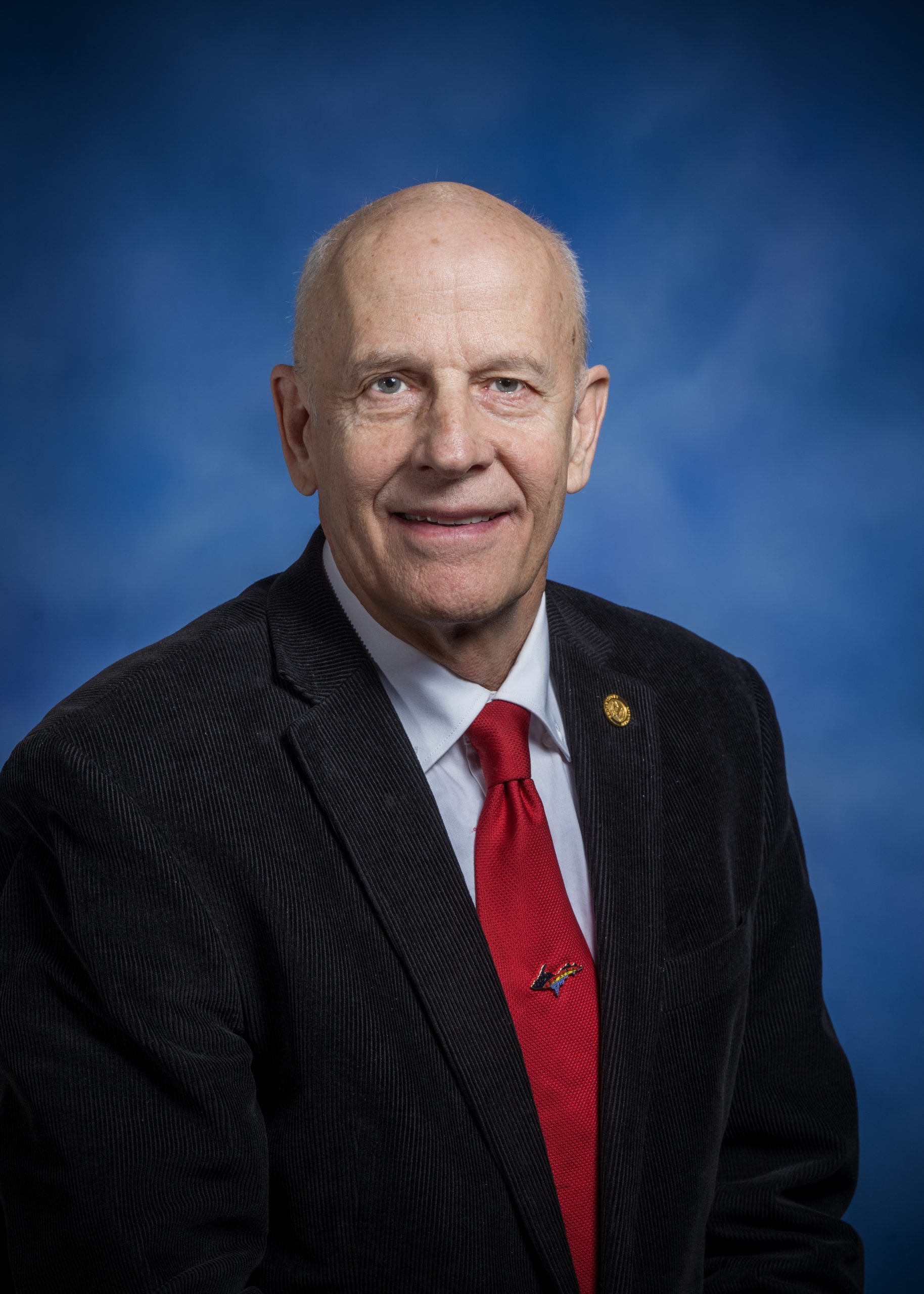
Photo of Karl Bohnak
R Michigan House · District 109 On the 2026 ballot

Rep. Karl Bohnak

Compare
Total votes
732
all sessions
Attendance
100%
of floor votes
Higher than 83% of chamber peers
With party
99%
of cast votes
Higher than 89% of chamber peers
Bipartisan score
0%
crosses aisle rarely
Lower than 91% of chamber peers
Sponsored
211
bills & resolutions
Lower than 77% of chamber peers
Committees
4
assignments
211 bills and resolutions

Sponsored bills

Total
211
Primary
24
Co-sponsor
187
This page
211
matching current filters
Co-sponsor HB 4350
Signed into law · Michigan House · Co-sponsor
Natural resources: other; wildlife feeding; allow under certain conditions. Amends sec. 40111a of 1994 PA 451 (MCL 324.40111a).

Maddy summaryHB 4350 amends Michigan's Natural Resources and Environmental Protection Act to allow individuals to feed wild birds and other wildlife under specific conditions. This bill permits such feeding if it occurs within 300 feet of a residence and the total amount of feed does not exceed two gallons. It clarifies that this allowance does not apply to activities like baiting for hunting, normal agricultural practices, or feeding conducted in a way that excludes deer and elk. This aims to create limited exceptions for recreational or preventative feeding of wildlife by residents.

Signed into law Jul 29, 2026 1 co-sponsor
Co-sponsor HB 5249
Signed into law · Michigan House · Co-sponsor
Health: emergency services; ambulance operation adaptive care license; create. Amends sec. 20920 of 1978 PA 368 (MCL 333.20920).

Maddy summaryHB 5249 creates a new "adaptive care license" for ambulance operations currently licensed only for basic life support (BLS). It allows these operations to gradually upgrade to provide limited advanced life support (ALS) or advanced life support (ALS) services, provided they demonstrate staffing and equipment readiness for higher care levels by January 1, 2025. The license requires annual documentation of progress toward this upgrade, including training and equipment plans, and must be renewed annually alongside the operation's regular license. This applies specifically to ambulance services owned or contracted by local governments that previously provided only BLS for emergency response.

Signed into law Jul 29, 2026 1 co-sponsor
Co-sponsor HB 4309
Signed into law · Michigan House · Co-sponsor
Health occupations: physician's assistants; physician's assistants licensure compact; provide for. Amends secs. 16337 & 18001 of 1978 PA 368 (MCL 333.16337 & 333.18001) & adds secs. 16187d, 17011b, 17061a, 17511b & 18011b.

Maddy summaryHB 4309 establishes a licensure compact for physician's assistants, allowing them licensed in one participating state to practice in other participating states without needing separate licenses. This directly affects physician's assistants seeking to work across state lines and patients in states participating in the compact. The bill creates legal mechanisms by amending existing law to enable reciprocal licensing agreements between states, removing barriers for PAs to provide care in multiple jurisdictions. It provides the framework for states to join the compact through mutual recognition of licenses, streamlining practice for qualified professionals.

Signed into law Jul 29, 2026 1 co-sponsor
Co-sponsor HB 6007
Passed · Michigan House · Co-sponsor
Food: service establishments; delegation of certain duties and exemption of certain persons from licensure; modify. Amends secs. 3105, 3113, 3129, 3139, 4101, 4105, 5101 & 6103 of 2000 PA 92 (MCL 289.3105 et seq.).

Maddy summaryHB 6007 updates Michigan's Food Law to clarify how enforcement responsibilities are shared between the state Department of Health and local health departments. The bill allows the state to delegate most inspection and licensing duties to local health departments for food service establishments, provided those departments meet specific program criteria. However, the state retains direct authority over complex wholesale food processing, establishments within large grocery stores, and certain high-risk mobile food units. Additionally, the legislation prevents local governments from creating conflicting licensing rules and outlines the process for revoking a local health department's certification if it fails to meet state standards.

Passed Jul 1, 2026 1 co-sponsor
Co-sponsor HB 5082
Passed · Michigan House · Co-sponsor
Natural resources: wetlands; wetland delineation regulations; provide for. Amends sec. 30321 of 1994 PA 451 (MCL 324.30321).

Maddy summaryHB 5082 amends Michigan's wetland regulations to streamline how property owners determine if their land contains wetlands. It allows landowners to formally request a wetland assessment from the Department of Environment, Great Lakes, and Energy (EGLE) by submitting a completed form, legal description, map, and permission to access the property. EGLE must provide a written report within 60 days, detailing wetland locations, required permits, and clarifying that the assessment does not override federal or local regulations. The bill also eliminates fees for these assessments, specifies that agricultural drains or temporary water obstructions don't count as wetlands, and establishes a 3-year binding determination period if EGLE concludes an area is not wetland.

Passed Jul 1, 2026 1 co-sponsor
Co-sponsor HB 4703
Passed · Michigan House · Co-sponsor
Insurance: health insurers; coverage for group prenatal care services; require. Amends 1956 PA 218 (MCL 500.100 - 500.8302) by adding sec. 3406ss.

Maddy summaryHB 4703 requires health insurers in Michigan to cover group prenatal care services for policyholders. This directly affects health insurers offering coverage in the state and pregnant individuals seeking prenatal care. The bill defines "group prenatal care services" as evidence-based, group-based visits that include health assessments, social support, education, and peer interaction in a family-centered setting. Insurers must now provide this coverage for group prenatal care under their health insurance policies.

Passed Jul 1, 2026 1 co-sponsor
Co-sponsor HB 6072
Passed · Michigan House · Co-sponsor
Health facilities: hospitals; certain hospital financial assistance policies; make subject to the hospital financial assistance act. Amends sec. 17 of 1913 PA 350 (MCL 331.167). TIE BAR WITH: HB 6071'26

Maddy summaryHB 6072 requires hospital boards in Michigan to follow the existing Hospital Financial Assistance Act when deciding how to provide financial help to patients. This change ensures that the rules for determining who qualifies for charity care and setting fees are consistent with state standards rather than being set solely by individual hospital boards. The bill only becomes active if a companion bill, HB 6071, is also passed into law. It directly affects public hospital trustees and the patients they serve by standardizing assistance policies.

Passed Jun 25, 2026 1 co-sponsor
Co-sponsor HCR 8
Passed · Michigan House · Co-sponsor
A concurrent resolution to approve an extension of the state of energy emergency declared on April 2, 2026.

Maddy summaryThis bill extends the state of energy emergency in Michigan by an additional 77 days, effective July 1, 2026. The measure allows the sale of E15 fuel in several counties where current regulations previously restricted it to lower vapor pressure gasoline. By suspending these fuel requirements, the extension aims to increase fuel supply options and help manage rising gas prices for consumers and businesses. The resolution requires approval from both the House and Senate before being sent to the Governor.

Passed Jun 25, 2026 1 co-sponsor
Co-sponsor HB 6071
Passed · Michigan House · Co-sponsor
Health facilities: hospitals; hospital financial assistance act; enact. Creates new act.

Maddy summaryThis bill establishes the Hospital Financial Assistance Act, which requires hospitals in Michigan to create and enforce financial aid programs for patients by January 1, 2027. The law mandates that these programs use federal poverty guidelines to determine eligibility, offering up to a full discount on medical bills for uninsured individuals earning at or below 350% of the poverty line. Hospitals must also publish clear information about these programs on their websites and in billing statements, and they are required to submit annual reports detailing the number of applications and the amount of debt forgiven or collected. To ensure compliance, the state Department of Health and Human Services will oversee the process, investigate complaints, and impose civil fines of up to $10,000 on hospitals that fail to follow the new rules.

Passed Jun 25, 2026 1 co-sponsor
Co-sponsor HB 6128
In committee · Michigan House · Co-sponsor
State agencies (existing): generally; use of open fields doctrine by law enforcement officers and state agencies; prohibit. Creates new act.

Maddy summaryThis bill prohibits law enforcement officers and state agency employees in Michigan from using the "open fields doctrine" during searches. The open fields doctrine is a legal rule that currently allows police to search open areas without a warrant, but this legislation would remove that exception for state-level searches. As a result, any search conducted by these officials in open fields would require a warrant or another valid legal justification. The law directly affects state departments, boards, and commissions, as well as the officers and agents who work for them.

In committee Jun 25, 2026 1 co-sponsor
Showing 11 to 20 of 211 bills