

Maddy summaryHB 4073 modifies Michigan's criminal procedure law to require specific warrant procedures for investigations involving the Department of Natural Resources (DNR). It amends Section 1602 of the Michigan Compiled Laws (MCL 324.1602) and adds a new Section 1507 to clarify warrant requirements for DNR officers conducting searches or seizures under environmental enforcement. This change directly affects DNR law enforcement actions, ensuring they follow defined judicial authorization processes for certain investigations. The bill passed the House on November 4, 2025, with 63 yeas and 37 nays.
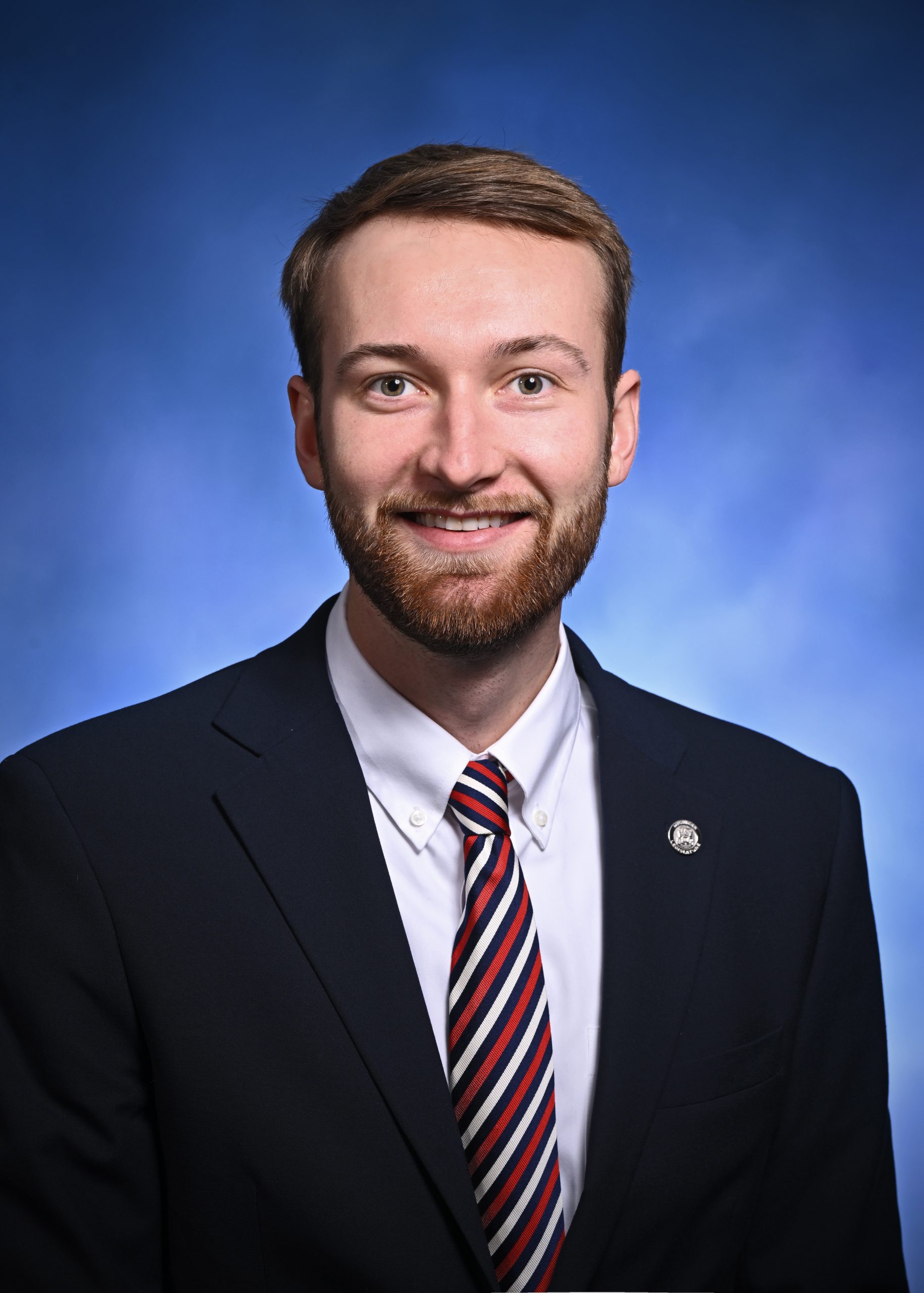
Rep. Parker Fairbairn
Sponsored bills
Maddy summaryHR 196 is a resolution demanding Michigan's Secretary of State comply with a federal request for an unredacted copy of the state's voter registration list, as required by the Civil Rights Act of 1960 and the National Voter Registration Act of 1993. It directly affects the Michigan Secretary of State's office by mandating disclosure of voter data within legal limits. The bill does not create new law but compels adherence to existing federal requirements for voter list transparency. This procedural resolution focuses solely on directing state compliance with federal mandates, not altering election policies.
Maddy summaryHR 195 is a resolution opposing Michigan's proposed Health Education Standards Framework. It urges the Michigan Department of Education to redraft the standards or the Michigan State Board of Education to reject them, specifically requesting the exclusion of content related to gender identity, gender expression, and sexual orientation from health education standards. The resolution cites parental rights and existing law requiring local control and opt-out provisions for sex education as justification. It directly targets state education officials, not students or schools, and serves as a non-binding request for policy revision.
Maddy summaryHB 4663 allows liquor license holders in Michigan to donate a portion of their profits to tax-exempt nonprofits (501(c)(3) organizations) after recording those profits on their financial records. Licensees must report these profits to the Liquor Control Commission upon request. The bill specifically prohibits nonprofits that receive a special license for an event from using donated funds to cover costs for that same event. This change directly affects licensed liquor businesses and qualifying nonprofits by creating a new, regulated pathway for charitable giving.
Maddy summaryHB 5117 removes population-based quotas for "specially designated merchant" liquor licenses in Michigan. It eliminates the requirement that only one such license may be issued per 1,000 residents (or fraction thereof) for certain applicants, including large grocery stores meeting size/sales criteria, pharmacies, and gas station retailers with motor fuel licenses. The bill also clarifies that licenses issued under these exemptions cannot be transferred to new locations. This change directly affects businesses seeking new licenses or renewing existing ones, particularly those operating large retail food establishments or combining alcohol sales with other services.
Maddy summaryHB 4691 amends Michigan's Vehicle Code to increase penalties for drivers who flee or elude police officers. It creates four tiers of felony sentencing based on the severity of the violation: fourth-degree (up to 2 years for basic evasion), third-degree (1-5 years if collision occurs or in low-speed zones), second-degree (2-10 years for serious injury or prior convictions), and first-degree (5-15 years if death results). The bill specifically defines "serious injury" to include loss of limbs, brain damage, or coma. This directly affects drivers who fail to stop for police in uniform with marked vehicles, with penalties escalating based on outcomes like collisions, injuries, or prior offenses.
Maddy summaryHB 4690 mandates fixed prison sentences for certain violent or gun-related crimes by amending Michigan's sentencing law (MCL 750.479a). It directly affects defendants convicted of these specific offenses, as judges must now impose predetermined terms instead of exercising discretion. The key provision requires minimum sentence lengths for these cases, removing judicial flexibility in sentencing. This policy change applies to new convictions under the amended law.
Maddy summaryHB 4484 amends Michigan's Social Welfare Act to allow licensed speech-language pathologists (SLPs) to seek reimbursement for audiological rehabilitation and speech-language therapy services, regardless of whether they hold a certificate of clinical competence. This change directly affects SLPs practicing in Michigan who previously faced potential barriers to reimbursement under existing department rules. The bill removes a prior requirement for the clinical certificate, ensuring reimbursement eligibility solely based on state licensure. It applies to all coverage policies under the Social Welfare Act (MCL 400.1-400.119b), streamlining access to payment for these healthcare services.
Maddy summaryHB 4422 raises the fees that licensed liquor distribution agents must pay to the state for operating under the current system. It directly affects authorized liquor distributors who hold state licenses to handle and sell alcoholic beverages. The bill increases the existing fee structure outlined in MCL 436.1205 without altering distribution rules or requirements. This change applies immediately following the bill's passage, as noted in the House vote.
Maddy summaryThis is a ceremonial resolution (HR 189) passed by the Michigan House of Representatives to honor the Detroit Red Wings hockey team on its 100th season. It does not create new laws or affect any policies; it simply recognizes the team's historical significance to Michigan. The resolution cites the Red Wings' founding in 1926, 11 Stanley Cup championships, cultural impact as "Hockeytown," and community work through their foundation. The House formally resolved to commemorate the team and transmitted a copy to the Red Wings organization as a gesture of appreciation.