

Maddy summaryHB 4184 increases Michigan's excise tax on aviation fuel from 3.10 cents to 4.00 cents per gallon. It directly affects fuel sellers, airlines, and airport operators by changing how this tax revenue is distributed. The bill modifies Section 203 of the Aeronautics Code to require 35% of the tax revenue to fund the state aeronautics fund and 65% to fund qualified airports. It also retains the 1.5-cent refund for airlines operating interstate flights and the exemption for fuel used in leaded racing fuel production.
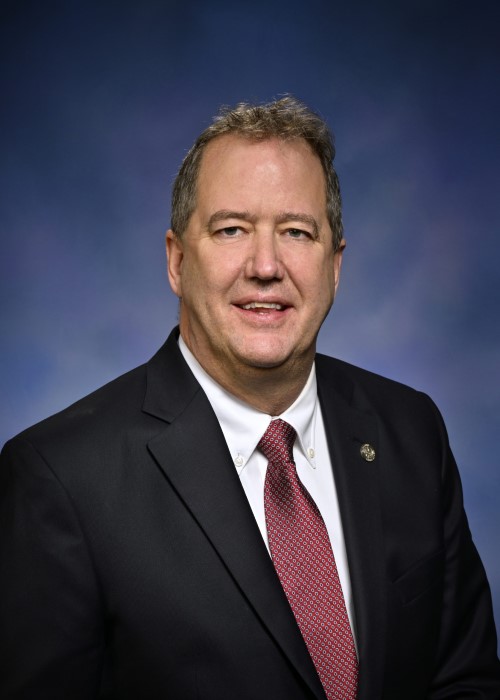
Rep. Cam Cavitt
Sponsored bills
Maddy summaryHB 4186 increases Michigan's business income tax rate from 4.95% to 30% for all business activity occurring on or after January 1, 2025. This rate change directly affects businesses operating within Michigan that are subject to the state's business tax, including those previously filing under the corporate income tax act. The bill amends sections 201 and 500 of the Michigan Business Tax Act (2007 PA 36) to implement this rate increase and adjust the tax base calculations for businesses. The change represents a significant policy shift in how Michigan taxes business income, effective in 2025.
Maddy summaryHB 4286 requires Michigan public schools to update health education curriculum standards by the 2026-2027 school year. It mandates specific content about human development, including an overview of pregnancy biology, fetal development inside the uterus, a 3-minute high-definition ultrasound video of early fetal organ development, and a computer-generated animation showing fertilization through birth. The bill directly affects Michigan public schools and the state Department of Education, which must revise curriculum standards to include these requirements. This is a concrete policy change to the health education curriculum, not a procedural or commemorative measure.
Maddy summaryHB 4170 permanently sets Michigan's individual income tax rate at 4.05% for all taxpayers, replacing a temporary 4.25% rate scheduled to take effect in 2024. It creates a mechanism where the rate could decrease further if state revenue growth exceeds inflation, requiring annual revenue reviews. The bill directly affects all Michigan residents who pay individual income tax. The change takes effect immediately for tax years beginning January 1, 2025, with the 4.05% rate now permanent unless triggered by the revenue growth condition.
Maddy summaryThis resolution designates March 21, 2025, as Rosie the Riveter Day in Michigan to honor women who worked in factories during World War II, particularly in Michigan's Willow Run and Detroit facilities. It does not create new laws or obligations but encourages residents, schools, businesses, and organizations to observe the day through educational activities and community events. The bill specifically recognizes these women's contributions to wartime production and their role in advancing workplace equality. It is a symbolic gesture with no direct regulatory impact on individuals or entities.
Maddy summaryHB 4150 eliminates application evaluation fees for school-related processes under Michigan's Revised School Code. It directly affects individuals applying for educational certifications, programs, or school-related services by removing a requirement to pay fees when their applications are reviewed. The bill amends two specific sections (MCL 380.1531h and 380.1538) to delete the fee mandate, streamlining the application process. This change applies statewide to all relevant school applications governed by the revised code. The bill passed the Michigan House with strong support (83-26) on March 12, 2025, and is now awaiting further legislative action.
Maddy summaryHB 4237 prohibits Michigan local governments (like cities, counties, and school districts) from awarding or renewing contracts that give contractors access to personal data if the contractor is a "controlled entity" tied to specific foreign countries of concern (China, Russia, Iran, North Korea, Cuba, Venezuela, or Syria). It requires contractors to submit sworn affidavits confirming they are not controlled entities, with violations subject to fines up to twice the contract value or a 5-year contract ban. The bill also restricts local governments from using information technology or services designed, developed, or supplied by companies owned by those foreign countries, aligning with federal security lists. These rules take effect July 1, 2026, for contract renewals and extensions.
Maddy summaryHB 4236 amends Michigan's state contracting rules to limit foreign influence in projects involving personal data. It directly affects state contractors working on facilities (like buildings or infrastructure) where personal identifying information is handled. The bill requires contractors to provide a sworn affidavit confirming they are not "controlled entities" tied to specific foreign governments (including China, Russia, Iran, and others). Starting July 1, 2025, the state cannot renew or extend such contracts without this verification.
Maddy summaryHB 4153 creates a new "local teaching certificate" pathway for educators in Michigan. It amends the Revised School Code to define a "certificated teacher" as including individuals holding either a standard teaching certificate or this new local certificate (under added Section 1531l). The bill directly affects teachers seeking certification through local school districts or authorized entities, rather than the standard state-issued process. Key provisions establish that local certificates must meet state standards but can be issued by districts or approved entities, expanding certification options for schools. This change modifies existing sections (501, 521, 551, etc.) to incorporate the new local certificate type into teacher certification requirements.
Maddy summaryHB 4151 modifies Michigan's teacher certification rules, primarily allowing experienced educators from other states to obtain Michigan teaching licenses without retaking certain exams if they've taught successfully for at least three years in their home state. It maintains existing requirements for new teachers to complete reading competency training (including diagnosing reading disabilities) before advancing to professional certification. The bill also requires the education department to report annually on exam fees and develop standardized tests for teacher certification, while keeping the same reading proficiency standards for Michigan-certified teachers. These changes directly affect teachers seeking certification or additional endorsements in Michigan, especially those transferring from other states or countries.