

Maddy summaryHB 4152 requires Michigan teacher preparation programs (and alternative teaching programs) to include specific training content starting September 30, 2027, to gain or maintain state approval. The bill mandates instruction on dyslexia characteristics, consequences, instructional adjustments, and multi-tiered support systems (MTSS), with additional evidence-based reading methods required for programs preparing teachers in reading, language arts, or special education. Programs focused on math or science must develop curricula in consultation with subject-matter experts. These requirements apply directly to institutions training future educators, with waivers possible for non-relevant programs under specific conditions.
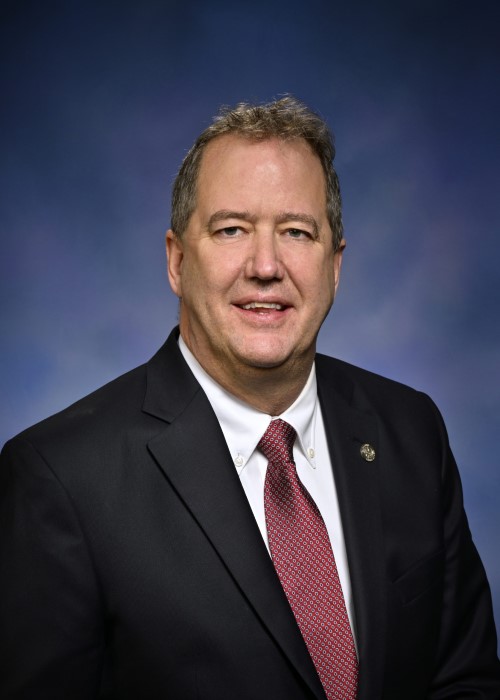
Rep. Cam Cavitt
Sponsored bills
Maddy summaryHB 4007 amends Michigan's Clean and Renewable Energy Act (2008 PA 295) by expanding the definition of "clean energy system" to include natural gas plants using carbon capture and storage (at least 90% effective) and certain existing natural gas facilities that can meet clean energy standards by 2030 through carbon capture and removal technologies. This change directly affects electric providers required to meet the state's clean energy standard, as it broadens the types of energy sources that qualify toward their compliance targets. The bill specifies that carbon capture must permanently store carbon dioxide (excluding enhanced oil recovery), and permits for new facilities may require higher capture rates if deemed necessary under federal standards. This definition update provides additional pathways for natural gas projects to count toward Michigan's clean energy goals.
Maddy summaryThis constitutional amendment proposes changing Michigan's education governance structure. It would shift the appointment of the state superintendent of public instruction from the state board of education to the governor (with Senate consent) starting January 1, 2027. Additionally, it requires state board of education members to be elected by district rather than at-large beginning in 2027. The superintendent would chair the board without voting rights, and the governor would serve as an ex-officio board member without a vote. This directly affects the governor, superintendent position, and state board of education members.
Maddy summaryHouse Bill 4433, titled the "emergency responder employment protection act," aims to protect employees in Michigan who serve as emergency responders. The bill prohibits employers from discriminating against, disciplining, or firing an employee for being an emergency responder or for being absent from work to respond to an emergency. To be protected, employees must provide notice before their shift, submit a written statement of emergency need within 72 hours, and ensure their absence does not create a workplace safety concern. Employees are also required to notify their employer of their emergency responder status and provide documentation, while employers retain the ability to treat such absences as paid or unpaid time off.
Maddy summaryHouse Bill 4443 establishes a new "disabled veteran's homestead specific tax" on properties currently exempt from general property taxes. Beginning January 1, 2026, this tax will apply to homesteads owned by disabled veterans or their surviving spouses. The tax amount is calculated based on what would have been owed in general property taxes, then discounted (reduced) according to the veteran's disability severity rating, potentially reducing the tax to zero for those with the highest disability ratings. Unpaid specific taxes are subject to the same forfeiture and foreclosure processes as delinquent general property taxes.
Maddy summaryHouse Bill 4444 amends Michigan's general property tax act to modify property tax exemptions for homesteads owned by disabled veterans and their surviving spouses. The bill outlines the application process for these exemptions and specifies that those granted on or after January 1, 2025, will remain in effect without requiring reapplication. It also introduces methods for prorating the exemption if the property is not used as a homestead for the entire tax year. Additionally, the bill clarifies that properties exempt under this section will be subject to a specific disabled veteran's homestead tax, which will also be prorated accordingly.
Maddy summaryHouse Bill 4340 amends Michigan's social welfare act to establish new eligibility requirements for state programs. The bill prohibits individuals from receiving services, grants, or participating in programs under this act unless they are a United States citizen or a "qualified alien." The term "qualified alien" refers to specific immigration statuses as defined by federal law. This restriction applies to state social welfare programs, with exceptions if federal law dictates otherwise.
Maddy summaryHB 4341 amends the State Housing Development Authority Act of 1966. It adds a new section that restricts eligibility for services, grants, or participation in programs under the act. Unless otherwise provided by federal law, individuals must be either a United States citizen or a "qualified alien" to receive these benefits. The bill defines "qualified alien" by referencing an existing federal statute (8 USC 1641).
Maddy summaryHouse Bill 4342 amends Michigan's state revenue sharing act, introducing a new condition for withholding state funds from local governments. Beginning October 1, 2025, the state treasurer would withhold all revenue sharing payments from any city, village, township, or county. This would occur if the local government enacts or enforces a law, ordinance, policy, or rule that violates the "local government sanctuary policy prohibition act" or the "county law enforcement protection act." Payments would be withheld for as long as the violating policy remains in effect. This bill is tied to the enactment of House Bills 4338 and 4339.
Maddy summaryHouse Bill 4027 proposes to amend the Michigan Zoning Enabling Act. The bill would remove a provision that requires local zoning ordinances to be subject to Part 8 of the Clean and Renewable Energy and Energy Waste Reduction Act. This change means that local zoning authorities would no longer be directly bound by this specific part of the state's clean energy law when creating or enforcing their zoning regulations. The bill aims to alter the relationship between local land use planning and state renewable energy mandates.