

Maddy summaryHouse Bill 4475 proposes to amend the Elliott-Larsen Civil Rights Act to prohibit discrimination based on an individual's vaccination status or whether they possess an "immunity passport." It would prevent state or local governmental entities, private universities, and community colleges from denying services, goods, educational opportunities, healthcare, or employment for these reasons. Employers would also be prohibited from discriminating against individuals in hiring, termination, or terms of employment due to vaccination status. The bill includes specific exceptions, such as for certain child care organizations, federal contractors, and regulated entities whose funding depends on compliance with federal health regulations. Additionally, it allows vaccination requirements for employees in roles with direct exposure to infectious materials or in public health/medical settings where vaccinations are necessary for their duties.
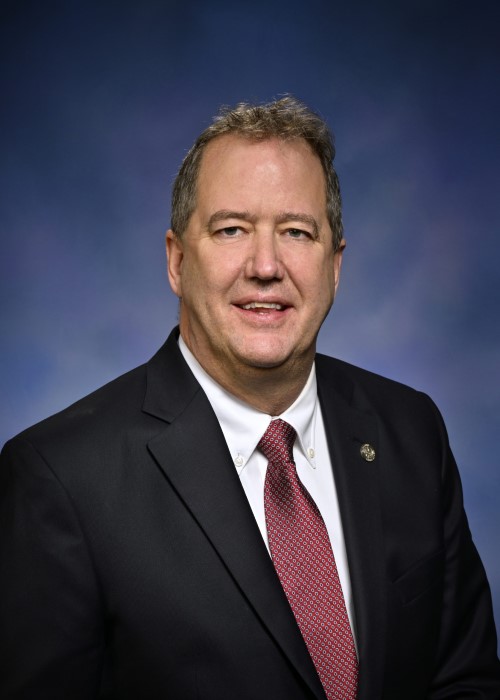
Rep. Cam Cavitt
Sponsored bills
Maddy summaryHouse Bill 4241 prohibits the Michigan Strategic Fund from providing economic incentives, such as grants or loans, to certain "foreign entities." These foreign entities are defined as those owned or controlled by, or having their primary business in, specific countries like China, Russia, Iran, or North Korea. The bill requires applicants for economic incentives to submit an affidavit confirming they are not a foreign entity. Additionally, any person or government entity distributing these incentives must ensure they are not knowingly given to a foreign entity.
Maddy summaryHouse Bill 4155 requires the Department to publish a list of recommended curriculum companies and assessment companies for use by K-12 public schools. By April 1, 2026, and annually thereafter, the Department must make these lists available to school districts, intermediate school districts, and public school academies. Recommended curriculum companies must offer programs aligning with state academic standards, provide evidence of effectiveness, and include provisions for accessibility and professional development. Similarly, recommended assessment companies must provide various assessments meeting state and federal requirements. It is important to note that schools are not mandated to use any of the companies or curricula on these recommended lists.
Maddy summaryHouse Bill 4148 revises the process for political parties to nominate candidates for the State Board of Education in Michigan. It divides the state into four specific districts. Beginning in 2026, political parties will be required to nominate candidates for the State Board of Education who are residents of designated districts, following a rotating 8-year schedule. This changes the current system where candidates are nominated at large without district-specific residency requirements.
Maddy summaryHouse Bill 4244 requires state government entities, defined as "public bodies," to change how they refer to a specific geographical location. If a public body uses the term "Gulf of Mexico," they must modify it to "Gulf of America." This applies to all departments, boards, commissions, offices, agencies, or other units of state government. Public bodies are required to implement this change by July 4, 2025.
Maddy summaryHB 4283 amends Michigan's Clean and Renewable Energy Act to allow electricity generated from Reciprocating Internal Combustion Engine (RICE) generators to count toward meeting the state's renewable energy portfolio standards. This change directly affects electric providers, including cooperatives and multistate utilities, that must meet specific renewable energy targets. The bill adds a new provision specifying that RICE-generated electricity can be used as renewable energy credits toward compliance. This provides electric providers with an additional compliance option for meeting the state's renewable energy requirements.
Maddy summaryHB 4328 provides $100 million in supplemental state funding for emergency response and disaster relief during Michigan's 2025 fiscal year, primarily for counties affected by storm damage. It allocates $75 million for storm disaster relief grants and $25 million for a contingency supplement, to be distributed by the Department of State Police on a first-come, first-served basis (50% immediately, 50% after six months). Counties can use these funds for emergency actions like debris cleanup, shelter, energy assistance, and repairing public infrastructure damaged by storms. This ensures timely support for communities recovering from storm-related financial hardship.
Maddy summaryHB 4233 prohibits foreign entities (including foreign governments, corporations, or individuals) from purchasing or acquiring agricultural land in Michigan, with limited exceptions. Current foreign owners may retain existing farmland but cannot buy additional land, and all foreign-owned agricultural land must be registered with the Secretary of State within 60 days, including location, acreage, and ownership details. Exceptions allow land acquired through inheritance (if sold within two years), security interests, or legal processes like foreclosure (if sold within two years and not used for non-farming purposes). Violations trigger court action by the Attorney General, requiring foreign owners to divest the land within two years.
Maddy summaryHB 4387 creates a temporary 2025 income tax credit for Michigan residents affected by a severe winter storm and ice storm declared a state of emergency by Governor Whitmer on March 31, 2025. It allows eligible taxpayers to claim a credit of up to $5,000 for qualified expenses directly related to repairing or restoring homes, property, or businesses damaged by the emergency - such as purchasing generators, chainsaws, or building materials. To qualify, taxpayers must reside in the declared emergency area, provide proof of expenses (including federal ID and property address), and confirm expenses weren’t reimbursed. The credit applies only to the 2025 tax year and cannot exceed the taxpayer’s total tax liability for that year.
Maddy summaryHB 4239, the "foreign influence of state institutions of higher education act," prohibits Michigan public colleges and universities from entering agreements or accepting grants from specific "foreign countries of concern" (including China, Russia, Iran, North Korea, Cuba, Venezuela, and Syria) if those arrangements control curriculum, threaten U.S. security, or restrict contracting freedom. It requires all gifts from foreign sources to be formalized through written agreements and mandates reporting of certain gifts to state officials. The law also bars accepting items of value conditioned on promoting a foreign country's language or culture and requires cultural exchange agreements with listed countries to be reviewed by U.S. federal agencies for national security risks. These provisions directly affect all 15 Michigan public universities and community colleges.