

Maddy summaryThis bill amends Michigan's Natural Resources and Environmental Protection Act to clarify that fur harvester license holders may hunt coyotes year-round. It directly affects licensed hunters who hold a fur harvester's license, removing ambiguity about year-round coyote hunting eligibility. The key change updates Section 43531(4) to explicitly permit year-round coyote hunting under the existing license framework, without altering fees or other license requirements.
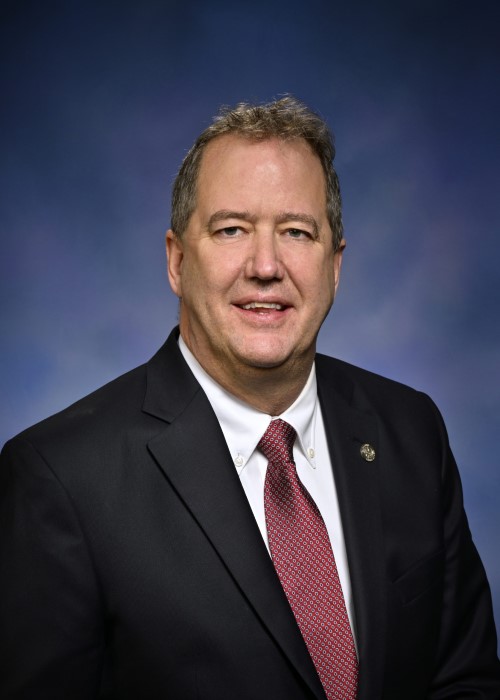
Rep. Cam Cavitt
Sponsored bills
Maddy summaryHB 4568 allocates state funds to Michigan's Department of Environment, Great Lakes, and Energy for fiscal year 2025-2026. It provides the specific budget required for the department's operations and programs during that period. As an appropriations bill, it directly affects how state resources are distributed to this agency without altering policies or creating new regulations. The bill is procedural, focusing solely on funding authorization.
Maddy summaryThis bill proposes a constitutional amendment to Michigan's budget rules (Article IX, Section 28), directly affecting how the state sets annual spending limits. It replaces current spending caps with a new formula tying budget growth to inflation, population changes, and voter-approved revenue increases. Any state revenue exceeding this calculated limit must be refunded to taxpayers via law. The amendment modifies how the legislature calculates yearly spending authority, requiring excess funds to flow back to citizens rather than remaining in the state budget.
Maddy summaryHR 122 is a ceremonial resolution declaring May 31-June 8, 2025, as "Great Lakes and Fresh Water Week" in Michigan. It does not create new laws or regulations but formally recognizes the state's connection to freshwater resources. The resolution aims to encourage Michiganders to learn about Michigan’s Great Lakes, rivers, lakes, and groundwater - resources vital to drinking water, industry, recreation, and the environment. It was introduced by Rep. Cam Cavitt and adopted on June 4, 2025.
Maddy summaryHB 4345 creates an exception allowing Michigan school districts to skip required instructional days without facing penalties when closing due to a declared state of emergency. This directly affects school districts and students by providing flexibility during emergencies like natural disasters or public health crises. The bill amends existing law to remove the penalty for missing minimum instructional days during such closures, ensuring districts aren't financially punished for following emergency protocols. The law took effect immediately upon the Governor's approval on June 2, 2025.
Maddy summaryHB 4287 modifies Michigan's individual income tax code to adjust deductions for retirement and pension benefits. It increases the maximum deductible amount for retirement income to $42,240 for single filers and $84,480 for joint filers, with annual adjustments based on the Consumer Price Index. This change directly affects Michigan taxpayers who receive retirement or pension benefits, allowing them to reduce their taxable income by a larger portion of those benefits while maintaining specific eligibility rules. The bill does not alter other tax provisions or include broadband-related funding as referenced in its title.
Maddy summaryHB 4267 designates a specific segment of M-6 in Kent County (from Kalamazoo Avenue east to 60th Street) as the "Keagan Spencer Memorial Highway" under Michigan's Memorial Highway Act. This bill is purely a naming designation with no policy changes or direct impact on legislation, regulations, or affected populations. It amends the existing highway act to formally recognize this roadway section in honor of Keagan Spencer. The bill passed unanimously in the Michigan House on May 20, 2025.
Maddy summaryHB 4203 amends Michigan's Vehicle Code to revise exemptions for tow trucks, wreckers, and road service vehicles from seasonal weight restrictions on state highways. The bill allows these vehicles to operate during restricted periods (typically winter months) when responding to emergencies or providing essential roadside assistance. This change directly affects towing and road service companies by permitting them to operate under weight limits they previously could not during certain seasons. The amendment applies specifically to vehicles performing emergency response or required road service functions.
Maddy summaryHB 4343 exempts certain commercial trucks assisting in a declared state of emergency from Michigan's frost laws, which typically restrict truck operations during freezing conditions. This means trucks providing emergency response services (like transporting supplies or personnel) will not face traffic violations for operating during frost conditions when supporting emergency efforts. The bill amends Michigan's Vehicle Code (MCL 257.722) to create this specific exception for emergency assistance vehicles. It directly affects commercial truck operators and emergency management agencies during declared emergencies.
Maddy summaryHB 4344 removes driving hour limits for commercial motor vehicle drivers during declared state emergencies. It specifically exempts drivers traveling to assist with or directly helping during disasters from federal hours-of-service rules (49 CFR part 395) under Michigan's Emergency Management Act. This change directly affects commercial drivers transporting goods or people in support of emergency response efforts when a state of emergency is active.