

Maddy summaryHB 5201 requires healthcare professionals performing abortions in Michigan to submit detailed, anonymized reports to the state health department within 7 days. The reports must include specific data points like patient age, gestation period, reason for the abortion (e.g., health risks, rape, economic factors), facility details, and medical method, but exclude all personal identifiers. Strict confidentiality rules prohibit disclosing any information that could identify individuals or facilities, with reports destroyed after 5 years and only aggregated statistical data published annually. This policy applies directly to abortion providers and the state health department, focusing solely on data collection for public health monitoring, not individual records or enforcement.
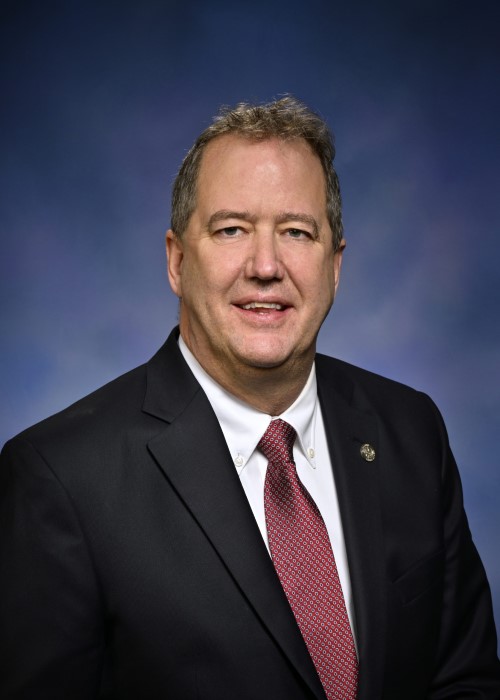
Rep. Cam Cavitt
Sponsored bills
Maddy summaryHB 5203 amends Michigan's sentencing guidelines (MCL 777.13k) to establish specific penalties for disclosing private medical information related to abortions. It directly affects healthcare providers, clinics, or others who share confidential abortion-related details without authorization. The bill creates new sentencing parameters for such disclosures within the criminal code, requiring judges to consider these guidelines when determining penalties. The legislation is currently under review by the Health Policy Committee after its November 2025 introduction.
Maddy summaryHB 5202 requires healthcare professionals to submit written reports to Michigan's Department of Health for any patient experiencing a physical complication or death directly linked to an abortion. The reports must be anonymized (removing patient identifiers), aggregated into the state's annual abortion statistics, and destroyed after five years. The bill mandates the department to create a standardized reporting form for urgent care facilities and emergency departments, which must be distributed and posted online. This bill, tied to companion legislation HB 5201, focuses solely on data collection requirements without changing abortion access or medical standards.
Maddy summaryHB 5304 requires applicants for dredging permits under Michigan's environmental law to either use dredged material for beach nourishment (if suitable) or pay a $25 per cubic yard fee. The fee funds a new Beach Nourishment Fund administered by the Department of Environment, Great Lakes, and Energy. This applies to projects under Parts 301, 303, and 325 of Michigan's Natural Resources and Environmental Protection Act. The bill amends sections 30106b, 30311b, and 32515a and adds sections 1306 (fee requirements) and 33709 (fund creation).
Maddy summaryHB 4301 expands Michigan's definition of "authorized emergency vehicle" in the Vehicle Code (MCL 257.2 and 257.698) to include specific new categories. It adds vehicles owned by the Michigan Mutual Aid Box Alarm System during emergencies, clarifies that road service vehicles (like tow trucks) may use flashing amber lights while assisting disabled vehicles, and allows federally recognized nonprofits to use emergency lights during disaster response. The bill also clarifies when certain colored lights (red, blue, amber, green) may be used on emergency vehicles, including for snow removal, spill response, and funeral processions. This directly affects emergency responders, road service providers, and nonprofit organizations during crisis operations.
Maddy summaryHB 4302 creates an exception to Michigan's commercial driver license (CDL) requirements for authorized emergency vehicles operated by the Michigan Mutual Aid Box Alarm System. This means drivers operating these specific emergency vehicles do not need to obtain the standard CDL or related endorsements required for commercial vehicles. The bill amends Michigan's Vehicle Code (MCL 257.312e) to explicitly exempt these vehicles from the general CDL rules. The exception directly affects personnel operating emergency vehicles under the Michigan Mutual Aid Box Alarm System, allowing them to operate without meeting standard CDL qualifications.
Maddy summaryHB 4108 amends Michigan's tort law to grant legal immunity to individuals who provide emergency bleeding control during medical crises. It directly protects ordinary citizens (not just professionals) who act in good faith to stop severe bleeding, such as at accident scenes or public events. The key provision shields these helpers from lawsuits for unintentional harm caused while applying bleeding control techniques, like using tourniquets or pressure dressings. This change applies specifically to bleeding control efforts during emergencies, not general emergency assistance.
Maddy summaryHB 4857 amends Michigan’s Public Health Code to strengthen confidentiality protections for emergency service providers receiving critical incident stress management (CISM) services. The bill ensures conversations between first responders (such as police, firefighters, EMTs, and dispatchers) and CISM teams remain private, preventing disclosure in court, investigations, or other proceedings. Exceptions include situations where a provider poses an imminent threat to themselves or others, reports abuse, or explicitly waives confidentiality. This change directly affects emergency workers accessing mental health support after traumatic incidents, ensuring they can seek help without fear of their disclosures being used against them. The law applies to all CISM services provided under the existing framework, including peer support, debriefings, and referrals.
Maddy summaryHB 4483 requires Michigan concealed pistol license holders to have a QR code printed on their license. This QR code links directly to a reciprocity website maintained by the Michigan Attorney General, which shows which states recognize Michigan licenses. The bill amends existing law to add this QR code as a standard feature on all concealed pistol licenses issued under Michigan's licensing system. It affects all current and future concealed carry license holders by providing a quick digital reference for out-of-state reciprocity.
Maddy summaryHB 4482 requires Michigan's Department of Attorney General to update a website every 60 days showing which states recognize Michigan concealed pistol license holders' permits. This directly affects Michigan residents who hold concealed carry licenses and wish to carry firearms in other states. The bill adds a new provision (Section 5q) to existing law, mandating regular website updates to display current reciprocity agreements. It does not change licensing requirements or permit holders' rights, only ensuring accurate, up-to-date information is publicly available. The bill is procedural, focusing solely on information transparency for license holders.