

Maddy summaryThis bill proposes amendments to Michigan's Privately Owned Cervidae Producers Marketing Act, which regulates the sale and marketing of deer and elk by private producers. The legislation modifies several sections of the existing law to update definitions and requirements related to cervidae producers. These changes would affect individuals and businesses involved in the private production and marketing of deer and elk in Michigan. The bill aims to clarify terminology and operational standards within the current regulatory framework.
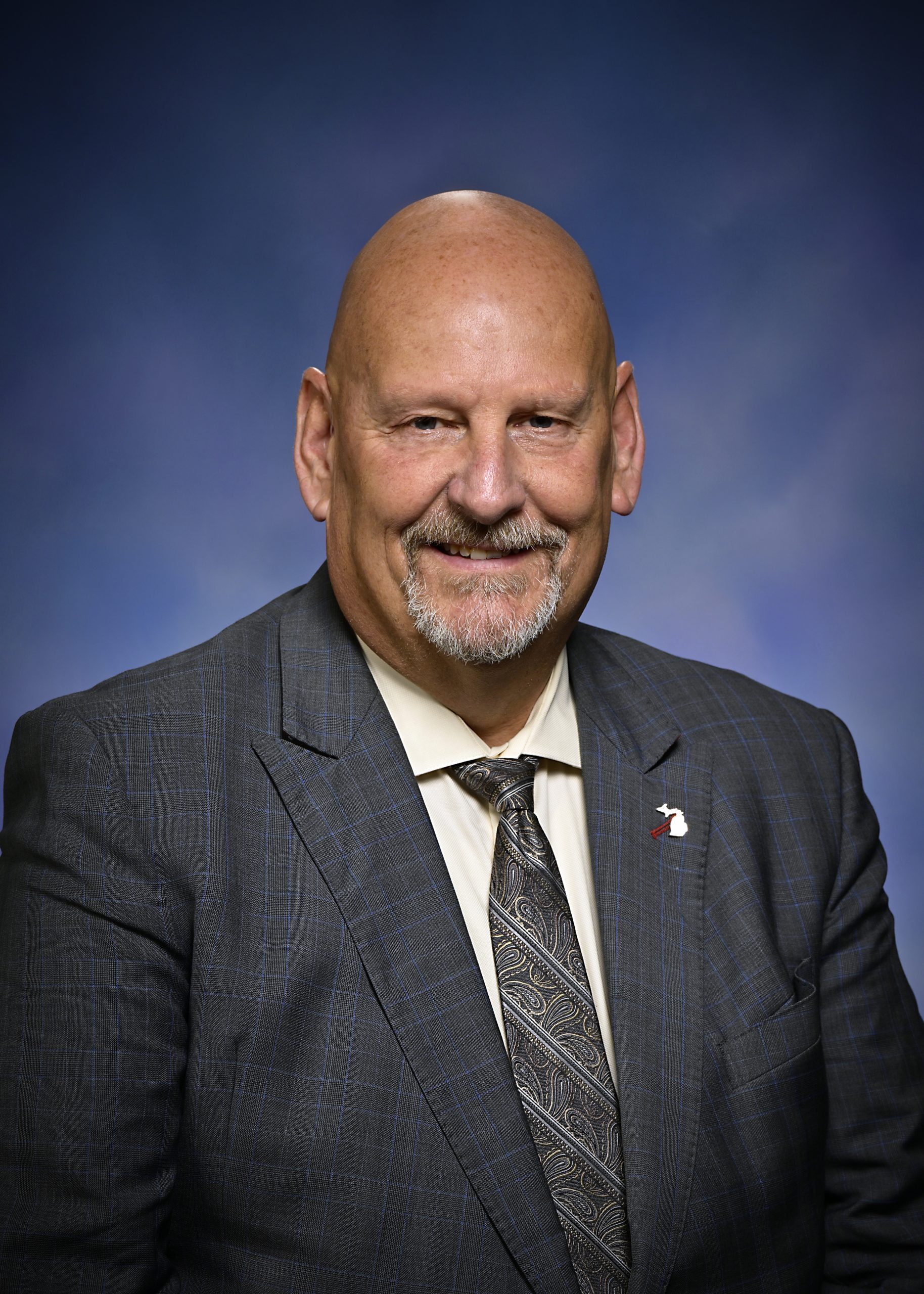
Rep. Curt VanderWall
Sponsored bills
Maddy summaryHB 5081 requires Michigan school districts, intermediate districts, and public school academies to employ at least one teacher trained in the Orton-Gillingham approach by the 2026-2027 school year to support students with dyslexia. This teacher must have completed training meeting International Dyslexia Association standards, which emphasizes multisensory reading instruction through phonemic awareness, phonics, and structured skill-building. Schools must also ensure these teachers receive at least 10 hours of annual professional development focused on dyslexia support. The bill directly affects all public school entities in Michigan and aims to improve specialized reading instruction for students with dyslexia.
Maddy summaryHB 5168 exempts use tax on tangible personal property (like equipment or materials) that becomes a structural or integral part of qualifying large agricultural processing facility projects in Michigan. It directly affects agricultural businesses and contractors working on projects requiring at least $100 million in capital investment for construction, expansion, or retooling of facilities that process livestock, crops, or plant products (excluding forest products). The exemption applies only to property permanently affixed to the facility or its infrastructure, not to general use. This amendment modifies Michigan’s Use Tax Act to provide tax relief for significant agricultural infrastructure investments.
Maddy summaryHB 5169 creates a sales tax exemption in Michigan for materials and equipment used in qualifying large agricultural processing projects. It directly affects businesses investing $100 million or more in constructing, expanding, or retooling agricultural facilities that process livestock, crops, or plant products (excluding forest products). The exemption applies only to tangible property that becomes a permanent, structural part of the facility or its infrastructure. This change modifies Michigan's General Sales Tax Act to reduce costs for significant agricultural development projects meeting specific investment and scope criteria.
Maddy summaryHB 5307 amends Michigan's hunting regulations to modify penalties for failing to report a deer harvest or retain a required confirmation number. The bill targets hunters who do not comply with reporting requirements for deer, which is a specific violation under the Natural Resources and Environmental Protection Act. Key mechanisms include adding or adjusting penalties for this reporting failure, potentially affecting hunters who miss these requirements. The bill does not change penalties for other hunting violations (like taking deer without a permit), which remain detailed in the existing section. (Note: The provided bill text shows existing penalty structures but does not specify the exact amendment language for the reporting requirement change.)
Maddy summaryThis bill proposes to update the sentencing guidelines in Michigan's Code of Criminal Procedure to specifically address violations of the Virtual Currency Kiosk Prevention Act. By amending existing law, it aims to provide clearer instructions for judges on how to determine appropriate punishments for crimes related to illegal virtual currency kiosks. The legislation does not create new offenses but rather refines the legal framework used to sentence individuals who break these specific rules.
Maddy summaryThis bill, known as the Virtual Currency Kiosk Prevention Act, prohibits the operation of physical terminals in Michigan that facilitate buying, selling, or exchanging virtual currency for cash or bank credit. It defines these terminals as devices that connect to external exchanges or hold the operator's own virtual currency and applies to any business or individual running them. Violators face felony charges with penalties including up to five years in prison, fines of up to $50,000, or community service, with harsher sentences of up to ten years and higher fines if vulnerable adults are harmed or significant financial losses occur. The law also grants the attorney general and county prosecutors the power to seek injunctions, recover collected fees, and confiscate the kiosks themselves.
Maddy summaryThis bill modifies Michigan's vehicle code to update rules for speed limits and enforcement in school zones. It clarifies definitions for school zones and adjusts the timing of when lower speed limits must be enforced, expanding the window before and after school sessions to 60 minutes instead of 30. The legislation also allows school superintendents to set additional enforcement periods for times like off-campus lunch and field trips, while maintaining a minimum speed limit of 25 mph in these zones. Additionally, it permits the use of digital signs and flashing lights to display school zone speed limits and requires specific signage for year-round schools.
Maddy summaryHB 5387 amends Michigan's "Mozelle senior or vulnerable adult medical alert act" to specifically include "missing veterans at risk" in the definition of persons eligible for emergency alerts. The bill defines a "missing veteran at risk" as an active-duty service member or veteran reported missing with a documented physical or mental health condition. This change directly affects veterans who go missing and have health conditions, ensuring they are covered under the same alert protocols as seniors and vulnerable adults. The law does not create new procedures but clarifies who qualifies for existing emergency reporting mechanisms.
Maddy summaryHB 6022 amends Michigan's Mental Health Code to update and clarify the definitions of key terms used throughout the state's mental health system. The bill directly affects community mental health services programs, licensed hospitals, and individuals seeking mental health care by refining how concepts like "assisted outpatient treatment," "abuse," and "adaptive skills" are understood legally. Key provisions include expanding the definition of assisted outpatient treatment to explicitly cover various support services such as vocational training and supervision of living arrangements, while also standardizing definitions for roles like child and adolescent psychiatrists. By revising multiple sections of the existing law, the legislation aims to ensure consistency in how mental health services are administered and described across different facilities and programs.