Issue · Criminal Justice

Criminal Justice

Every criminal justice bill, vote, and legislator stance in Michigan, automatically classified by Maddy, our AI policy reader.

Total bills
337
2025-2026 Regular Session
Top supporter
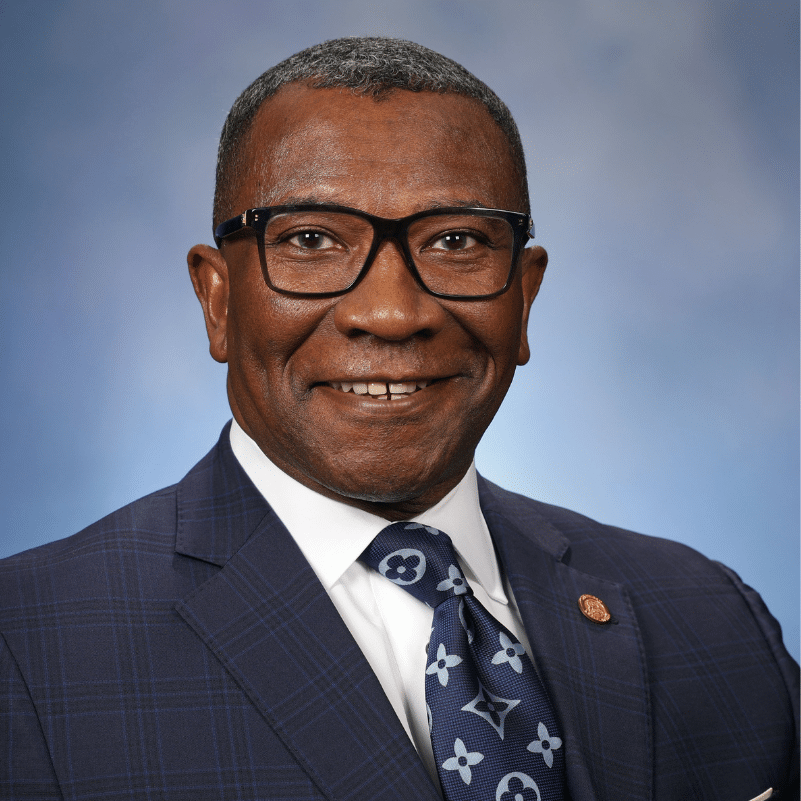
Amos O'Neal
100% support rate
Top opponent
Lana Theis
27% support rate
Ranked legislators
10
5 support · 5 oppose
Key legislators

Who's moving criminal justice in Michigan

Legislators moving criminal justice in Michigan
Legislator Party Stance Support rate Votes
Amos O'Neal
Amos O'Neal House · District 94
D
Strong +
100% 18
Erika Geiss
Erika Geiss Senate · District 1
D
Support
77% 43
Jeremy Moss
Jeremy Moss Senate · District 7
D
Support
73% 48
Veronica Klinefelt
Veronica Klinefelt Senate · District 11
D
Support
73% 48
Sarah Anthony
Sarah Anthony Senate · District 21
D
Support
73% 48
Lana Theis
Lana Theis Senate · District 22
R
Oppose
27% 43
Thomas Albert
Thomas Albert Senate · District 18
R
Oppose
27% 48
Michele Hoitenga
Michele Hoitenga Senate · District 36
R
Oppose
27% 48
Jonathan Lindsey
Jonathan Lindsey Senate · District 17
R
Oppose
27% 47
Jon Bumstead
Jon Bumstead Senate · District 32
R
Oppose
29% 44
Showing 71–80 of 337 bills

All criminal justice bills

in committee · Michigan · House Apr 15, 2026

HB 5778: Crimes: trespassing; penalties for trespassing; increase. Amends sec. 552 of 1931 PA 328 (MCL 750.552).

This bill proposes to increase the penalties for trespassing in Michigan by raising the maximum jail time from 30 days to 90 days and the maximum fine from $250 to $500 for repeat offenders. It directly affects individuals who enter or remain on another person's property without permission after being asked to leave, as well as those who enter or stay on fenced or posted farm land without consent. The legislation maintains existing protections for process servers attempting to serve legal documents and clarifies that a request to leave is not required to be violated on farm property. These changes would apply to anyone previously convicted of a trespassing violation, making subsequent offenses more severe under current law.
Sub-Topics Corrections
passed both · Michigan · House Jun 10, 2026

HB 5831: Crimes: terrorism; penalties for acts of terrorism; modify. Amends sec. 543f of 1931 PA 328 (MCL 750.543f). TIE BAR WITH: HB 5830'26

This bill modifies the penalties for the crime of terrorism in Michigan by updating the language in the state penal code. It directly affects individuals charged with knowingly and premeditated acts of terrorism, ensuring the statute clearly mandates life imprisonment without parole if the act results in death. The legislation also maintains existing provisions that allow for a fine of up to $100,000 or a prison term of at least 25 years for other terrorism-related convictions. These changes aim to clarify the legal consequences for those convicted of terrorism under current laws.
in committee · Michigan · House Apr 22, 2026

HB 5830: Crimes: terrorism; making terrorist threat or false report of terrorism; modify. Amends sec. 543m of 1931 PA 328 (MCL 750.543m). TIE BAR WITH: HB 5831'26

This bill proposes changes to Michigan's laws regarding false reports and threats of terrorism. It directly affects individuals who make communications about terrorism, clarifying that a person can be charged even if they lack the actual intent or ability to commit the threatened act. The key provision states that knowingly making a false report of terrorism or threatening violence with reckless disregard remains a felony punishable by five to twenty years in prison and a fine of up to $20,000. The bill is currently tied to a companion measure, meaning it will not take effect unless that related legislation is also passed.
Sub-Topics Corrections
in committee · Michigan · House May 13, 2026

HB 5951: Law enforcement: other; law enforcement use of a chemical agent or kinetic energy projectile in certain situations; restrict. Creates new act.

This Michigan bill restricts law enforcement officers from using chemical agents, such as pepper spray, or kinetic energy projectiles like rubber bullets to disperse protests or demonstrations. Instead of allowing broad use for crowd control, the law permits these tools only when an officer is properly trained and when their use is objectively necessary to prevent a threat to life or serious bodily injury. To ensure accountability, the bill requires agencies to submit detailed reports within 60 days of any such incident, documenting the event details, the specific tools used, the number of rounds fired, any injuries sustained, and the de-escalation steps taken before resorting to force. Additionally, agencies must publish these reports on their websites and may request a 30-day extension if needed to complete the submission.
Sub-Topics Law Enforcement
in committee · Michigan · House Apr 30, 2026

HB 5916: Criminal procedure: sentencing; mandatory sentencing for certain crimes in the revised judicature act; require. Amends sec. 2950 of 1961 PA 236 (MCL 600.2950).

HB 5916 amends Michigan's Revised Judicature Act to update the legal age threshold for criminal contempt penalties associated with violating personal protection orders. The bill changes the age requirement from 17 to 18 years old, meaning individuals aged 18 and older who violate such orders face immediate arrest and potential felony charges with a maximum prison sentence of 181 days and a fine of up to $500. This change directly affects adults who are subject to restraining orders and law enforcement officers who enforce them. The amendment clarifies sentencing guidelines for adult respondents while maintaining existing protections for minors.
in committee · Michigan · Senate Apr 16, 2026

SB 902: Criminal procedure: probation; probation for certain criminal sexual conduct violations; prohibit. Amends sec. 1, ch. XI of 1927 PA 175 (MCL 771.1).

SB 902 modifies Michigan's criminal procedure laws by establishing a mandatory supervision fee for individuals placed on probation after a sentence is delayed. Specifically, the bill requires courts to order a fee of $30 per month, or $60 per month if electronic monitoring is used, for up to 12 months of delay. This fee is collected by the Department of Corrections and is intended to cover supervision costs while the defendant awaits final sentencing. The legislation applies to adults facing various felony and misdemeanor charges but excludes juveniles and allows courts to waive the fee for indigent defendants.
in committee · Michigan · House Apr 30, 2026

HB 5907: Criminal procedure: sentencing; mandatory sentencing for certain crimes in the vehicle code; require. Amends secs. 601b, 602a, 617 & 625 of 1949 PA 300 (MCL 257.601b et seq.).

This bill amends the Michigan Vehicle Code to increase penalties for traffic violations occurring in work zones, school zones, and school bus zones. It mandates that fines for moving violations in these areas be doubled and elevates offenses causing injury or death to misdemeanors or felonies, respectively. Additionally, the legislation adjusts sentencing guidelines for fleeing and eluding police, making penalties more severe based on factors like prior convictions and the severity of the outcome. The changes also clarify definitions for emergency scenes and school bus zones to ensure consistent application of these stricter rules.
in committee · Michigan · House Apr 30, 2026

HB 5908: Criminal procedure: sentencing; mandatory sentencing for certain crimes in the riots act; require. Amends sec. 4 of 1968 PA 302 (MCL 752.544).

HB 5908 amends Michigan's existing riot laws to establish mandatory minimum sentences for specific criminal acts. The bill requires that anyone convicted of violating certain sections of the Riot Act must receive a prison term of at least 10 years, while other related offenses carry a maximum sentence of five years. This legislation directly impacts individuals charged with rioting and related crimes by ensuring they face a set minimum punishment rather than a judge's discretion. The changes take effect 90 days after the bill is officially signed into law.
in committee · Michigan · House Apr 15, 2026

HB 5792: Crimes: other; interfering with the operational technology of a covered critical infrastructure facility; prohibit. Amends 1931 PA 328 (MCL 750.1 - 750.568) by adding sec. 383b.

This bill creates a new felony offense for knowingly and maliciously interfering with the operational technology of specific critical infrastructure facilities. It directly affects individuals who intentionally disrupt systems such as large electric substations, significant battery storage units, major water facilities, large data centers, and natural gas storage sites. The law establishes two tiers of punishment: a standard penalty of up to 20 years in prison and a $250,000 fine, or a harsher penalty of up to 30 years and a $300,000 fine if the disruption harms emergency services, hospitals, water systems, or causes over $1 million in damage. The legislation explicitly excludes lawful protests, authorized research, and law enforcement activities from these restrictions.
Sub-Topics Corrections Oil & Gas
in committee · Michigan · House Mar 4, 2026

HB 5662: Law enforcement: other; certain federal agents to utilize body-worn cameras; require in certain circumstances. Creates new act.

This bill requires United States Immigration and Customs Enforcement agents working in Michigan to activate body-worn cameras when interacting with the public, except in private places where individuals expect privacy. The law mandates that these cameras record audio and video of the agents' activities during such interactions and establishes a civil infraction with a fine of up to $500 for non-compliance. Additionally, the bill specifies that agents who fail to pay the imposed fine would be deemed ineligible to work in the state until the debt is settled. The legislation applies specifically to federal ICE agents operating within Michigan's borders and creates a new regulatory framework for their use of recording technology.
Sub-Topics Law Enforcement
Showing 71 to 80 of 337 bills
Previous 1 7 8 9 34 Next