Issue · Criminal Justice

Criminal Justice

Every criminal justice bill, vote, and legislator stance in Michigan, automatically classified by Maddy, our AI policy reader.

Total bills
239
2025-2026 Regular Session
Top supporter
Amos O'Neal
100% support rate
Top opponent
Lana Theis
27% support rate
Ranked legislators
10
5 support · 5 oppose
Key legislators

Who's moving criminal justice in Michigan

Legislators moving criminal justice in Michigan
Legislator Party Stance Support rate Votes
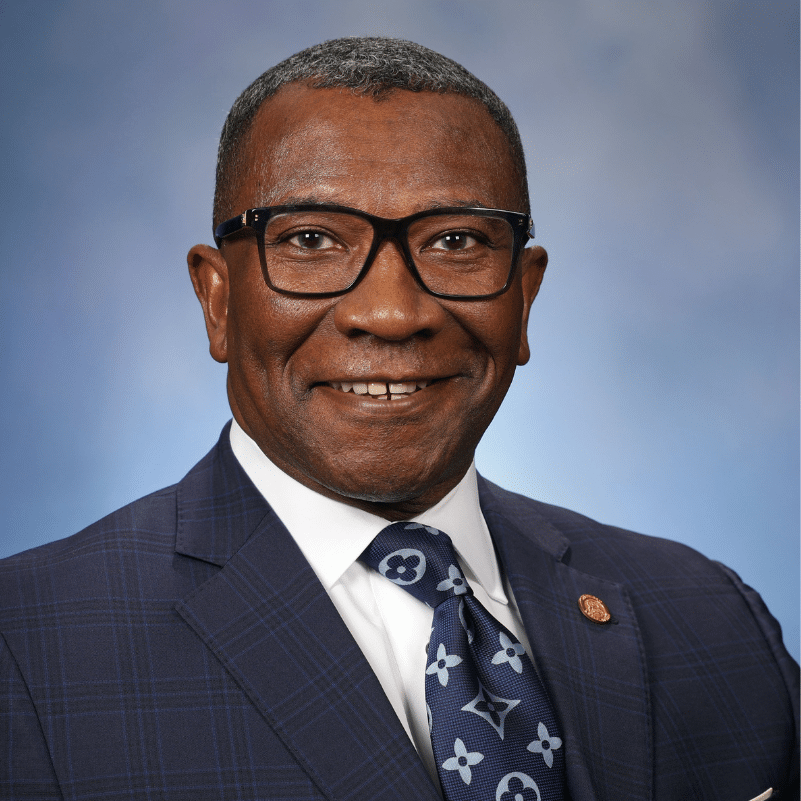
Amos O'Neal
Amos O'Neal House · District 94
D
Strong +
100% 18
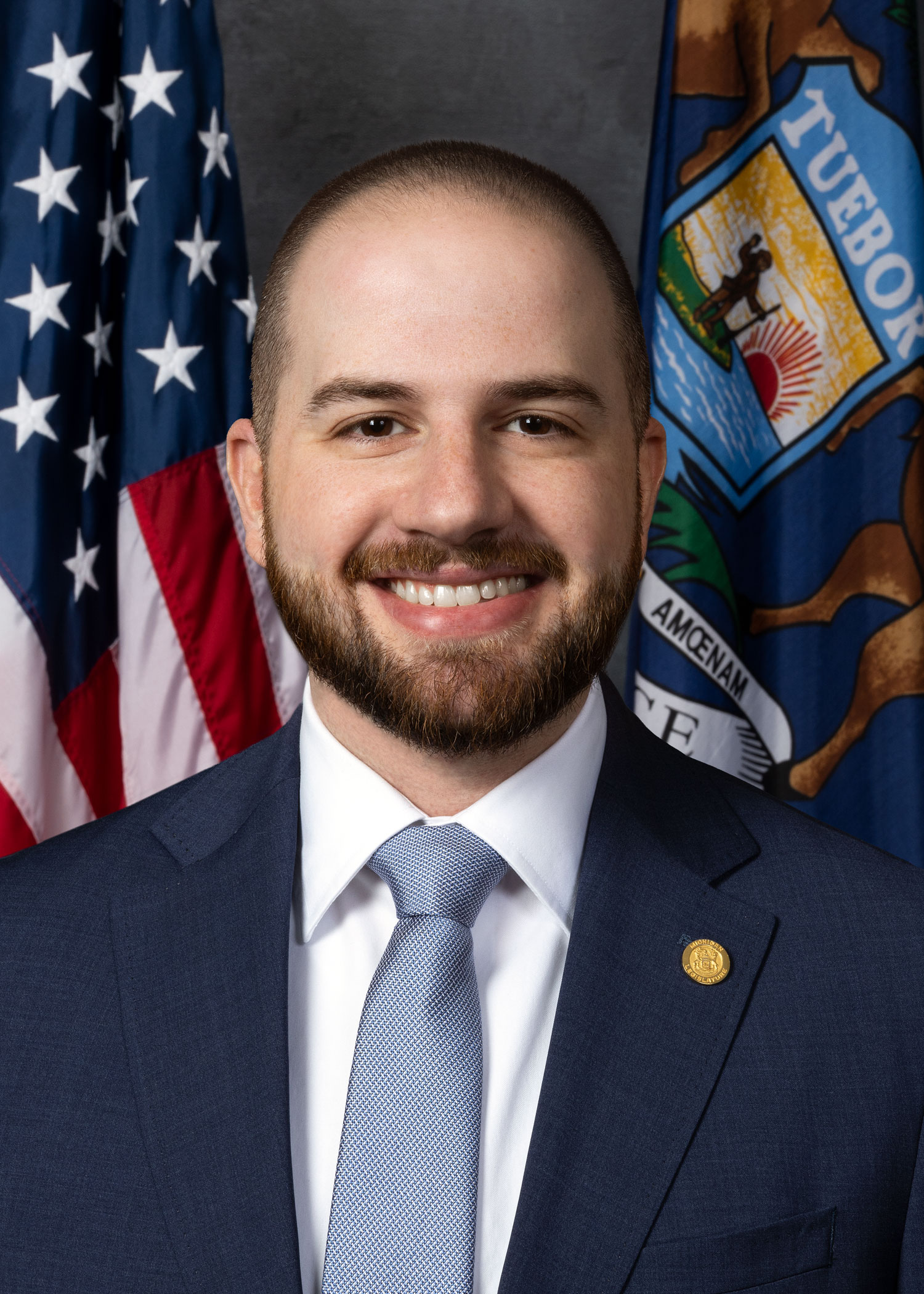
Erika Geiss
Erika Geiss Senate · District 1
D
Support
77% 43
Jeremy Moss
Jeremy Moss Senate · District 7
D
Support
73% 48
Veronica Klinefelt
Veronica Klinefelt Senate · District 11
D
Support
73% 48
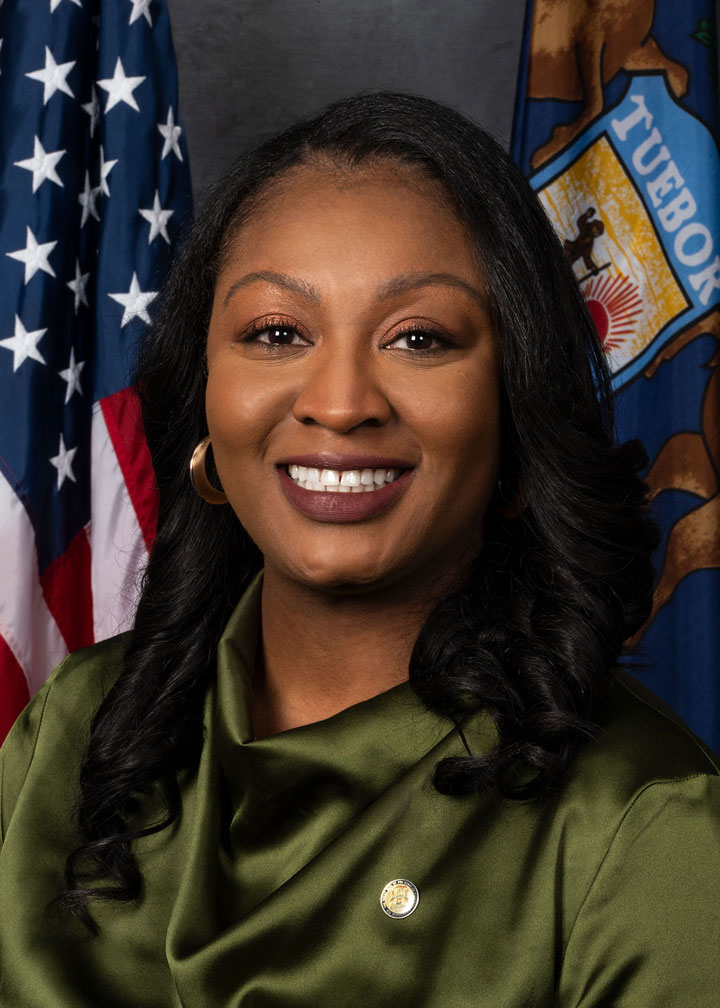
Sarah Anthony
Sarah Anthony Senate · District 21
D
Support
73% 48
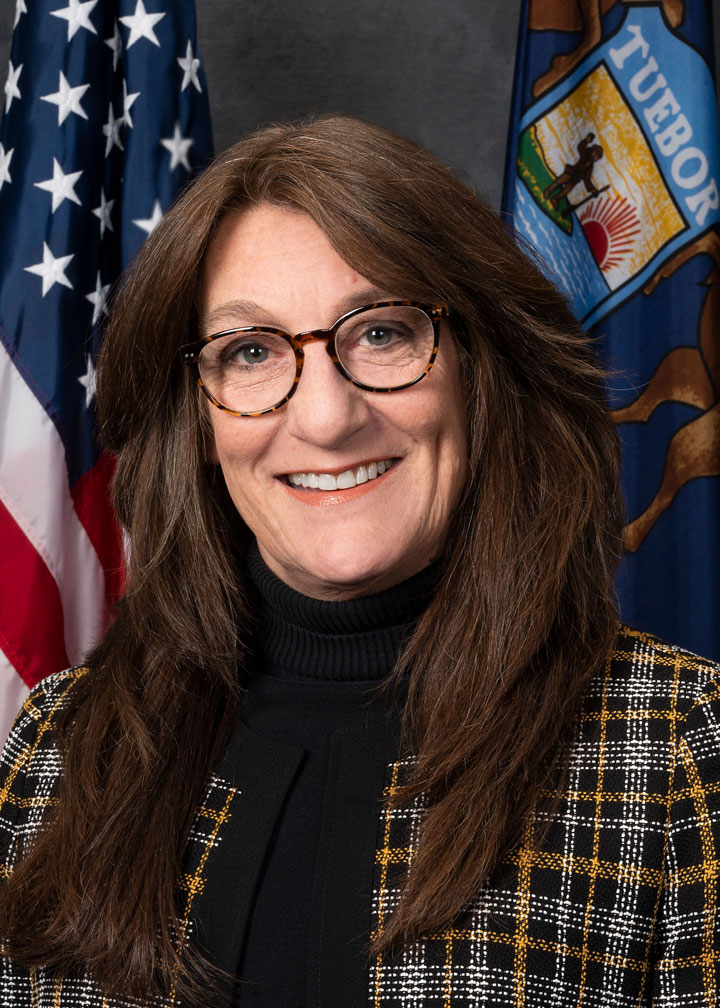
Lana Theis
Lana Theis Senate · District 22
R
Oppose
27% 43
Thomas Albert
Thomas Albert Senate · District 18
R
Oppose
27% 48
Michele Hoitenga
Michele Hoitenga Senate · District 36
R
Oppose
27% 48
Jonathan Lindsey
Jonathan Lindsey Senate · District 17
R
Oppose
27% 47
Jon Bumstead
Jon Bumstead Senate · District 32
R
Oppose
29% 44
Showing 171–180 of 239 bills

All criminal justice bills

in committee · Michigan · House Oct 21, 2025

HR 184: A resolution to urge the United States Congress to swiftly pass House Bill 1156, the Pandemic Unemployment Fraud Enforcement Act, to ensure that federal and state authorities have sufficient time to hold fraudsters accountable and recover stolen taxpayer funds.

This House Resolution (HR 184) urges the U.S. Congress to pass H.R. 1156, the Pandemic Unemployment Fraud Enforcement Act. The resolution states that H.R. 1156 would extend the statute of limitations for prosecuting pandemic unemployment fraud from five to ten years, allowing federal and state authorities more time to investigate complex fraud cases - such as those involving identity theft or money laundering - and recover misused taxpayer funds. It references Michigan's estimated $8.5 billion in potentially fraudulent pandemic unemployment benefits as context for the need for extended enforcement. As a procedural resolution, HR 184 itself does not create new law but seeks to advance H.R. 1156.
in committee · Michigan · House Sep 24, 2025

HB 5016: Crimes: prostitution; offenses of and references to prostitute and prostitution; modify in the Michigan penal code. Amends secs. 13, 159g, 167, 411j, 448, 449, 450, 451, 451a, 451c, 452, 453, 454, 455, 456, 457, 458, 459, 460, 462 & 520m of 1931 PA 328 (MCL 750.13 et seq.) & repeals sec. 449a of 1931 PA 328 (MCL 750.449a). TIE BAR WITH: HB 5017'25, HB 5018'25, HB 5019'25, HB 5015'25, HB 5014'25, HB 5028'25, HB 5020'25, HB 5021'25, HB 5027'25, HB 5022'25, HB 5023'25, HB 5024'25, HB 5025'25, HB 5026'25

HB 5016 updates Michigan's penal code by replacing outdated terms like "prostitute" and "prostitution" with modern, less stigmatizing language such as "person engaged in commercial sexual activity." It specifically amends Section 167 to remove "common prostitute" from the definition of a disorderly person, changing the language to focus on conduct rather than labeling individuals. This bill directly affects how the law refers to and potentially prosecutes individuals involved in commercial sexual activity under current statutes. The changes aim to align terminology with contemporary legal standards without altering the underlying criminal penalties for related offenses.
Sub-Topics Human Trafficking
in committee · Michigan · House May 21, 2026

HB 5107: Marihuana: penalties and remedies; marihuana for personal use and possession; modify allowable amounts of. Amends secs. 5 & 15 of 2018 IL 1 (MCL 333.27955 & 333.27965). TIE BAR WITH: HB 5105'25

HB 5107 amends Michigan's marijuana laws to adjust possession and cultivation limits for adults 21+ and modify penalties for exceeding those limits. It increases personal possession from 2.5 ounces to 10 ounces at home, allows up to 12 plants for personal cultivation, and permits 2.5 ounces of concentrate. For minor excesses (e.g., possessing 2-5 ounces instead of 2.5 ounces), the bill changes penalties from criminal charges to civil fines (up to $500 for second offenses), avoiding jail time for first-time violations. The changes apply directly to Michigan residents 21+ who use or cultivate marijuana within the new limits.
Sub-Topics Drug Policy
in committee · Michigan · Senate Oct 30, 2025

SB 628: Human services: medical services; coverage for syringe service programs; provide for. Amends 1939 PA 280 (MCL 400.1 - 400.119b) by adding sec. 109t.

SB 628 requires Michigan's medical assistance program (Medicaid) to cover syringe service programs, which provide clean needles, disposal containers, and other harm reduction supplies to people who inject drugs. This directly affects individuals who use injection drugs by expanding access to safer equipment, and it affects the state's Medicaid program by mandating coverage for these services. The bill defines "syringe service programs" as harm reduction initiatives offering supplies like needles, cookers, and sharps disposal containers. It does not change eligibility for Medicaid but ensures these specific harm reduction services are funded under existing medical assistance.
in committee · Michigan · Senate Oct 30, 2025

SB 629: Health: other; syringe service programs; provide for. Amends secs. 7401, 7403, 7453 & 7457 of 1978 PA 368 (MCL 333.7401 et seq.) & adds sec. 5137.

SB 629 creates a legal framework for needle and syringe access programs in Michigan to reduce the spread of communicable diseases like HIV and hepatitis. It allows authorized programs (run by health departments or local agencies) to distribute sterile needles/syringes and provide related services. Participants in these programs are exempt from criminal penalties under existing laws for possessing needles, trace amounts of drugs in used equipment, or drug testing supplies. The bill directly affects people who use injection drugs, local health programs, and law enforcement by clarifying that program participation does not violate drug possession or paraphernalia laws.
in committee · Michigan · House Apr 22, 2025

HB 4334: Traffic control: accidents; penalties for moving violation causing physical injury or death to a vulnerable roadway user; enhance. Amends secs. 303, 320a, 601c & 653a of 1949 PA 300 (MCL 257.303 et seq.); adds secs. 79g & 79h & repeals sec. 653b of 1949 PA 300 (MCL 257.653b). TIE BAR WITH: HB 4335'25

House Bill 4334 proposes to enhance penalties for drivers who commit moving violations that result in physical injury or death to vulnerable roadway users. The bill amends several sections of the Michigan Vehicle Code (1949 PA 300) and adds new sections to implement these stricter consequences. Its aim is to increase accountability for drivers whose actions lead to harm for pedestrians, bicyclists, or other vulnerable individuals on the road.
Sub-Topics Traffic Safety
in committee · Michigan · House Nov 6, 2025

HB 5216: Corrections: state facilities; medical information regarding a prisoner provided to individuals as authorized by a prisoner; allow. Amends 1953 PA 232 (MCL 791.201 - 791.285) by adding sec. 64a.

HB 5216 requires Michigan correctional facilities to provide prisoners with a medical information release form, an emergency contact form, and explanatory materials upon intake. Prisoners must designate specific individuals to receive their medical information during critical emergencies (defined as hospitalization needs) and provide accurate contact details, with the responsibility to update this information if changes occur. During a critical medical emergency, the department must notify one designated emergency contact and may arrange hospital visits for approved family or clergy if medically appropriate. This bill directly affects prisoners in Michigan correctional facilities and their designated contacts, creating a formal process for sharing medical information during emergencies.
in committee · Michigan · Senate Nov 5, 2025

SB 255: Criminal procedure: other; violation of tampering with utility shut-off procedures; decriminalize under certain circumstances. Amends title & secs. 282 & 383a of 1931 PA 328 (MCL 750.282 & 750.383a).

SB 255 would decriminalize restoring water service to a lawfully occupied home after a shutoff due to non-payment, provided no metering or backflow devices are damaged. It changes penalties from potential felony charges to civil violations, with first offenses requiring up to 25 hours of community service, and repeat offenses limited to fines under $500 or up to 100 hours of service. The bill applies specifically to residents who restore service themselves, not utility workers or others. It also mandates referrals to water assistance programs for those cited under this provision.
in committee · Michigan · House Jun 26, 2025

HB 4669: Corrections: other; site visits by legislators; provide for. Amends 1953 PA 232 (MCL 791.201 - 791.285) by adding sec. 7b.

HB 4669 requires Michigan correctional facilities to allow unannounced, immediate inspections by state legislators upon request. It directly affects all correctional facilities under the Department of Corrections and state legislators (senators and representatives). The key provision mandates that facility staff must grant legislators access to inspect any premises without prior notice. This bill enhances legislative oversight by providing direct, on-the-ground access to correctional facilities for lawmakers.
Sub-Topics Corrections
passed both · Michigan · House Mar 24, 2026

HB 5234: Law enforcement: funds; allowable uses for fee revenue related to salvage vehicle inspection; modify. Amends sec. 217c of 1949 PA 300 (MCL 257.217c).

HB 5234 modifies Michigan's vehicle code to change how law enforcement agencies can use fees collected from salvage vehicle inspections. Specifically, it updates Section 217c of the Michigan Vehicle Code (MCL 257.217c) to expand allowable uses for these fee revenues. The bill directly affects local law enforcement agencies that collect these inspection fees, allowing them to allocate funds toward equipment, training, or other operational needs previously restricted. This is a procedural funding adjustment with no new tax or mandate.
Sub-Topics Law Enforcement
Showing 171 to 180 of 239 bills
Previous 1 17 18 19 24 Next