

Maddy summaryHR 1919, the "Anti-CBDC Surveillance State Act," prohibits the Federal Reserve from developing, testing, or issuing any central bank digital currency (CBDC) or similar digital assets. It specifically bans the Fed from offering direct financial products to individuals, maintaining individual accounts, or issuing CBDCs directly or indirectly through intermediaries like banks. The bill also blocks the Fed from using any digital asset for monetary policy and clarifies that physical currency's privacy protections remain intact. This policy directly affects the Federal Reserve System's ability to create or manage digital monetary tools.
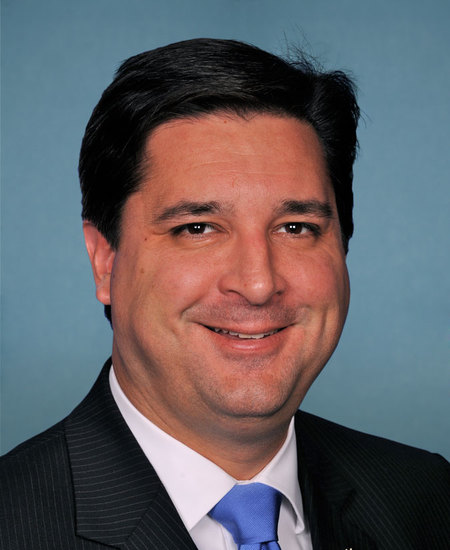
Rep. David Rouzer
Sponsored bills
Maddy summaryThe SHIELD Act would change unemployment benefit eligibility by barring workers from receiving regular unemployment compensation if they are unemployed due to a strike or labor dispute they are participating in, financially supporting, or have a direct interest in (excluding lockouts). This rule would require states to adjust their unemployment programs to deny benefits in such cases. The changes would take effect two years after the bill becomes law, though states could choose to implement them sooner. The bill also repeals a federal tax provision related to unemployment tax rates, but this is a secondary provision.
Maddy summaryHR 4450, the National Education Association Charter Repeal Act, repeals the federal charter granted to the National Education Association (NEA) under 36 U.S. Code Chapter 1511. This bill directly affects the NEA by removing its status as a federally chartered organization, though the NEA will continue operating as a private entity. The key provision is the complete repeal of the specific statutory provision (36 U.S. Code Chapter 1511) that had provided the NEA with its federal charter since 1961. This is a procedural change with no direct impact on education policy or public funding.
Maddy summaryHR 4382 authorizes the U.S. Mint to produce commemorative coins for the 2028 Los Angeles Olympics/Paralympics and 2034 Salt Lake City Winter Olympics/Paralympics. It specifies gold, silver, and half-dollar coin designs with defined mintage limits (e.g., up to 100,000 $5 gold coins for each event), all bearing inscriptions like "2028" or "2034" and standard coin features. A surcharge ($5-$50 per coin) is added to sales, with all funds directed to the respective Olympic committees to support event hosting and legacy programs like youth sports. The bill ensures no net cost to the government by requiring surcharge revenues to cover all design, production, and marketing expenses before funds are disbursed.
Maddy summaryHR 4370, the SAMS Act of 2025, codifies five existing executive orders into law to strengthen U.S. mineral supply chains. It gives legal force to orders focused on securing critical minerals (like lithium and rare earths) for national security and economic resilience, directly affecting federal agencies implementing these strategies. Key provisions require agencies to follow these established policies - addressing reliance on foreign mineral sources, supporting domestic mining, and prioritizing national security in mineral processing - without creating new regulations. The bill does not alter current mineral policies but formally enshrines them as binding federal requirements.
Maddy summaryHCONRES 43 is a non-binding congressional resolution expressing that public performances of "The Star-Spangled Banner" should use the original English lyrics written by Francis Scott Key. It encourages performers and event organizers to preserve the anthem's historical integrity by using its original English text, rather than translated or adapted versions, as a way to honor its 1814 origins and 1931 designation as the national anthem. The resolution does not create new law or impose legal requirements but formally states Congress's preference for maintaining the anthem's traditional English lyrics in public settings. It directly affects public events where the anthem is performed, such as sports games, ceremonies, and official gatherings.
Maddy summaryThis bill requires federal agencies to provide detailed information about payments they authorize, including the purpose, funding source, and activity type. It mandates agencies to verify bank account information before payments are made and gives the Treasury Department access to the National Directory of New Hires, tax information, and Social Security data to help identify and prevent improper payments. Agencies must periodically verify payment information accuracy and report on payments exempt from these requirements due to sensitive operations. These provisions apply to all federal agencies using Treasury disbursement systems, aiming to improve government spending efficiency through better data sharing and verification processes.
Maddy summaryHRES 565 designates the week of June 30-July 4, 2025, as "National Tire Safety Week" to promote education about tire maintenance for American motorists. The resolution supports existing safety practices like checking tire pressure monthly (when tires are cold), verifying tread depth (using the penny test), and rotating tires per manufacturer guidelines. It encourages drivers to inspect tires for damage and follow recommended maintenance to reduce risks like underinflation, hydroplaning, and premature wear. As a non-binding resolution, it expresses congressional support for public awareness efforts but does not create new legal requirements.
Treat and Reduce Obesity Act of 2025 This bill expands Medicare coverage of intensive behavioral therapy for obesity. Specifically, the bill allows coverage for therapy that is provided by (1) a physician who is not a primary care physician; or (2) other health care providers (e.g., physician assistants and nurse practitioners) and approved counseling programs, if provided upon a referral from, and in coordination with, a physician or primary care practitioner. Currently, such therapy is covered only if provided by a primary care practitioner. The bill also allows coverage under Medicare's prescription drug benefit of drugs used for the treatment of obesity or for weight loss management for individuals who are overweight.
Maddy summaryHR 4178, the "Enforce the Caps Act," sets specific annual spending limits for non-defense discretionary programs in federal budgets from fiscal years 2026 through 2029. It establishes new budget authority ceilings of $1.622 trillion for 2026, increasing to $1.671 trillion by 2029. These caps directly affect federal agencies managing programs like education, transportation, and scientific research by restricting their annual funding levels. The bill amends the 1985 Balanced Budget Act to insert these fixed spending levels into law, creating binding limits for those fiscal years.