

Maddy summary# Summary of Proposed FEMA Reform Legislation (FEMA Act of 2025) This comprehensive legislative document proposes significant reforms to the Robert T. Stafford Disaster Relief and Emergency Assistance Act, with four main sections addressing: ## 1. Disaster Assistance Reforms - **Expanded eligibility** for assistance, including clarifying that absence of a fixed address doesn't disqualify individuals from sheltering assistance - **Improved rental assistance** with consideration of local post-disaster rent increases - **Direct assistance** for those unable to use financial assistance, with no requirement to show other assistance can cover costs (except insurance) - **Enhanced notices** for applicants, including documentation of denial decisions - **Clarification of displacement assistance** eligibility, stating insurance shouldn't be considered a duplication of benefits ## 2. Mitigation Program Enhancements - **Preapproved project mitigation plans** requiring states to develop plans with peer review processes - **Improved allocation of funds** with formulas prioritizing vulnerable communities, high-risk areas, and rural/economically distressed communities - **Resilient buildings** requirements for housing retrofits using the latest building codes - **Streamlined application processes** for hazard mitigation funds across multiple programs - **Study on mitigation benefits** to evaluate cost savings and effectiveness ## 3. Transparency and Accountability Measures - **Public dashboards** for both individual assistance (431) and public assistance (432) showing application status, approvals, denials, and funding - **Transparency requirements** for disaster declarations with detailed justifications for approvals/denials - **GAO studies** on numerous topics including: - Identity theft in disaster assistance (409) - Insurance utilization for public assistance facilities (410) - Wildfire management plans (411) - Effectiveness of alerting systems (412) - Cost savings of repair/rebuilding reforms (415) - **Prohibition on political discrimination** in assistance distribution ## 4. Workforce and Operational Improvements - **Study on workforce retention** in noncontiguous communities - **Pilot program** for preliminary damage assessments in remote communities - **Fast-moving disasters working group** to develop best practices for rapid response The legislation focuses on improving efficiency, transparency, and effectiveness of disaster relief programs while prioritizing vulnerable populations and communities with higher risk of disasters. It also emphasizes data-driven decision making through required studies and reports to continuously improve disaster management policies.
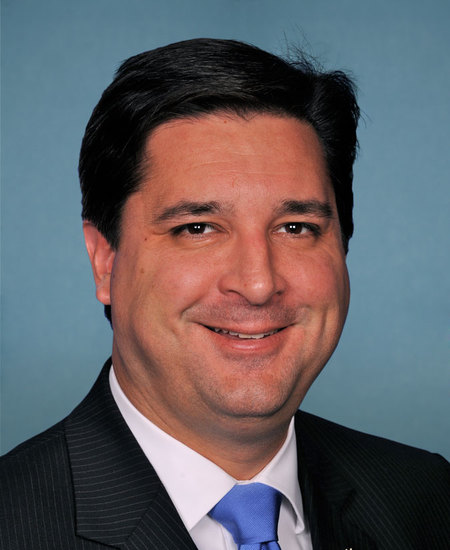
Rep. David Rouzer
Sponsored bills
Maddy summaryHR 4964, the Child Interstate Abortion Notification Act, requires physicians performing abortions on minors traveling across state lines to provide 24 hours of actual or constructive notice to the minor's parent before the procedure. It directly affects minors (under 18) seeking abortions in a state different from their residence, their parents, and healthcare providers. Key provisions mandate parental notification unless exceptions apply - such as medical emergencies, court waivers, verified abuse disclosures, or the minor being accompanied by a documented parent. The law aims to ensure compliance with parental involvement requirements in the minor’s home state, with penalties for noncompliance including fines or imprisonment for physicians.
Maddy summaryHR 4793, the SOS Act, requires the government to add a specific graph to annual reports about Social Security trust funds. The graph must compare two different funding assumptions: the amount assumed under current law (based on dedicated funding sources) versus the amount assumed under the Balanced Budget Act of 1985. This bill does not change Social Security payments or benefits; it only modifies how the government reports on trust fund finances. The requirement applies to reports prepared by the Congressional Budget Office and Treasury Department, affecting the transparency of federal budget documentation.
Maddy summaryThe Healthy H2O Act creates a federal grant program to help rural households and small facilities (like child-care centers) install certified water filtration systems that remove health contaminants such as lead, arsenic, and PFAS. Eligible recipients must live in rural areas, have tested water containing contaminants, and meet income limits (under 150% of their state’s median nonmetropolitan household income). Grants cover the cost of purchasing, installing, maintaining, and testing certified point-of-use or point-of-entry filtration systems. The program requires annual reports to Congress analyzing water quality trends, filter effectiveness, and emerging needs in affected communities. This initiative addresses immediate drinking water safety gaps where long-term infrastructure projects cannot yet provide solutions.
Maddy summaryThis bill establishes a federal right for livestock producers to sell meat and dairy products across state lines without facing conflicting state regulations. It prevents states from imposing production standards (like animal welfare rules) on products not raised within that state, ensuring a uniform national market for covered livestock products. The law specifically covers animals raised for meat or dairy (including milk products), but excludes egg production. This aims to eliminate barriers to interstate commerce for these products while aligning with U.S. trade obligations.
Maddy summaryThis bill prohibits life, disability, and long-term care insurers from denying coverage, canceling policies, or increasing premiums based solely on a person's status as a living organ donor. It directly protects living organ donors by preventing insurance discrimination unrelated to actual health risks. The bill also requires the Health and Human Services Secretary to update public educational materials about organ donation benefits, risks, and insurance impacts within six months of enactment. These materials will include information on the new insurance protections established by the bill. The law relies on state insurance regulators for enforcement of the insurance provisions.
Maddy summaryThis bill creates two new federal tax credits to support U.S. port crane manufacturing. It offers a 25% tax credit for businesses investing in new port crane manufacturing facilities (e.g., buildings, equipment) and a production credit of 40% or 60% of the sale price for port cranes sold domestically, with the higher rate requiring 90% U.S.-made component materials. The credits apply to facilities and production through 2035, directly affecting manufacturers of port cranes, their components, or related equipment located in the U.S. The legislation specifies exact definitions for "port crane" (e.g., gantry cranes at ports) and "component materials" to determine eligibility.
Maddy summaryThis bill amends the Family and Medical Leave Act (FMLA) and federal employee leave rules to clarify that recovery from organ donation surgery qualifies as a "serious health condition." It directly affects private-sector workers covered by the FMLA and federal civil service employees. The key change adds "including recovery from surgery related to organ donation" to the definitions of serious health conditions in both the FMLA and federal leave statutes. This ensures eligible employees can use their existing family and medical leave benefits to recover after donating an organ, without requiring new leave entitlements.
Maddy summaryThe Defending American Property Abroad Act of 2025 protects U.S. property interests in Western Hemisphere countries with U.S. free trade agreements. It requires the Secretary of Homeland Security to identify and list ports, harbors, or marine terminals where a foreign government has nationalized, expropriated, or seized U.S.-owned land (since January 2024) through actions like contract repudiation or forced control. Once listed, the President must prohibit vessels using these sites from importing goods, docking passenger vessels, or conducting maintenance in the United States. This directly affects U.S. persons (citizens or businesses) with property in designated locations.
Maddy summaryThe Jobs in the Woods Act establishes a federal grant program to fund career training in forestry operations and products industries. It provides competitive grants (ranging from $500,000 to $2 million over up to 4 years) to eligible entities like nonprofits, states, tribes, or community colleges in targeted rural areas. These areas must be nonmetropolitan low-income communities, have broadband access, or have populations under 50,000. Grants require applicants to demonstrate regional need, plan for program sustainability, partner with schools, and address aging workforces or youth migration. The program is funded at $10 million annually from 2026 through 2030.