

Maddy summaryThis bill aims to increase diversity among Massachusetts educators by requiring the state Department of Elementary and Secondary Education to create new hiring guidelines and alternative certification options. The law mandates that public schools and districts develop specific plans to eliminate discriminatory barriers, actively recruit underrepresented groups, and set measurable goals for hiring diversity that must be updated every three years. Additionally, it establishes a review process to ensure these plans meet state criteria and requires regular reporting on their implementation. The Department of Elementary and Secondary Education will also explore alternative ways to grant teacher certification, such as accepting portfolios or degrees from other states, instead of relying solely on standard testing.
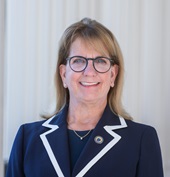
Sen. Joan Lovely
Sponsored bills
April 1, 2024 -- The committee on Education, to whom was referred the petitions (accompanied by bill, Senate, No. 239) of Michael D. Brady, James K. Hawkins, Patrick M. O'Connor and Patricia D. Jehlen for legislation to establish a special commission on creating a more diversified teaching workforce in the Commonwealth; (accompanied by bill, Senate, No. 252) of Brendan P. Crighton for legislation to promote racially integrated schools; (accompanied by bill, Senate, No. 254) of Brendan P. Crighton for legislation to promote racially and culturally inclusive K-12 curriculum; (accompanied by bill, Senate, No. 259) of Julian Cyr, Jack Patrick Lewis, Vanna Howard and Rebecca L. Rausch for legislation relative to LGBTQ+ inclusive curriculum; (accompanied by bill, Senate, No. 286) of Adam Gomez and Vanna Howard for legislation to ensure diversity in public education; (accompanied by bill, Senate, No. 288) of Adam Gomez, Tram T. Nguyen, Steven Ultrino, Jack Patrick Lewis and others for legislation to promote racially inclusive curriculum in schools; (accompanied by bill, Senate, No. 299) of Robyn K. Kennedy, Steven Owens and Rebecca L. Rausch for legislation to address racial and cultural bias training in educator professional development; (accompanied by bill, Senate, No. 311) of Jason M. Lewis, Manny Cruz, Joanne M. Comerford, Jack Patrick Lewis and other members of the General Court for legislation relative to educator diversity; (accompanied by bill, Senate, No. 318) of Liz Miranda, Joanne M. Comerford, Lydia Edwards, Jack Patrick Lewis and other members of the General Court for legislation to establish a permanent commission on American Indian and Alaska Native education; (accompanied by bill, Senate, No. 340) of Pavel M. Payano for legislation to enable all students to thrive: protecting a high quality, diverse educator workforce; and (accompanied by bill, Senate, No. 344) of Rebecca L. Rausch, Jack Patrick Lewis, Joanne M. Comerford, Vanna Howard and other members of the General Court for legislation relative to celebrate and teach Native American culture and history, report the accompanying bill (Senate, No. 2709).
Maddy summaryThis bill establishes a dedicated trust fund to provide grants for public school districts to install carbon monoxide detection systems in buildings equipped with fossil-fuel burning equipment or enclosed parking. It requires districts to submit detailed installation plans for review by the Departments of Elementary and Secondary Education and Fire Safety, ensuring projects are approved within 180 days. The legislation also mandates that new or renovated schools must meet specific building code standards for these detectors and allows for the temporary use of battery-operated alarms while permanent systems are installed. Additionally, the bill authorizes an initial transfer of $7.5 million to the fund and requires the creation of safety best practices for detector placement by January 1, 2025.
Maddy summaryThis bill creates a new legal category called "bona fide business entities" to help small businesses avoid being classified as employees by the state and federal government. To qualify for this status, a business must register with the Secretary of the Commonwealth, report its income as independent business earnings on tax forms, and comply with all existing laws regarding employee taxes, unemployment insurance, and workers' compensation. The primary effect is that services provided under a written contract by these qualifying entities will not count as employment for purposes of state tax codes, Title IX, Title XXI, and Labor and Industries regulations.
Maddy summaryThis bill creates a new Office of Career Technical Education within the state Department of Elementary and Secondary Education to better align vocational training with local job market needs. The office will be led by a deputy commissioner responsible for developing new programs, setting teacher competency standards, and creating industry-recognized credentials for students. Key provisions include establishing partnerships with businesses to design skill assessments, allowing students to split their time between regular high schools and specialized vocational centers, and facilitating credit transfers to community colleges and universities. Additionally, the bill mandates the use of data from student assessments to improve curriculum and equipment, while encouraging the use of existing national standards to validate student skills.
Maddy summaryThis bill creates a special commission to study how Massachusetts treats individuals with intellectual and developmental disabilities within the criminal justice system. The commission will investigate options for diverting these individuals away from arrest and incarceration, improve placement processes, and identify methods to prevent worsening of their conditions. The 21-member group includes representatives from government agencies, law enforcement associations, disability advocacy organizations, and clinical experts. By July 31, 2024, the commission must submit a report with findings and draft legislation to implement its recommendations.
Maddy summaryThis bill expands Massachusetts' existing Bottle Bill to include more types of drinkable liquids and larger containers, aiming to increase recycling rates. It defines "beverage" to cover most liquids for human consumption while excluding items like milk, infant formula, and small-scale fruit juices, and it raises the size limit for eligible containers to 2.5 liters for non-carbonated drinks and 3 liters for carbonated ones. The legislation also updates the refund value for returned containers to $2.75 for smaller items and $3.75 for larger ones, while exempting dealers with businesses under 2,000 square feet from certain immediate payment rules. Additionally, it requires the state secretary to review handling fees and refund values every three years to ensure they meet specific recycling targets, such as recycling 65% of containers by 2025 and 95% by 2031.
Maddy summaryThis bill establishes a temporary halt on approving new or expanded gas infrastructure projects across Massachusetts until at least 2026. The measure specifically targets facilities that process, store, transmit, or distribute combustible fuels like natural gas, renewable natural gas, and hydrogen. Under the new rules, regulators cannot grant permits for these projects unless they are strictly necessary for public safety. Additionally, the legislation prevents towns without existing gas service from digging up streets to build new fuel systems.
Senate, March 14, 2024 -- The committee on Financial Services to whom was referred the petition (accompanied by bill, Senate, No. 629) of James B. Eldridge, Michael J. Barrett, Vanna Howard and Sal N. DiDomenico for legislation relative to fairness in debt collection, report the accompanying bill (Senate, No. 2638).
By Representatives O'Day of West Boylston and Philips of Sharon, a petition (accompanied by bill, House, No. 2246) of James J. O'Day, Edward R. Philips and others for legislation to authorize attending physicians to prescribe medical aid in dying medication that will end the life of patients in a peaceful manner. Public Health.