

March , 2024 -- The committee on Education, to whom was referred the petitions (accompanied by bill, Senate, No. 256) of John J. Cronin, Manny Cruz and John Barrett, III for legislation to create and expand student pathways to success; (accompanied by bill, Senate, No. 274) of Paul R. Feeney, Jacob R. Oliveira, Adam Scanlon, Susan Williams Gifford and other members of the General Court for legislation to improve access, opportunity, and capacity in Massachusetts vocational-technical education; (accompanied by bill, Senate, No. 297) of Edward J. Kennedy and Joanne M. Comerford for legislation to expand dual enrollment for high school students in Gateway Cities; (accompanied by bill, Senate, No. 306) of Jason M. Lewis, Michael O. Moore, Kate Lipper-Garabedian and Patricia D. Jehlen for legislation relative increase student access to career technical education schools and programs which are aligned with regional labor market needs; (accompanied by bill, Senate, No. 334) of Jacob R. Oliveira, Jeffrey N. Roy and Michael J. Barrett for legislation to expand high school student access to earn industry recognized credentials; (accompanied by bill, Senate, No. 361) of John C. Velis for legislation to expand high school student access to earn industry recognized credentials; and (accompanied by bill, Senate, No. 362) of John C. Velis and Kelly W. Pease for legislation to expand dual enrollment for high school students in Gateway Cities, report the accompanying bill (Senate, No. 2664).
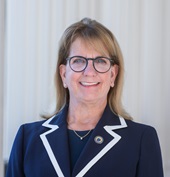
Sen. Joan Lovely
Sponsored bills
Maddy summaryThis bill aims to increase housing availability by requiring local zoning laws to allow multifamily apartment buildings by right in at least 1.5% of a town's developable land. It establishes a minimum density of 20 units per acre for these developments and removes certain restrictions on open space residential projects, making them easier to approve. Additionally, the legislation mandates that accessory dwelling units, such as in-law apartments, be permitted by right in all single-family residential zones with minimal regulation on their design. The bill also introduces a new site plan review process that allows municipalities to evaluate the layout and infrastructure of developments without requiring special permits or variances.
Maddy summaryThis bill allows cities and towns in Massachusetts with at least 50,000 residents to offer property tax exemptions for small-scale urban farms. It specifically targets real estate under two acres used for agriculture or horticulture that generates at least $500 in sales annually. Local governments would have the authority to decide the exact tax reduction percentage and whether rooftop or container farms qualify for the benefit. The law takes effect only after a city or town votes to adopt it.
Maddy summaryThis bill prohibits the use of glyphosate herbicides on Commonwealth-owned public lands, such as state parks, playgrounds, and school buildings, starting on December 31, 2023. Under the new rules, applying these herbicides is only allowed if a person holds a specific state license for research or obtains an emergency permit when there is an immediate threat to health or the environment and no other options exist. The legislation also adds a definition for glyphosate and reinforces existing requirements for proper pesticide handling and record-keeping. Finally, the Department of Food and Agriculture is tasked with creating regulations to enforce these changes within one year of the bill taking effect.
Maddy summaryThis bill requires all acute-care hospitals in Massachusetts to include a licensed registered nurse as a voting member of their governing board. The nurse would participate in key decisions regarding the hospital's strategic planning, organizational structure, policies, and programs. By mandating this role, the legislation ensures that nursing leadership has a direct voice in the hospital's highest-level management. The change applies to every acute-care facility defined under current state law.
Maddy summaryThis bill aims to address shortages in Massachusetts' direct care and dementia workforce by creating new training and career advancement opportunities. It establishes a pilot program to provide free Certified Nursing Assistant training and testing to up to 1,000 individuals in areas with high workforce needs, offering a $1,000 bonus to graduates who remain employed for at least one year. Additionally, the legislation creates a career pathway that allows home health aides to advance to Certified Nursing Assistant and Licensed Practical Nurse roles within the state. The bill also expands the list of medical fields considered for certain health services to include geriatrics, geriatric psychiatry, neurology, and neuropsychology.
Maddy summaryThis bill creates a PFAS Remediation Trust Fund to help Massachusetts residents and local governments address contamination from per- and polyfluoroalkyl substances in drinking water, groundwater, and soil. The fund is designed to cover remediation costs for municipalities, private well owners, and public water systems without requiring additional annual appropriations from the state budget. Money for the fund will come from settlements related to claims against manufacturers of PFAS-containing aqueous film-forming foam, and any unused funds at the end of a fiscal year will roll over to the next year. The executive office of energy and environmental affairs is responsible for administering the fund and ensuring expenditures align with existing legal settlements.
Maddy summaryThis bill amends Massachusetts law to require that individuals using pesticides containing the herbicide glyphosate must hold a valid license or permit issued by the state department. It applies to both agricultural and non-agricultural uses on any land, meaning homeowners and other non-farmers would need certification to apply these products. Additionally, the legislation mandates that retailers verify a customer's license before selling or supplying glyphosate-containing pesticides and requires these sales to occur on the business premises. Businesses wishing to sell these products must register with the department, pay an annual fee of up to $25, and adhere to specific terms set by the department.
By Representative Gentile of Sudbury, a petition (accompanied by bill, House, No. 2183) of Carmine Lawrence Gentile and others for legislation to improve food allergy awareness. Public Health.
By Representatives Carey of Easthampton and Fernandes of Falmouth, a petition (accompanied by bill, House, No. 2727) of Daniel R. Carey and Dylan A. Fernandes relative to the establishment of first-time homebuyer savings accounts and providing for an income tax deduction for certain amounts contributed to such accounts. Revenue.