

Maddy summaryThis bill creates a new Board of Registration in Midwifery within the Department of Public Health to oversee the licensing and regulation of midwives in the state. The board will consist of nine appointed members, including experienced midwives, obstetricians, and a public representative, with a specific requirement to consider racial disparities in maternal health during appointments. Additionally, the legislation expands the state's allied health professions board to include lactation consultants and updates various laws to formally recognize certified nurse-midwives and licensed midwives in official definitions and hospital settings. The bill also mandates that the insurance commission cover postpartum depression screenings for state employees and allows coverage for medically necessary donor human milk for infants at high risk of certain conditions.
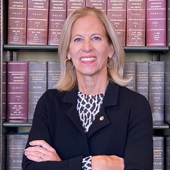
Rep. Carole Fiola
Sponsored bills
Maddy summaryThis bill expands the types of crimes for which prosecutors in Massachusetts can request pretrial detention based on a defendant's dangerousness. It directly affects individuals charged with specific offenses, including various forms of assault, drug-related crimes, and violent felonies, by adding new categories to the existing list of eligible charges. The key provision allows courts to order detention only if they find clear and convincing evidence that no release conditions would ensure public safety, while explicitly prohibiting judges from using financial bail as a means to detain someone. Additionally, the legislation clarifies that conspiracy or solicitation to commit these listed crimes also qualifies for such dangerousness-based detention requests.
Maddy summaryThis law bans the use of elephants, big cats, primates, giraffes, and bears in traveling animal acts, such as circuses and mobile carnivals, effective January 1, 2025. It prohibits anyone from allowing these animals to perform tricks or participate in entertainment while being transported in vehicles between locations. The ban does not apply to animals that live permanently at a fixed facility, veterinary transport, or film productions that do not involve live public exhibitions. Violations of the new rules can result in civil penalties ranging from $500 to $10,000 per animal involved.
Maddy summaryThis bill strengthens safety and justice measures by expanding access to social services for indigent defendants and improving compensation for those convicted of crimes in error. It requires the state to connect eligible clients with vendors for post-release support and lowers the legal standard of proof for wrongful conviction claims from "clear and convincing" to "a preponderance of the evidence." The legislation also establishes specific monetary caps for damages awarded to claimants, authorizes courts to order expungement of criminal records for erroneous convictions, and introduces stricter penalties for tampering with GPS monitoring devices used during probation or parole. Additionally, it updates the criteria for pretrial detention to include certain repeat offenses and violations of specific protective orders.
Maddy summaryThis bill amends Massachusetts law to protect individuals and food establishments from civil lawsuits when they donate food, including items that have passed their expiration dates, to nonprofit organizations or other recipients. The protections apply as long as the donated food is not misbranded or adulterated and was handled in compliance with public health regulations, while also excluding cases involving gross negligence, recklessness, or intentional misconduct by the donor. By removing liability for injuries caused by the condition of such donated food, the legislation aims to encourage more people and businesses to contribute surplus food to those in need without fear of legal repercussions.
Maddy summaryThis bill encourages food donations by offering a tax credit of up to $25,000 annually to businesses that donate food to nonprofit organizations serving people in need. It also provides legal protections for donors and nonprofits by shielding them from civil liability if donated food causes injury, even if the food is past its expiration date, provided it was not handled with gross negligence. To claim the tax credit, businesses must submit a certification from the receiving nonprofit confirming the food was distributed without charge or only to cover handling costs. The legislation applies to farms, restaurants, and grocery stores within the state and requires that all donations comply with existing health and safety regulations.
Maddy summaryThis bill aims to stop wage theft and hold employers accountable by strengthening how the state enforces labor laws. It creates a new public enforcement unit within the Attorney General's office to investigate unpaid wages and other violations. The legislation also expands the types of penalties available to punish companies that fail to pay workers correctly. These changes directly affect employees who may have been underpaid and the businesses that employ them.
Maddy summaryThis law establishes a new disability pension program for public safety workers, such as police officers and firefighters, who suffer permanent injuries from violent attacks involving weapons like firearms or knives. To qualify, an injured employee must be unable to perform their job duties, and the injury must have occurred within two years of their application for retirement. The bill mandates a rigorous review process involving medical panels to confirm the injury's severity and permanence before granting benefits. Once approved, eligible workers receive a monthly pension equal to 100% of their pre-injury salary, plus a lump-sum payment of their accumulated retirement deductions, with additional survivor benefits for spouses and children.
The committee of conference on the disagreeing votes of the two branches with reference to the Senate amendment of the House Bill relative to salary range transparency (House, No. 4109), reports, in part, recommending passage of the accompanying bill (House, No. 4890).
By Representatives Fiola of Fall River and Jones of North Reading, a petition (accompanied by bill, House, No. 3245) of Carole A. Fiola, Bradley H. Jones, Jr., and others relative to the use of elephants, big cats, primates, giraffes, and bears in traveling exhibits and shows. Tourism, Arts and Cultural Development.