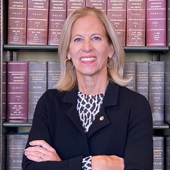
By Representative Gregoire of Marlborough, a petition (accompanied by bill, House, No. 2336) of Danielle W. Gregoire and Carole A. Fiola relative to the expansion of the state DNA database. Public Safety and Homeland Security.
Rep. Carole Fiola
Sponsored bills
Maddy summaryThis bill expands the authority of court officers to ensure safety both inside courthouses and in surrounding areas like parking lots. It grants these officers police powers when they are working outside traditional court buildings, such as during remote hearings, when escorting jurors, or when transporting detainees. The changes apply to all court officers and those authorized to act in that capacity across the Commonwealth of Massachusetts.
Maddy summaryThis bill authorizes the town of Freetown to hire retired full-time police officers as special police officers to assist with various police duties. To qualify, applicants must have previously served as regular officers, voluntarily retired due to age, pass a medical exam paid for by the individual, and maintain their own health insurance. The act grants these special officers the same arrest powers as regular police but limits their employment to one-year renewable terms with no additional town benefits beyond an hourly detail rate. Additionally, the legislation exempts these officers from certain state laws regarding age restrictions and specific employee protections while requiring them to follow the town's standard departmental rules.
Maddy summaryThis bill requires covered employers in Massachusetts to submit detailed wage data reports alongside their existing annual reports to the state secretary. The state secretary will then compile this information and publish aggregate wage statistics on the executive office of labor and workforce development website, organized by industry and released annually by June 1. While the bill mandates the collection and public release of these aggregate statistics, it explicitly excludes the individual wage data reports from being considered public records, thereby protecting specific employer information from public disclosure.
Maddy summaryThis bill requires Massachusetts mental health providers to offer support groups as a treatment option during annual wellness exams. It mandates that patients receive a list of resources and, if diagnosed with a mental health condition, be referred to care accessible within six weeks. The legislation also establishes a state network of evidence-based support groups and requires annual reporting on referral success rates to track system performance.
Maddy summaryThis bill proposes establishing a livable wage specifically for human services workers in Massachusetts. It directly affects employees of community-based organizations that receive funding from state agencies such as the Executive Office of Health and Human Services, the Executive Office of Elder Affairs, or the Department of Housing and Community Development. The legislation defines these workers as staff who provide treatment, support, or services to clients and their families, while defining the organizations as those with funded human services programs. By amending Chapter 6A of the General Laws, the bill creates a formal framework to ensure these essential workers are paid a wage deemed sufficient to meet basic living needs.

Maddy summaryThis bill modifies how Massachusetts calculates assets for seniors aged 65 and older who apply for state assistance programs. It clarifies that money moved into a special needs trust for these individuals counts as a resource only when the trust is actually used to buy goods or services for the person. By defining this specific type of transfer as a fair market value disposal, the law ensures that funds in the trust are treated correctly during eligibility reviews without changing the trust's protective purpose. The change directly impacts elderly residents and the state agencies that determine their access to public benefits.
Maddy summaryThis bill amends Massachusetts law to change how special needs trusts for seniors are treated when determining eligibility for Medicaid. Currently, transferring assets into these trusts can be counted as a resource that might disqualify a person from receiving government health benefits. The proposed change would allow individuals aged 65 and older to place assets into these trusts without those funds being counted against them, provided the money is used only for the senior's benefit. This adjustment aims to help disabled seniors access Medicaid while still maintaining their financial support through private trusts.
By Representatives Kane of Shrewsbury and Fiola of Fall River, a petition (accompanied by bill, House, No. 2203) of Hannah Kane, Carole A. Fiola and others relative to informed consent for concurrent surgical procedures. Public Health.
By Representative Fiola of Fall River, a petition (accompanied by bill, House, No. 2165) of Carole A. Fiola and Paul A. Schmid, III that the Office of Medicaid be authorized to require laboratories providing toxicology testing to demonstrate functional and operational test-utilization and test-frequency control programs. Public Health.