

Maddy summaryThis bill amends Massachusetts law to change how towns calculate the land area used for subsidized housing inventory requirements. It directs municipalities to exclude specific types of land, such as areas under state historic preservation laws, protected farmland, private cemeteries, and utility corridors, from their total land area count. By removing these categories from the calculation, the legislation aims to adjust the threshold for determining if a town has sufficient available land for affordable housing. The change directly affects cities and towns that must report their land availability under the state's affordable housing program.
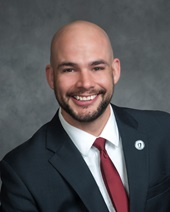
Rep. Joe McKenna
Sponsored bills
By Representative Howitt of Seekonk, a petition (accompanied by bill, House, No. 3349) of Steven S. Howitt and Joseph D. McKenna relative to roadways and road markings. Transportation.
Maddy summaryThis bill proposes to eliminate the $20 annual fee currently required for veterans to obtain special "VETERAN" license plates in Massachusetts. By amending state law, the measure would allow veterans to receive these plates without paying the extra charge, though they would still need to pay the standard vehicle registration fees. The change directly affects Massachusetts veterans who wish to display their service on their vehicles. If passed, the legislation would remove a specific financial barrier for veterans seeking this designation.
By Representative Cutler of Pembroke, a petition (accompanied by bill, House, No. 2758) of Josh S. Cutler and others relative to expanding the senior property tax exemption. Revenue.
By Representative Pignatelli of Lenox, a petition (accompanied by bill, House, No. 2256) of Smitty Pignatelli and others relative to membership in the Interstate Medical Licensure Compact. Public Health.
Maddy summaryThis bill expands protections for consumers with disabilities by establishing new rules for the repair and service of specialized, medically necessary wheelchairs. It defines "complex rehabilitation technology wheelchairs" as individually configured devices that require expert evaluation and maintenance, and it mandates that authorized suppliers repair these products in a timely manner without requiring prior approval from insurance payers. The Department of Public Health is tasked with creating specific repair standards through a stakeholder process and enforcing compliance, while also setting up a fee schedule to reimburse suppliers for necessary diagnostic evaluations. These changes aim to ensure consistent, high-quality service for wheelchair users across Massachusetts.
Maddy summaryThis bill requires various health insurance plans in Massachusetts to cover medically necessary services provided by licensed community behavioral health centers. The law specifically mandates that these plans offer coverage for mental health, developmental, and substance use disorder care delivered through a flat-rate payment model known as bundled services. By amending multiple state insurance chapters, the legislation ensures that individuals enrolled in different types of health plans receive these services on a nondiscriminatory basis.
Maddy summaryThis bill proposes changes to the Massachusetts health care system to better support family members who serve as unpaid caregivers for relatives receiving home care services. The legislation aims to establish a formal recognition program that would allow these family caregivers to receive training, respite care services, and other resources to help manage the demands of their role. By creating a structured support framework, the bill seeks to improve the well-being of both the caregivers and the individuals they support without altering the core funding or eligibility rules for existing home care programs.
Maddy summaryThis bill proposes changes to the payment rates for workers who provide support and services to individuals with disabilities in Massachusetts. It directly affects the Department of Developmental Services and the employees who deliver care under its programs. The legislation seeks to adjust how these workers are compensated, though the specific new rate amounts or calculation methods are not detailed in the provided text.
Maddy summaryThis bill requires the state of Massachusetts to reimburse cities and towns for specific expenses related to operating mandated early voting locations. The law covers costs such as hiring extra staff, paying overtime for municipal employees, purchasing voting booths, and installing privacy screens. Each year, the state auditor will estimate these costs, and the Secretary of the Commonwealth will request funding and distribute the money to local governments before the expenses are incurred. The funds are deposited directly into the general funds of the respective cities and towns to be used solely for these early voting requirements.