By Representative McKenna of Webster, a petition (accompanied by bill, House, No. 2376) of Joseph D. McKenna relative to firearm licensing requirements. Public Safety and Homeland Security.
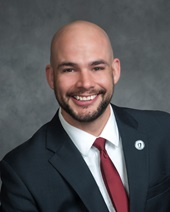
Rep. Joe McKenna
Sponsored bills
Maddy summaryThis bill amends Massachusetts zoning laws to allow accessory dwelling units, also known as in-law suites, in single-family residential areas on lots of at least 5,000 square feet. The legislation defines these units as self-contained living spaces with separate entrances that cannot be sold separately from the main home and must be at least 450 square feet but no larger than half the size of the primary dwelling or 900 square feet. A key provision requires that at least one person in either the main house or the new unit must be elderly or have a disability, while still permitting municipalities to limit the total number of such units to a minimum of 5 percent of existing housing. Additionally, the bill sets specific rules for parking, requiring no more than one additional space, and allows local governments to regulate setbacks and building height.
By Representative McKenna of Webster, a petition (accompanied by bill, House, No. 2375) of Joseph D. McKenna relative to the issuance of licenses for firearms. Public Safety and Homeland Security.
By Representative Gifford of Wareham, a petition (subject to Joint Rule 12) of Susan Williams Gifford and Joseph D. McKenna relative to the maintenance of records on the transfer of firearms, rifles, shotguns, machine guns and ammunition. Public Safety and Homeland Security.
Maddy summaryThis bill establishes a special commission to study and review Massachusetts condominium laws, directly affecting current and future condominium owners, property managers, and community associations. The seven-member committee will be appointed by the Speaker of the House, the Senate President, and the Governor, and must include specific experts such as a condominium law attorney representing unit owners, a current unit owner, and a certified property manager. Over the course of its work, the commission will hold public hearings to investigate issues like board meeting procedures, fee increases, financial audits, and dispute resolution processes before submitting a report with recommendations for new regulations by January 1, 2023.

Maddy summaryThis bill expands domestic violence protections in Massachusetts to include contract workers employed by staffing agencies and other third-party labor providers. It achieves this by legally defining these workers and their employers, ensuring they have the same right as traditional employees to take time off for safety reasons related to domestic violence. The change removes the previous restriction that limited these protections only to direct employees, thereby covering a broader range of workers in the Commonwealth.
Senate, October 19, 2023 -- The committee on Labor and Workforce Development, to whom was referred the petitions (accompanied by bill, Senate, No. 1166) of Ryan C. Fattman, Joseph D. McKenna, Brian M. Ashe, Alyson M. Sullivan-Almeida and other members of the General Court for legislation to ensure domestic violence victims' protections for all employees in the Commonwealth; and (accompanied by bill, House, No. 1919) of Joseph D. McKenna, Ryan C. Fattman and others relative to employment protections for domestic violence victims, reports the accompanying bill (Senate, No. 2479).
Maddy summaryThis law bans the use of elephants, big cats, primates, giraffes, and bears in traveling animal acts, such as circuses and mobile carnivals, effective January 1, 2025. It prohibits anyone from allowing these animals to perform tricks or participate in entertainment while being transported in vehicles between locations. The ban does not apply to animals that live permanently at a fixed facility, veterinary transport, or film productions that do not involve live public exhibitions. Violations of the new rules can result in civil penalties ranging from $500 to $10,000 per animal involved.
Maddy summaryThis bill amends Massachusetts law to protect individuals and food establishments from civil lawsuits when they donate food, including items that have passed their expiration dates, to nonprofit organizations or other recipients. The protections apply as long as the donated food is not misbranded or adulterated and was handled in compliance with public health regulations, while also excluding cases involving gross negligence, recklessness, or intentional misconduct by the donor. By removing liability for injuries caused by the condition of such donated food, the legislation aims to encourage more people and businesses to contribute surplus food to those in need without fear of legal repercussions.
Maddy summaryThis bill creates a special legislative commission to study the intentional misrepresentation and misuse of service animals in Massachusetts. The commission will consist of seventeen members appointed by various government officials and representatives from disability advocacy, business, and service dog organizations. Its primary task is to review current laws, investigate the prevalence of fraud, and examine practices in other states to determine if new regulations or penalties are needed. Additionally, the commission will explore whether service animals should be required to have a certification or registration system. The group must submit its findings and recommendations by April 1, 2025, to state legislators and relevant committee chairs.