

Maddy summaryThis bill creates a legal presumption that certain contagious diseases contracted by full-time police, fire, or emergency medical service workers were incurred during their duties, if they passed required physical exams upon entry and had no pre-existing condition. It applies to diseases like COVID-19, hepatitis, tuberculosis, and HIV - those linked to exposure to blood or bodily fluids - excluding the common cold. Workers must apply within five years of leaving active service and demonstrate they regularly responded to emergency calls during their tenure. Benefits, if approved, would cover disability or death claims under existing workers' compensation laws (Chapters 32, 41, 152).
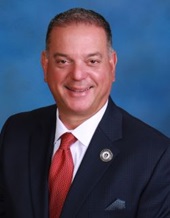
Rep. Angelo Puppolo
Sponsored bills
Maddy summaryMassachusetts bill HD 3453 requires trade contractors and subcontractors working on certain construction projects (including building construction, repair, and maintenance covered under specific Massachusetts laws) to participate in approved apprenticeship programs. Within 30 days of a contract award, these contractors must join a registered apprenticeship program (either state-approved or U.S. Department of Labor-approved) and employ registered apprentices throughout the project’s duration. Effective January 1, 2025, eligible programs must have graduated apprentices to journey worker status for at least three of the past five years. Contractors must submit written compliance documentation, including program details, to the Attorney General within 45 days of contract award.
Maddy summaryHD 3922 requires trade contractors and subcontractors working on certain Massachusetts construction contracts (including building repair, maintenance, or new construction) to use approved apprenticeship programs. Within 30 days of a contract award, these contractors must maintain or join a state- or U.S. Department of Labor-approved apprenticeship program and employ apprentices throughout the project. The bill also mandates that contractors submit written compliance proof, including program details, to the Attorney General within 45 days. To qualify, apprenticeship programs must have graduated apprentices to journey worker status for at least three of the past five years (effective January 1, 2023). This directly affects contractors on eligible state and public construction projects.
Maddy summaryHD 3991 requires utility contractors performing street excavations (like for gas, electricity, or cable work) to pay prevailing wages as defined by Massachusetts labor standards. It mandates that contractors submit wage agreements before permits are issued and maintain detailed payroll records showing hours worked, occupations, and wage rates for all workers. This applies to projects requiring permits from state, municipal, or utility authorities, directly affecting utility companies and their contractors. The bill enforces these requirements through existing labor laws (Chapter 149, Sections 26-27F) and connects to permit issuance procedures under Chapter 30.
Maddy summaryHD 2335 requires health insurers and Medicaid plans in Massachusetts to cover biomarker testing for patients when the test is supported by medical evidence, such as FDA approvals, CMS guidelines, or nationally recognized clinical practice guidelines. It directly affects patients needing personalized treatment (e.g., cancer care) and insurers, mandating coverage for diagnosis, treatment, or monitoring of diseases. Key provisions include strict timelines for prior authorization decisions (72 hours standard, 24 hours in emergencies), limits on requiring multiple biopsies, and clear processes for patients to appeal coverage denials. The bill ensures access to evidence-based testing without unnecessary delays or disruptions in care.
Maddy summaryHD 4037 requires Massachusetts' Department of Fire Services to collect data on violations related to hot work processes (like welding or cutting) under Chapter 148. This includes failures to maintain hot work training certification, performing hot work without certification, or not following permit requirements. The department must create a public database on its website containing this data and implement an automated system to notify affected property owners and insurance companies about violations. The bill directly affects businesses and property owners conducting hot work, aiming to improve safety transparency through centralized violation tracking.
Maddy summaryHD 685 amends Massachusetts law to explicitly allow vehicles owned or operated by the Department of Transportation (MassDOT) to display flashing red lights during safety operations. This change directly affects MassDOT vehicles like snowplows or maintenance trucks when responding to emergencies or performing urgent duties requiring immediate travel. The bill specifies these lights may only be used while the vehicle is actively responding to an emergency or performing an official duty that necessitates immediate action. It clarifies that this provision applies specifically to MassDOT vehicles, not other types of emergency vehicles covered under existing law. The amendment updates the existing legal framework to include MassDOT's operational needs.
By Ms. Miranda, a petition (accompanied by bill, Senate, No. 1884) of Liz Miranda, Sal N. DiDomenico, Michael F. Rush, Joanne M. Comerford and other members of the General Court for legislation relative to teacher retirement election. Public Service.
By Mr. Feeney, a petition (accompanied by bill, Senate, No. 597) of Paul R. Feeney, Joanne M. Comerford, James K. Hawkins, Angelo J. Puppolo, Jr. and other members of the General Court for legislation to conserve and improve natural and working lands. Environment and Natural Resources.
By Representative Hawkins of Attleboro, a petition (accompanied by bill, House, No. 384) of James K. Hawkins and others for legislation to direct the Department of Environmental Protection to publish a toxic chemicals of concern consumer products list. Consumer Protection and Professional Licensure.