

Maddy summaryThis Massachusetts bill establishes a 10-year pilot program to create overdose prevention centers that allow trained staff to monitor individuals using pre-obtained drugs. These facilities aim to reduce the risk of disease transmission and prevent fatal overdoses by providing a safe environment for consumption. Eligible operators include private organizations and municipal departments, but they must first receive approval from their local board of health before applying for a license. The Department of Public Health is tasked with creating specific rules for these centers and must review applications and notify applicants of their decision within 45 days.
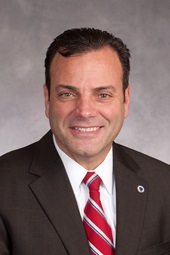
Rep. Paul McMurtry
Sponsored bills
Maddy summaryThis bill establishes new standards and accountability measures for clean energy projects in Massachusetts funded by state resources. It defines who must follow these rules, including businesses and public utilities receiving state contracts or grants for renewable energy and climate initiatives. The legislation also sets specific criteria for identifying environmental justice populations, such as communities with lower incomes or significant minority populations. By clarifying these terms and requirements, the act aims to ensure that workforce standards are consistently applied across various state energy programs.
Maddy summaryThis bill directs the Department of Elder Affairs to develop a plan for providing specialized services to individuals with early-onset Alzheimer's disease who are enrolled in MassHealth's frail elder home and community-based services waiver. The legislation requires the department to identify specific needs and barriers faced by this population and propose strategies to improve care and support. Additionally, the bill mandates that the department report its findings and proposed plan to the Joint Committee on Elder Affairs by a specified deadline.
Maddy summaryThis bill amends state regulations to require natural gas companies in Massachusetts to submit detailed plans for transitioning to clean energy while protecting their employees. The law mandates that these companies establish performance-based rate schemes that include specific service quality standards and workforce development strategies. Key provisions require companies to outline training programs for alternative energy sources, ensure sufficient staffing for pipeline safety, and propose mitigation measures like early retirement incentives to handle job losses during the shift away from fossil fuels. Ultimately, the legislation aims to balance the state's goal of achieving net zero emissions with the need to support workers affected by changes in the energy sector.
Maddy summaryThis bill directs the Massachusetts State Treasurer to create and regularly update a financial literacy curriculum specifically designed for seniors. The initiative requires the Treasurer to collaborate with the Office of Elder Affairs, the Massachusetts Councils on Aging, and AARP Massachusetts to ensure the program meets the needs of older adults. By adding this new section to Chapter 10 of the state laws, the legislation establishes a formal framework for improving financial education resources available to the state's senior population.
Maddy summaryThis bill creates a statewide "Adopt-A-Senior" volunteer program in Massachusetts to help older adults with snow removal and home maintenance tasks. The Department of Elder Affairs would manage the program by setting up a registry for volunteers, coordinating with community organizations, and matching volunteers with seniors in need. The legislation also allows the department to create rules for the program and establish incentive systems to encourage more people to participate. Funding for the initiative would come from state appropriations or donations from public and private sources.
Maddy summaryThis bill amends Massachusetts prevailing wage laws to include certain bona fide apprenticeship and training programs. It directly affects construction projects that utilize these specific training initiatives, ensuring they qualify for prevailing wage requirements. The key provision expands the definition of eligible projects to cover apprenticeships that meet established standards, thereby extending wage protections to workers in these programs. This change aims to align training program participants with the wage standards applied to other skilled labor on public works projects.
Maddy summaryThis bill amends state tax laws to increase financial incentives for housing production and rental ownership in Massachusetts. It raises the property tax exemption limits for new housing projects and increases the annual tax credit available to landlords who rent out qualifying units. Additionally, the bill introduces a new tax credit for low-income renters and requires an annual review to ensure housing incentives remain affordable relative to consumer prices. These changes are set to take effect for tax years starting on or after January 1, 2024, with a provision to revert the increased amounts to their original levels within ten years.
Maddy summaryThis bill establishes a dedicated trust fund to help public school districts install carbon monoxide detection systems in buildings that use fossil fuels or have enclosed parking. The fund will be administered by the Department of Elementary and Secondary Education in partnership with the Department of Fire Safety, which will review and approve installation plans submitted by schools before releasing grant money. Additionally, the legislation requires annual reports on the fund's status and mandates that future school construction projects include plans for these safety alarms. By creating a specific financial source and updating building codes, the bill aims to ensure schools have the necessary equipment to detect carbon monoxide leaks.