

Maddy summaryThis bill expands dental coverage for Massachusetts residents aged 65 and older who receive state-funded medical assistance. It requires the Division of Medical Assistance to cover specific dental treatments, including dentures, restorative work, root canals, and gum disease treatment, for this senior population. Additionally, the legislation ensures that seniors enrolled in the Essential program receive dental benefits equivalent to those provided to Basic program enrollees as of 2002. The changes apply only to individuals already eligible for MassHealth and do not affect private insurance or other payment methods.
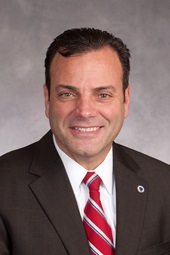
Rep. Paul McMurtry
Sponsored bills
Maddy summaryThis bill directs the Massachusetts Executive Office of Health and Human Services to create a state plan within one year that establishes training and care standards for healthcare providers treating patients with autism and intellectual and developmental disabilities. To guide this effort, the legislation creates a new advisory committee composed of health officials, medical experts, patient advocates, and representatives from major health organizations. The plan must include specific requirements for continuing education and strategies to improve how these conditions are diagnosed during routine outpatient visits. Additionally, the bill mandates that state licensure boards work with the advisory committee to ensure these new training standards are part of the renewal process for medical professionals.
Maddy summaryThis bill establishes a special commission to study the development, maintenance, and improvement of the Veterans of Foreign War Highway in Dedham and West Roxbury. The commission will consist of elected officials, local government leaders, and community members tasked with evaluating traffic patterns, funding options, land use for recreation, and potential aesthetic enhancements. Members of the commission will serve without pay or expense reimbursement and must submit their findings and a draft master plan by June 30, 2024.
Maddy summaryThis bill establishes a special commission to study the regulation of continuing care retirement communities in Massachusetts, aiming to protect the financial and consumer rights of residents. The commission will be composed of representatives from the state legislature, the attorney general, the Department of Elder Affairs, various industry and advocacy groups, and two current residents. Its primary tasks include reviewing contracts, financial viability, entrance fees, marketing practices, and procedures for closing or changing ownership of these facilities. The group is required to hold at least six meetings and one public hearing before submitting a report with legislative or regulatory recommendations within one year.
Maddy summaryThis bill establishes a new commission to study the practicality of a program where the government could voluntarily buy homes and buildings located in flood-prone areas. The commission will be led by state officials from climate, energy, and emergency management agencies, alongside representatives from housing, environmental protection, and various advocacy groups focused on justice and conservation. Its main task is to analyze current and future flood risks using scientific data and determine what such a purchase program would require, including costs and procedures. The commission must submit a report with its findings and recommendations to the state legislature once its work is complete.
Maddy summaryThis bill amends Massachusetts state law to prevent discrimination against people with disabilities in healthcare settings. It specifically prohibits hospitals and other medical entities from denying or deprioritizing life-saving treatment based on assumptions that a person's life is less valuable because of their disability or chronic health condition. While the law bans using disability as a reason to withhold care, it explicitly allows medical professionals to consider short-term survival probabilities when allocating resources during a crisis. Additionally, the legislation forbids using metrics that assign lower value to life extension for individuals with pre-existing disabilities when deciding which treatments to offer or cover.
Maddy summaryThis bill establishes a permanent commission in Massachusetts dedicated to improving educational opportunities for American Indian and Alaska Native residents. The commission will consist of 17 members appointed by various state departments, including education, health, and social services, as well as the Massachusetts Commission on Indian Affairs. Members will serve two-year terms without pay but can be reimbursed for work-related expenses, and the group will operate independently from other state agencies. The commission's primary role is to investigate how public and private resources can be used to enhance educational support and services for these communities. Appointments will be made through an open process involving consultation with tribal governments and intertribal organizations.
Maddy summaryThis bill establishes a Special Commission on Teacher Diversification in Massachusetts to address the lack of diversity in the state's teaching workforce, where teachers of color currently make up only about 10% of the staff despite students of color comprising over 40% of the K-12 population. The commission will study existing recruitment programs, identify best practices, and develop a long-term plan to increase the number of minority teachers, with a specific focus on gateway cities. The 21-member commission includes state officials, university representatives, and leaders from various education and teacher organizations to evaluate barriers and recommend strategies for enrolling more minority candidates in teacher preparation programs.
Maddy summaryThis bill directs the Massachusetts Department of Elementary and Secondary Education to create a paid, tuition-free apprenticeship program for future teachers. Under the plan, selected individuals would work alongside experienced staff while earning an accelerated bachelor's degree in arts or sciences relevant to their teaching field. The program requires participants to complete three years of paid work, with their wages increasing as they gain experience and finish their degree. It also establishes a legal definition for "Teacher Apprentice" to clarify the role of these trainees within school districts.