

Maddy summaryThis bill amends existing law to clarify that firefighters who die "in the line of duty" are eligible for death benefits. It updates specific sections of the General Laws by adding the phrase "who died in the line of duty or was" after "firefighter" in two legal references. The change ensures the benefit program explicitly covers firefighters whose deaths occur while performing official duties. It directly affects firefighters who die on duty and their families, guaranteeing they qualify for existing death benefits under current law. The bill does not create new benefits but refines the eligibility language for clarity.
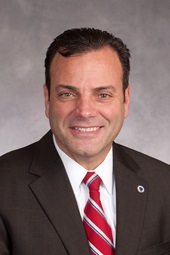
Rep. Paul McMurtry
Sponsored bills
Maddy summaryThis bill (H 4681) modernizes Massachusetts labor law to expand workers' organizing rights. It directly affects employees in state-contracted services (like healthcare, social services, and nonprofits) by redefining "employee" to include these workers (excluding agricultural/domestic workers) and clarifying that multiple employers sharing control over workers are "joint employers." Key provisions include allowing electronic signatures for union authorization cards, ensuring state labor law applies if federal law doesn't cover certain workers, and removing barriers to collective bargaining for workers not protected by federal law. The bill aims to strengthen labor-management relations by making it easier for workers to form unions and negotiate.
Maddy summaryHD 2369 expands labor protections in Massachusetts by redefining key terms in Chapter 150A to cover more workers. It explicitly includes employees of healthcare facilities, nonprofits, and government contractors (like those providing social or medical services) as "employees," while excluding agricultural and domestic workers. The bill creates a "written majority authorization" process using signed cards or electronic forms (valid for 12 months) to form unions, and defines "joint employers" to hold multiple entities accountable for labor practices. Crucially, it states Massachusetts law will apply if federal labor laws no longer cover certain workers or employers. This directly affects workers in covered sectors seeking union representation.
Maddy summaryThis bill, "Colby's Law," requires all BMX and motocross tracks operating in Massachusetts to register with the Executive Office of Public Safety and Security and obtain annual permits after safety inspections. It mandates specific safety measures, including proper track grading, spectator barriers, on-site medical equipment (like AEDs), certified medical personnel during events, and mandatory protective gear (helmets meeting safety standards, plus pads for motocross riders). The law also requires operators to maintain liability insurance, conduct safety briefings for new participants, and implement special safety rules for riders under 18, including parental consent and speed limits. Violations can result in fines up to $5,000, and the state must run public safety awareness campaigns.
Maddy summaryHD 587 establishes the Massachusetts Public Safety Building Authority to provide state assistance for constructing or renovating public safety facilities, including police stations, fire stations, and other community safety infrastructure. The authority, led by the state treasurer, will manage funding from a dedicated 0.5% sales tax revenue stream (from certain retail sales) held in a trust fund specifically for public safety projects. Local towns can apply for financial support to cover costs of building or upgrading these facilities, with the authority overseeing project eligibility and disbursement. The program aims to help communities address rising construction expenses while ensuring facilities meet safety, accessibility, and community development needs.
Maddy summaryThis bill creates the Massachusetts Municipal and Public Safety Building Authority and a dedicated trust fund financed by 33% of the state's marijuana sales tax revenue. The authority will use these funds to help cities and towns build or improve public safety buildings (like police stations and fire stations) and municipal facilities (such as town halls and public works offices). The state treasurer will hold the fund and disburse money to the authority without requiring annual legislative approval. This provides a stable, long-term funding source for local infrastructure projects.
Maddy summaryHD 2046 creates the "Promise Commission" to study Massachusetts public education, directly affecting the state's K-12 and higher education systems. The 11-member commission - including education leaders, union representatives, and community partners - will examine topics like educator recruitment, curriculum modernization, assessment alternatives to MCAS, and K-12 pathways. It must develop a comprehensive report by March 2026 outlining a vision for aligning education with 21st-century student needs. The bill mandates the commission to analyze best practices from other states and countries to inform its recommendations.
Maddy summaryThis bill prohibits municipalities from publishing veterans' names or personal details if they owe taxes after the tax is due. It allows municipalities to use designated veterans' agents to directly notify affected veterans about their tax obligations. The law also amends tax list publication rules to specifically exclude veterans' names and addresses from publicly shared taxpayer lists. These changes directly protect veterans' privacy regarding tax debt while maintaining proper notification channels. The bill focuses on restricting public disclosure of veterans' identifying information related to tax payments.
Maddy summaryHD 1575 establishes a licensing framework for anesthesiologist assistants in Massachusetts. The bill defines key terms, requires assistants to work under the direct, on-site supervision of a licensed anesthesiologist (who must be actively practicing), and mandates that assistants graduate from accredited programs and pass national certification. It creates a registration system under the Board of Registration in Medicine, sets continuing education requirements, and allows assistants to access medications as directed by their supervising anesthesiologist. Violations, such as practicing without a license, carry fines of $100-$1,000 or up to one year in jail. This bill directly affects anesthesiologist assistants, supervising anesthesiologists, and the medical licensing board.
Maddy summaryThis bill (HD 2682) amends Massachusetts law to expand protections for transit workers against assault and battery. It explicitly adds "public transit worker" to the list of protected employees under Section 13D of Chapter 265, and defines "assault and battery" to include attacks using bodily substances like blood, saliva, or urine. The law now treats such assaults as more severe offenses, with specific legal definitions clarifying what constitutes a "bodily substance." This directly affects transit workers by making assaults against them a distinct criminal violation under state law. The changes provide clearer legal grounds for prosecuting attacks on transit staff using bodily substances.