

Maddy summaryHB 108 requires that all abortions be performed only by licensed physicians (not other qualified providers) and prohibits physicians from performing or inducing an abortion before confirming the presence of a fetal heartbeat via medical testing. The bill defines "fetal heartbeat" as detectable cardiac activity and mandates that physicians document gestational age and testing methods in medical records. It shifts enforcement to private civil lawsuits (not state action) and repeals prior abortion regulations. This directly affects pregnant individuals seeking abortions, physicians performing them, and abortion providers in Maryland.
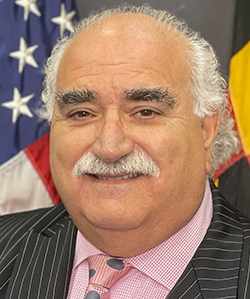
Del. Ric Metzgar
Sponsored bills
Maddy summaryHB 1456 requires hospitals and tissue banks to follow a physician’s order when facilitating autologous (patient donating for themselves) or directed (donation from a person identified by the patient) blood donations. It allows tissue banks to charge a reasonable fee covering administrative costs for these services. The bill also mandates that hospitals must permit such donations when they facilitate blood donations for a patient’s medical procedure. This directly affects hospitals, tissue banks, and patients needing blood donations for medical treatments.
Maddy summaryHB 156, the "Fairness in Girls’ Sports Act," requires Maryland public and nonpublic high schools competing against public schools to designate interscholastic and intramural junior varsity and varsity sports teams based solely on biological sex. It prohibits schools from allowing students assigned male at birth to participate on teams designated for students assigned female at birth. The bill also prevents government agencies or athletic organizations from penalizing schools for maintaining separate teams for females, and allows students or schools harmed by violations to file civil lawsuits seeking damages, attorney fees, or injunctions. This law directly affects high school athletic programs and takes effect July 1, 2025.
Maddy summaryHB 1395 authorizes Maryland county school boards to employ chaplains as volunteer aides to provide non-religious support services to students. It amends Maryland’s education code to explicitly include chaplains within the definition of "volunteer aides," ensuring they cannot replace teachers but may assist school staff. The bill requires county superintendents to establish guidelines for this program and takes effect July 1, 2025. This policy change directly affects county school boards and students seeking voluntary support services.
Maddy summaryHB 1396, the Property Rights Protection Act of 2025, prohibits condemnation for specific energy infrastructure projects. It blocks the state, utilities, or local governments from using eminent domain to acquire property for constructing power lines (Section 7-103(c)), wind or solar generating stations (Section 7-207(b)(2)(II)), or properties encumbered by conservation easements (new Section 12-101(e)). The bill directly affects property owners, particularly those with conservation easements or land near proposed renewable energy sites. It replaces existing condemnation rules with these new restrictions to limit government and utility authority over private land use for energy projects.
Maddy summaryHB 462 prohibits intentionally causing physical harm to a sports official (umpire, referee, or judge) during a sporting event. It specifically adds sports officials to the list of protected individuals under Maryland's second-degree assault law, making such acts a misdemeanor punishable by up to 10 years in prison or a $2,500 fine. Unlike assaults against police or first responders (which become felonies), assaults against sports officials remain misdemeanors under this bill. The bill also updates arrest procedures to allow warrantless arrests for this specific assault type, as it is now listed in the criminal procedure code.
Maddy summaryHB 548 restricts Maryland's Governor from deploying the state militia (including the National Guard) into "active duty combat" without specific congressional action. It prohibits such deployments unless the U.S. Congress has passed an official declaration of war (per Article I, Section 8, Clause 11) or taken a specific action under Clause 15 to "call forth" the militia for federal purposes. The bill explicitly preserves the Governor's authority to deploy the militia under Title 32 of U.S. law for domestic support, such as disaster response within Maryland. This directly affects the Governor's power to commit state military forces to overseas combat roles without federal congressional authorization.
Maddy summaryHB 289 creates a paid apprenticeship program within Maryland's Department of Public Safety and Correctional Services, directly affecting incarcerated individuals in state facilities. The bill requires the department to develop apprenticeships in skilled trades with participating employers (state agencies, local governments, or private entities), prioritizing marketable job skills and paying at least the state minimum wage. Employers set wages but must pay a minimum rate, with funds partially credited to the incarcerated individual's account or distributed to dependents if needed. Upon successful completion, the department provides a certificate within 30 days of release, aiming to support post-incarceration employment.
Maddy summaryHB 60 increases Maryland's tax deduction for military retirement income from current age-based limits to a flat $25,000 for 2025-2025 tax years and $40,000 for 2026 onward, removing the previous age requirement. It directly affects Maryland residents receiving military retirement pay, regardless of age. The bill modifies Section 10-207(q) of Maryland's tax code to apply this larger deduction to the first $25,000 or $40,000 of qualifying military retirement income annually. The change takes effect July 1, 2025.
Maddy summaryThis bill modifies Maryland's tax exemption for parts and equipment used to repair, maintain, or upgrade aircraft. It keeps the exemption in place for smaller planes under 12,500 pounds and larger planes used primarily in interstate or foreign commerce. The law removes the requirement for the state Comptroller to report annually on lost tax revenue and job changes related to the exemption. Additionally, it extends the exemption's expiration date from June 30, 2025, to June 30, 2030.