

Maddy summaryThis bill prohibits placing children in unlicensed settings (such as hotels, motels, or nonresidential offices) under Maryland's out-of-home placement program for foster care, with limited exceptions for kinship caregivers or parental placements. It creates a new Child and Youth Placement Review Panel within the Governor’s Office to oversee placements and requires the Placement Manager to convene a Rapid Response Team for urgent cases. The bill also establishes an Advisory Council to improve Maryland’s system of care for children and families and modifies hospital overstay protocols for pediatric patients. These changes directly affect children in foster care, hospitals, and the agencies managing their care, aiming to ensure safer, licensed placements.
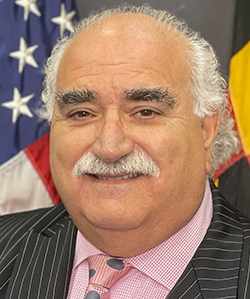
Rep. Ric Metzgar
Sponsored bills
Maddy summaryHB 972 establishes the Maryland Fair and Agricultural Education Promise Fund, a permanent fund to provide annual grants supporting agricultural fairs and education. The fund will receive lottery proceeds (before allocation to the general fund) and replace previous requirements for horse racing fund allocations. It directs specific annual grants: $825,000 to the Maryland Agricultural Fair Board, $75,000 to the Maryland Agricultural Education Foundation, $550,000 to the Maryland State Fair Society (for youth programs like 4-H and FFA), and $50,000 to the Maryland FFA Association. These grants aim to advance agricultural fairs, education, and youth programs across Maryland.
Maddy summaryHB 980 (Kanaiyah's Law) creates the Office of the Child Welfare Ombudsman within the Attorney General's office to handle complaints about Maryland's child welfare system. It requires juvenile courts to include specific information-sharing requirements in guardianship orders and expands criminal background checks to cover all adults living in a child's guardian's home. The bill also prohibits unlicensed placements for certain children, protects complainants from retaliation, and exempts certain complaint records from public disclosure. These changes directly affect child welfare agencies, guardians, and families navigating the system, aiming to improve transparency and accountability.
Maddy summaryHB 911 authorizes licensees at Laurel Park (and Pimlico Race Course) to conduct live Arabian breed horse racing under specific conditions. The bill requires that Arabian races occur in addition to existing thoroughbred races (not replacing them), with a maximum of one per day and three per race meet, and prohibits using thoroughbred purse funds for these races. All Arabian races must follow existing takeout rules, pay standard taxes/fees, and receive approval from the State Racing Commission. This directly affects racetrack operators seeking to add Arabian breed racing without altering current thoroughbred race schedules or funding.
Maddy summaryHB 393 requires health insurers, nonprofit health plans, HMOs, and managed care organizations in Maryland to cover scalp cooling systems when they provide coverage for chemotherapy treatments for cancer. This applies directly to cancer patients undergoing chemotherapy who use scalp cooling to prevent hair loss, and to the insurers that must now include this coverage. The bill defines scalp cooling systems as medical devices designed for repeated use to preserve hair during cancer treatment. Coverage must be provided for these systems as part of chemotherapy treatment plans, effective January 1, 2027. The law amends Maryland’s Insurance Article (Section 15-864) to mandate this coverage for qualifying health plans.
Maddy summaryHB 720 repeals the expiration date for the Douglas J. J. Peters Veterans of the Afghanistan and Iraq Conflicts Scholarship, removing the current cutoff of June 30, 2030, for awarding new scholarships and eliminating restrictions on renewing scholarships for recipients who received their initial award before that date. This change directly affects eligible veterans, active service members, or their dependents (spouses, children) who served in the Afghanistan or Iraq conflicts and meet Maryland residency and enrollment requirements at participating institutions. The bill maintains all existing provisions, including the 50% tuition coverage limit, 2.5 GPA requirement, and 5-year full-time renewal period. It ensures the scholarship program continues indefinitely without time-based restrictions on new awards or renewals.
Maddy summaryHB 194, the Incarcerated Job Training Act, requires Maryland's Department of Public Safety and Correctional Services to create a paid apprenticeship program for incarcerated individuals in skilled trades. The bill mandates that participants earn at least the state minimum wage, with earnings deposited into their personal accounts for use after release. Employers - such as state agencies, local governments, or private businesses - can participate, but may reject assignments or withdraw from the program. Successful completers receive a certificate within 30 days of release, and the program must prioritize developing marketable job skills. The law takes effect October 1, 2026.
Maddy summaryHB 166 establishes the Henrietta Lacks Commission in Maryland to address the legacy of Henrietta Lacks and the ethical use of HeLa cells. The commission, composed of appointed state officials and representatives from health, tourism, and economic development agencies, will review medical research ethics, promote education about Lacks' story, curate tributes to her, integrate her legacy into tourism, and support economic development in Dundalk's Turner Station community. It must submit annual reports to the governor and legislature starting in 2027. This bill creates a procedural framework for oversight and commemoration but does not enact new regulations or funding.
Maddy summaryHB 628 establishes a program providing $1,000 monthly payments for three years to young adults who were in out-of-home care (like foster care) on their 18th birthday, with birthdays on or after October 1, 2026. Payments cannot be counted as income for Medicaid, the Maryland Earned Income Tax Credit, or state/federal financial aid for education. The Department of Human Services must report annually on participants' income, location, employment, and housing status starting October 2027. The program will run from October 1, 2026, through September 30, 2031, with automatic termination after that date.
Maddy summaryHB 49 restricts abortion access by requiring physicians (not other providers) to perform abortions and banning procedures before a detectable fetal heartbeat is confirmed. It defines "fetal heartbeat" as cardiac activity visible via ultrasound and mandates physicians use specific medical methods to detect it, including documenting gestational age and test results. Exceptions apply for medical emergencies, requiring written documentation certifying the necessity. The bill repeals prior abortion regulations and shifts enforcement to private civil lawsuits, not government action. It directly affects physicians performing abortions, pregnant patients seeking care, and healthcare facilities.