

Maddy summaryHB 475, the Juvenile Offender Protection Act, prohibits Maryland's Department of Juvenile Services from hiring or retaining employees convicted of specific serious crimes, including abduction, kidnapping, murder, rape, sexual offenses against minors, and certain assaults. It directly affects individuals seeking or holding jobs with the Department of Juvenile Services who have prior convictions for the listed offenses. The law adds these restrictions to Maryland's Code, with an exception allowing hiring if the conviction was reversed or vacated. The bill takes effect October 1, 2026.
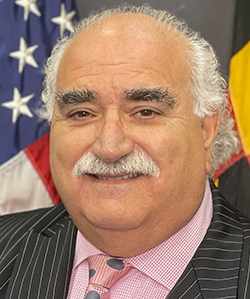
Del. Ric Metzgar
Sponsored bills
Maddy summaryHB 67 requires a Ten Commandments monument to be placed on Maryland State House grounds, displaying the full text of the Ten Commandments. It establishes a new Commission on the Ten Commandments Monument (appointed by legislative leaders and the Governor) to oversee the monument's design, placement, and maintenance by December 31, 2026. The existing Commission on Artistic Property will manage the monument's care and maintenance after installation. The bill mandates this display as a historical and cultural reference, citing U.S. Supreme Court precedents on public monument displays. The policy change directly affects the State House grounds and requires state agencies to facilitate the monument's placement.
Maddy summaryHB 127 requires Baltimore County to create a property tax credit for county residents who are public safety officers (like police and firefighters) or Baltimore County public school employees. The credit would reduce the county property tax on their primary residence, with the county government determining the exact amount, duration, and application process. This bill directly affects those specific public employees by lowering their local tax burden, but the county must establish the program through its own local law. The credit would apply to taxable years beginning after June 30, 2026.
Maddy summaryHB 482, the "Fair Districts for Maryland Act," proposes constitutional changes to overhaul Maryland's redistricting process. It establishes an independent Legislative and Congressional Redistricting and Apportionment Commission to draw both state legislative and congressional districts, replacing the current Governor-led process. The bill mandates new boundary rules requiring districts to respect natural geography, community interests, and geographic compactness, while explicitly prohibiting consideration of voter registration, past voting patterns, or political party affiliation. If the General Assembly fails to adopt a redistricting plan within 45 days of the census, the Commission would submit a plan to the Supreme Court for approval. This directly affects all Maryland residents by changing how voting districts are drawn, aiming to reduce partisan influence in the redistricting process.
Maddy summaryHB 117 requires every Maryland public school to have at least one airway clearing device (a portable suction device for choking emergencies) and mandates that county school boards establish policies allowing school nurses and trained staff to use these devices during choking incidents. The policy must specify storage locations (near eating areas) and require staff training on device use and choking emergency response. Schools must report all device uses to the State Department of Education via a standardized form, and personnel acting in good faith during emergencies are protected from personal liability. This bill directly affects public schools, county boards, and school staff by standardizing emergency response protocols for choking incidents.
Maddy summaryHB 24 authorizes Maryland county school boards to hire chaplains as volunteer aides to provide student support services in schools, without replacing teaching staff. The bill requires county superintendents to create guidelines for volunteer aide use and clarifies that chaplains serving as volunteers are considered limited agents of the county board for liability and workers' compensation purposes. It directly affects public school systems across Maryland counties and takes effect July 1, 2026. The law specifically prohibits using volunteer aides to supplant educational personnel, focusing on supplemental support rather than staff replacement.
Maddy summaryHB 1352 prohibits Maryland institutions of higher education from denying students access to facilities or services due to sickle cell disease diagnosis and requires them to provide reasonable accommodations. The bill mandates the Maryland Department of Health to develop an education campaign for campuses about sickle cell disease challenges, create uniform procedures with the Maryland Higher Education Commission for supporting affected students, and compile training materials for faculty and staff. Institutions must also establish clear reporting procedures for violations and publicly share accommodation policies. These requirements take effect October 1, 2025, directly impacting all Maryland colleges and universities and students with sickle cell disease.
Maddy summaryHB 1472 requires the placement of a Ten Commandments monument on the grounds of the Maryland State House, specifying the exact biblical text from Exodus and Deuteronomy to be displayed. It mandates that the Commission on Artistic Property oversee the monument's care, maintenance, and display as part of state-owned artistic property. The bill repeals and updates existing law (Articles 9-1016 and 9-1021 of the Maryland Annotated Code) to formalize this requirement. This is a symbolic procedural measure focused on monument placement, not a policy affecting citizens or governing new regulations.
Maddy summaryHB 1374 expands eligibility for publicly funded prekindergarten to include 3-year-olds in certain private providers. It modifies the definition of "Tier I child" to include 3-year-olds whose families meet income requirements (≤300% federal poverty level) or are homeless, live in counties where private providers have opted to enroll them, and choose full-day programs. Eligible private providers (licensed, charging tuition ≤ "cost of quality," meeting quality standards) must sign a memorandum of understanding with the State Department of Education and county boards to enroll these children. The bill directly affects qualifying 3-year-olds, eligible private prekindergarten providers, and local departments responsible for notifying families about enrollment options.
Maddy summaryHB 982, the "Gun Theft Felony Act of 2025," reclassifies the theft of any firearm as a felony regardless of the firearm's value. Currently, firearm theft could be charged as a misdemeanor if the value was below $1,500, but this bill makes all firearm thefts automatically felonies. The bill amends Maryland’s Criminal Law to require that anyone convicted of stealing a firearm must restore the firearm to the owner or pay its value, with penalties including up to 20 years in prison or fines up to $25,000 based on the firearm’s value. This change directly affects individuals who steal firearms, increasing penalties for this specific offense.