

Maddy summaryHB 535 establishes the Abandoned and Neglected Cemeteries Fund to provide care, preservation, and restoration for cemeteries in Maryland that are abandoned (where the operating organization no longer exists and ownership is unclear) or neglected (with maintenance citations, deterioration, or vandalism). The bill creates a voluntary income tax checkoff option on state tax forms, allowing individuals to contribute directly to the fund, which will also receive state budget appropriations and interest earnings. The Maryland Department of Labor will administer the fund, with money used exclusively for cemetery maintenance and restoration - supplementing, not replacing, existing cemetery oversight funding. The fund is nonlapsing, meaning it carries over year to year, and must be reported to the legislature annually.
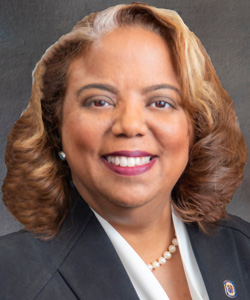
Del. Deni Taveras
Sponsored bills
Maddy summaryHB 448, the Modernization of Military Laws Act, updates Maryland laws to better support veterans, active service members, and military families. It standardizes key definitions like "veteran" and "uniformed services" across all state laws, requires the Secretary of Veterans and Military Families to create transition support policies, and eases voting access by allowing military members to file candidacy certificates remotely with an affidavit. The bill also updates housing and employment discrimination protections for veterans and clarifies election rules for service members. These changes directly affect military personnel, veterans, and their families across Maryland’s state government and election systems.
Maddy summaryHB 910 increases Maryland's property tax exemption for blind individuals from $15,000 to $40,000 on their primary residence. It directly affects blind homeowners and their surviving spouses (who haven't remarried) who own a dwelling house meeting specific occupancy and visual impairment criteria. The bill amends existing law to raise the exemption amount, which applies to the assessed value of the home, and continues the exemption to surviving spouses after the blind individual's death. The change takes effect June 1, 2025, for all taxable years beginning after June 30, 2025.
Maddy summaryHB 1069 prohibits Maryland insurers from including clauses that grant them sole discretion to interpret policy terms in health insurance, life insurance, and annuity contracts. It applies to all insurers, nonprofit health plans, and health maintenance organizations (HMOs) selling policies in Maryland. The law amends state insurance regulations to ban such clauses, requiring interpretations to align with Maryland law rather than insurer preferences. The prohibition applies to policies issued, delivered, or renewed on or after January 1, 2026.
Maddy summaryHB 337 requires the Comptroller to distribute $500,000 annually from Maryland's Racetrax lottery game proceeds to Anne Arundel County, Howard County, and the City of Laurel. This funding is tied to Laurel Race Course's operations and must be used for community services like health care, addiction support, counseling, and transportation for residents near the racetrack or backstretch workers. Payments stop if Laurel Race Course ceases live racing or if backstretch workers no longer live on the property. Anne Arundel County must allocate its share to nonprofits serving backstretch workers, including those providing Spanish-language services.
Maddy summaryHB 32 establishes a Forensic Review Board within the Maryland Department of Health to review eligibility for release for people found not criminally responsible (NCR) at state facilities. The bill requires each facility to create a board of licensed healthcare providers that must annually assess NCR individuals and recommend to courts whether they should be discharged or released conditionally. It also creates a Community Forensic Aftercare Program to monitor people on conditional release. These changes replace current procedures under Maryland’s Criminal Procedure and Health laws, adding specific annual review requirements and written record-keeping for release decisions. The bill directly affects NCR patients in state facilities and their release pathways.
Maddy summaryHB 300 changes how Maryland reimburses nonprofit organizations for indirect costs on state-funded grants and contracts. It requires nonprofits to receive reimbursement at the same rate they use for federal grants, or at a minimum of 10% of modified direct costs if no federal rate applies. This applies to nonprofits (tax-exempt under 501(c)(3), (4), or (6)) receiving state funds for services, whether the funds are solely from the state or combined with nonfederal sources. The law takes effect on October 1, 2025.
Maddy summaryHB 853 (Maryland Second Look Act) allows individuals serving prison sentences of 20+ years to petition courts for sentence reduction under specific conditions. To qualify, petitioners must have served at least 20 years and wait 5 years after any prior petition, with a maximum of three petitions total. Courts must hold hearings considering factors like rehabilitation, victim input, the individual’s age at the offense, and safety risks, and must publicly state their reasons for granting or denying relief. The law applies retroactively to eligible individuals already serving long sentences.
Maddy summaryHB 514 revises Maryland’s chiropractic licensing rules to update the State Board of Chiropractic Examiners’ structure and oversight. It changes board membership (requiring 5 licensed chiropractors and 2 consumer members), adds authority for unannounced office inspections when complaints allege violations of CDC infection control guidelines, and mandates health provider exams for licensees or applicants under specific circumstances. The bill directly affects chiropractors seeking licensure or renewal, chiropractic offices, and the Board itself. Key changes include streamlined board appointments, enhanced compliance inspections, and new requirements for health assessments to ensure public safety.
Maddy summaryHB 573 updates Maryland's requirements for expanded function dental assistants (EFDA). It requires the State Board of Dental Examiners to approve specific types of training programs (like accredited college courses or programs from the Dental Assisting National Board) for EFDA certification, and mandates that initial certification courses offer online options when appropriate. The bill also sets clear rules for reinstating expired EFDA certifications, requiring completion of continuing education (which must include online options), timely renewal applications, and payment of fees. These changes directly affect dental assistants seeking or renewing their EFDA certification in Maryland.