

Maddy summaryHB 1481 establishes Maryland's Adapted Vehicle Access Pilot Program to provide modified vehicles to eligible individuals who require a wheelchair for mobility, are licensed drivers, and qualify to operate adapted vehicles. The Department of Disabilities will administer the program, prioritizing participants in areas with limited public transportation access, and solicit donations of vehicles, modification services, and funds to support it. The bill requires the department to study the program's impacts on participants' independence, mobility, job opportunities, and reliance on public subsidies, with a final report due by December 1, 2028. The pilot program is set to run for five years, ending automatically on September 30, 2030.
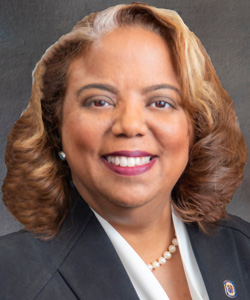
Del. Deni Taveras
Sponsored bills
Maddy summaryHB 699 defines "honorable discharge" for Maryland veterans' state benefits to include discharges that were less than honorable due to specific, protected factors. It directly affects veterans who received such discharges solely because of their sexual orientation or gender identity, or based on disclosures related to those factors (including statements/acts prohibited at the time), or because of PTSD/TBI diagnoses or sexual trauma disclosures made at VA facilities. The bill requires veterans to submit documentation supporting their discharge basis to access state benefits. It amends Maryland law to take effect October 1, 2025.
Maddy summaryHB 939 requires the Maryland Commission for Women to establish a collaborative group focused on improving access to over-the-counter birth control. The collaborative, including representatives from health departments, insurance, pharmacies, reproductive health organizations, and consumer groups, will study and recommend ways to implement existing coverage requirements. Specifically, it will examine pharmacy coverage, point-of-sale options, public health initiatives for underserved individuals, and consumer education to enhance access for Maryland residents who currently face barriers to obtaining over-the-counter birth control.
Maddy summaryHB 600, the "Educational Equality for Service Members Act," updates Maryland's education laws to ensure eligibility for educator certification applies equally to all uniformed services (including National Guard, reserves, and other service branches), not just the traditional armed forces. It revises definitions throughout education statutes to replace "military" with "uniformed services" and clarifies that "veteran" includes those discharged within one year for certification purposes. The bill maintains the existing requirement for active service members, eligible veterans, and their spouses to hold a valid out-of-state license and meet basic qualifications to qualify for expedited certification. This change directly affects service members and veterans seeking teaching careers in Maryland by aligning certification pathways with current service definitions.
Maddy summaryHB 672 requires Maryland's State Department of Education and Department of Health to annually assess school health and wellness personnel (including counselors, nurses, psychologists, and therapists) across all public schools. The assessment tracks personnel-to-student ratios, vacancy rates by role, and collects feedback on recruitment and retention strategies from school systems and health departments. It also expands the Maryland Council on Advancement of School-Based Health Centers by adding a school nurse representative to its 16 voting members. Reports on these findings must be submitted to the General Assembly each December starting in 2027. The bill directly affects school districts, health centers, and the 10 designated health professional roles listed in the law.
Maddy summaryHB 691, the Tax Relief and State Personnel Equality for Service Members Act, redefines "uniformed services" to include the Public Health Service and National Oceanic and Atmospheric Administration (NOAA), extending veteran benefits to their members who meet federal veteran criteria. The bill amends Maryland's tax, pension, and personnel laws to apply the same rules to all uniformed services - not just the armed forces - ensuring equal access to state benefits like tax relief and retirement programs. It specifically updates definitions in the Maryland Code to include these service members in state programs previously limited to military veterans. This directly affects service members in non-military uniformed services and state agencies administering veteran benefits.
Maddy summaryHB 541 establishes a Nonprofit Organizations Navigator within Maryland's Department of Commerce to directly assist nonprofits in accessing state grant programs. The navigator provides technical help with grant applications, resolves bureaucratic delays, shares federal/state grant opportunities, and represents nonprofits on the Maryland Efficient Grant Application Council. This bill amends the council's structure to include the navigator as a nonvoting member and updates membership rules for the council.
Maddy summaryHB 455 requires Maryland's Department of Veterans and Military Families to place American braille tactile flags in one or more state veterans' cemeteries. These flags, designed by the Kansas Braille Transcription Institute, allow blind and visually impaired visitors to experience the American flag through touch. The bill directly affects blind veterans and visually impaired individuals who visit Maryland's five state veterans' cemeteries. It amends state law to mandate the department designate specific locations for these tactile flags as a memorial feature.
Maddy summaryHB 509 establishes a Maryland Inventory of Cemeteries and Burial Sites Workgroup to study how to create a state-wide cemetery inventory system. The workgroup, composed of state officials, historical organizations, cemetery representatives, and local community members, will standardize definitions, review current county and nonprofit cemetery documentation practices, and study systems in other states. It will recommend a single data system design, identify the best managing entity, estimate costs, and propose funding sources for a state inventory system to begin in fiscal year 2027. The workgroup must report its findings to the Governor and General Assembly by December 1, 2025, and the bill expires June 30, 2026, without requiring immediate action. This bill directly affects county governments, historical preservation groups, and cemetery operators through its study of their existing practices.
Maddy summaryHB 938 requires continuing care providers (like senior living facilities) with a governing body to appoint an alternate member if only one resident representative serves on that body. The alternate can attend all meetings and vote only when the regular representative is unavailable. The bill also mandates that providers consult with resident associations before appointing an alternate and ensures residents can access nonconfidential meeting details within a month of approval. This applies to all continuing care providers in Maryland operating under the current governance structure.