

Maddy summaryHB 935 requires Maryland to establish a dedicated prerelease facility for female incarcerated individuals, directly affecting women eligible for prerelease programs at the Maryland Correctional Institution for Women. The bill mandates a separate facility meeting specific criteria: at least 3 acres, not within 1 mile of other prisons, and designed to house 1.25 times the 2024 prerelease-eligible population. It requires the Department of Public Safety and Correctional Services to provide comprehensive rehabilitative services (including gender-responsive programming) and report progress to legislative committees by a specified deadline. The facility must operate by June 1, 2023, with the Department of General Services directing procurement for its construction.
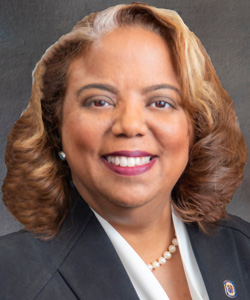
Del. Deni Taveras
Sponsored bills
Maddy summaryHB 779 requires state and local projects funded with state money (at a specified cost threshold) to follow new riverine siting and design criteria aimed at reducing flood risks from rivers. It directs the Coast Smart Council to establish these criteria by specific dates and review them periodically, with updates under certain conditions. The bill creates a new "Part VII" in Maryland law specifically for riverine criteria, separate from existing coastal flooding rules. This applies directly to public infrastructure projects like roads, buildings, or utilities financed with state funds, focusing on resilience against river flooding.
Maddy summaryHB 686, "Zoey's Law," increases penalties for drivers who flee police and cause death during the chase. It reclassifies causing death while attempting to elude police as a felony, raising the maximum penalty to 5 years for a first offense and 10 years for repeat offenses, with fines up to $5,000. The bill directly affects drivers who evade law enforcement and result in a fatality, replacing prior misdemeanor penalties. This change applies to all drivers who fail to stop for police signals (e.g., lights, sirens) and cause death, regardless of whether the driver was fleeing for a "crime of violence."
Maddy summaryHB 539 creates a pathway for individuals lacking formal proof of educational credentials to become child care teachers in Maryland centers serving preschool or school-age children (3+ years old). It requires the State Board of Education to establish a process where these individuals can be hired during a 6-month probationary period while completing approved pre-service training (90 hours total). To qualify, they must hold an associate or bachelor’s degree in specific fields (e.g., early childhood education, child development) and complete training within six months of hire, or complete 45 hours before hire and finish the rest within six months. Child care centers must terminate or reassign teachers who fail to meet these requirements by the end of the probationary period. The bill directly affects child care centers and prospective teachers who possess relevant education but lack documentation.
Maddy summaryHB 659 adds a new member position to Maryland's State Board of Education, requiring the Governor to appoint an early childhood development professional with extensive experience in child care operations and curriculum development. This member must be selected from a list of three candidates provided by the Office of Child Care Advisory Council. The bill directly affects the State Board's composition and ensures representation from early childhood education professionals, who will attend executive sessions but cannot vote on personnel appeals. The appointment process requires the Department to notify licensed child care providers of vacancies, and the position takes effect July 1, 2026.
Maddy summaryHB 488 establishes the geographic boundaries for Maryland's eight congressional districts for the 2026 elections. It specifies exact county and election district portions, using census tract data to define district lines where precincts are split, based on boundaries as they existed on January 13, 2026. This bill directly affects voters in Maryland's congressional districts by determining which communities are grouped together for electing U.S. Representatives. It replaces previous election law sections (8-702 through 8-709) and clarifies that certain districting rules apply only to state legislative districts, not congressional ones.
Maddy summaryHB 51 establishes Maryland's Digital Asset Reserve Fund, a permanent state fund to invest cryptocurrency using money seized from gambling violations (like illegal bookmaking or betting). The State Treasurer would manage this fund, directing forfeiture proceeds from gambling enforcement into cryptocurrency investments that meet a $500 billion market capitalization minimum. The bill modifies criminal procedure laws to redirect these seized funds to the new reserve instead of the general fund, and adds new rules for managing crypto assets securely. It does not affect general state tax revenue or other funding sources.
Maddy summaryHB 394 requires Maryland county school boards to annually identify areas where students live too far from school for bus transportation and list safe walking/biking routes (with sidewalks, crosswalks, or paths) for those students. County governments must then review these reports and construct necessary sidewalks and crosswalks to create these safe routes. The bill applies to all counties and mandates coordination with other entities if county-owned roads aren't sufficient. It directly affects public school students living beyond bus service distance and county governments responsible for infrastructure. The law takes effect July 1, 2026.
Maddy summaryHB 331 establishes Maryland's Beverage Container Recycling Refund and Litter Reduction Program. It requires beverage producers to register, pay fees, and join a stewardship organization to manage recycling, mandates that all redeemable containers display refund information, and requires retailers to include the container's refund value in prices. Consumers receive refunds when returning containers to designated redemption facilities, while local governments can operate facilities to earn credits toward recycling targets. The bill also creates a grant program to fund public water fountains and refill stations, aiming to reduce litter and increase recycling rates.
Maddy summaryHB 641 establishes a three-county pilot program to test curbside voting in Maryland, directly affecting voters with mobility challenges and local election officials implementing the program. The bill requires the State Board to select one county each with small, medium, and large voter populations to test curbside voting at designated locations outside early voting centers or polling places. Key provisions mandate that locations must prioritize accessibility for historically disenfranchised communities, proximity to voters, and public transportation access, while ensuring ballot secrecy and allowing voters to complete ballots without assistance unless requested. The pilot program requires voting systems to accommodate curbside voting and specifies that election officials must set boundaries to prevent campaigning near curbside locations. This pilot will run during early voting and election days at designated sites, with implementation starting at least six months before each statewide primary election.