

Maddy summaryHB 438 establishes the Adult Prison School Board Model Development Committee to create a school board system for correctional education in Maryland's prisons and juvenile facilities. The committee, composed of state officials, correctional education representatives, and experts (including formerly incarcerated individuals and nonprofit advocates), must develop a funding and operational plan by June 2028, examining costs for staff, materials, and budget management. This procedural bill does not enact immediate policy changes but sets a timeline for recommendations to the Governor and legislature. It expires automatically on June 30, 2028, after its two-year study period.
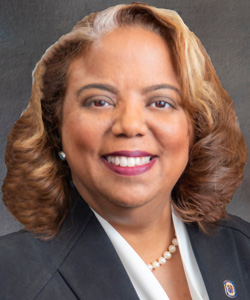
Del. Deni Taveras
Sponsored bills
Maddy summaryHB 592 establishes a task force to study the forced separation of infants from incarcerated mothers in Maryland. The task force, composed of state officials, formerly incarcerated individuals, family members, social workers, and legal experts, will examine the number of pregnant and postpartum incarcerated individuals, the impact of separation, and best practices from other states. It must make recommendations to reduce forced separation and improve family bonds, reporting by December 31, 2027. The task force will operate for two years, from July 1, 2026, to June 30, 2028.
Maddy summaryHB 334 requires state procurement officers to mandate that all bidders and contractors certify they are not violating the U.S. or Maryland Constitution and will refrain from such actions during the contract period. This applies to every entity seeking state contracts, including affiliates and divisions of bidders. The bill adds specific certification requirements to Maryland’s procurement law (sections 13-212.2 and 13-230), making constitutional compliance a condition for bidding and contract execution. It takes effect October 1, 2026, with no defined scope for what constitutes a constitutional violation. The policy change directly affects all businesses competing for state procurement contracts.
Maddy summaryHB 517 clarifies that counties and cities in Maryland can adopt stricter local emission standards or air quality rules than state or federal levels, provided their standards are equally or more stringent. It also confirms local governments retain authority to regulate solid waste management systems without being limited by certain state provisions. The bill requires the Department of the Environment to publish clear information about this local authority on its website by October 1, 2026. This law directly affects local governments seeking to implement more protective environmental regulations within their jurisdictions. It does not change existing state standards but removes ambiguity about local regulatory power.
Maddy summaryHB 345, the "Affordable Solar Act," creates new rules for solar energy systems in Maryland. It allows homeowners to install portable solar systems (max 1,200 watts) without utility approval or fees, while establishing two new credit types: SRECs for smaller residential systems and SREC-IIs for larger distributed or utility-scale projects (over 5MW). The bill requires utilities to procure specific SREC-II credits and redirects certain fees into new escrow accounts instead of the Strategic Energy Investment Fund. These changes directly affect residential solar users, utilities, and solar developers by altering renewable energy compliance standards and financial mechanisms.
Maddy summaryHB 384 allows minors who are parents to directly file or respond to child support court cases without needing a legal guardian. It amends Maryland law to override the standard rule requiring minors to have a representative, granting minor parents the legal capacity to initiate or defend child support actions (both temporary and permanent). This change specifically affects minor parents seeking or defending child support for their children. The law takes effect October 1, 2026.
Maddy summaryHB 110 requires all public schools in Maryland to include seat belt safety instruction in their safety education programs. It mandates that school buses purchased after July 1, 2030, must be equipped with 3-point seat belts for every seat. The bill also prohibits lawsuits or criminal charges against school bus operators if a passenger fails to wear a seat belt. This affects schools, bus manufacturers, and school bus operators by setting new safety standards and limiting liability for non-compliance.
Maddy summaryHB 738 requires Maryland's Department of Information Technology to establish an oversight process for major information technology development projects. It directly affects state agencies planning significant IT investments, mandating that they undergo formal review before proceeding with major spending decisions. The key provision creates a structured framework for evaluating project scope, budget, and risks prior to approval. This law, enacted on May 25, 2025, ensures greater accountability for large-scale state IT initiatives.
Maddy summaryHB 500, the Procurement Reform Act of 2025, streamlines Maryland state government purchasing by transferring key authority from the Secretary of General Services to the Chief Procurement Officer. It adjusts dollar thresholds requiring public notice or reporting for procurements, modifies small business preference programs (including expanding eligibility for small business reserves), and adds new requirements for contractors to submit workforce diversity plans for contracts over $500,000. The bill also creates a procurement preference for businesses certified for "good labor practices" and mandates that certain agencies establish working groups to address procurement issues. These changes directly affect state agencies, contractors (especially small businesses), and the Office of Small, Minority, and Women Business Affairs, which gains oversight of new workforce diversity rules.
Maddy summaryHB 424 creates a Prescription Drug Affordability Board with authority to set upper payment limits for prescription drugs causing affordability challenges in Maryland. The Board must consider costs like administration and delivery when setting limits, and it must reconsider limits if a drug becomes a "current shortage" (listed on the FDA shortage database or determined by the Board). This directly affects drug manufacturers (who set wholesale costs), pharmacies (receiving reimbursements), and healthcare providers, particularly those in the 340B program. The bill prohibits setting new limits for drugs in shortage and bans enforcement of limits against Medicare Part C/D plan reimbursements.